
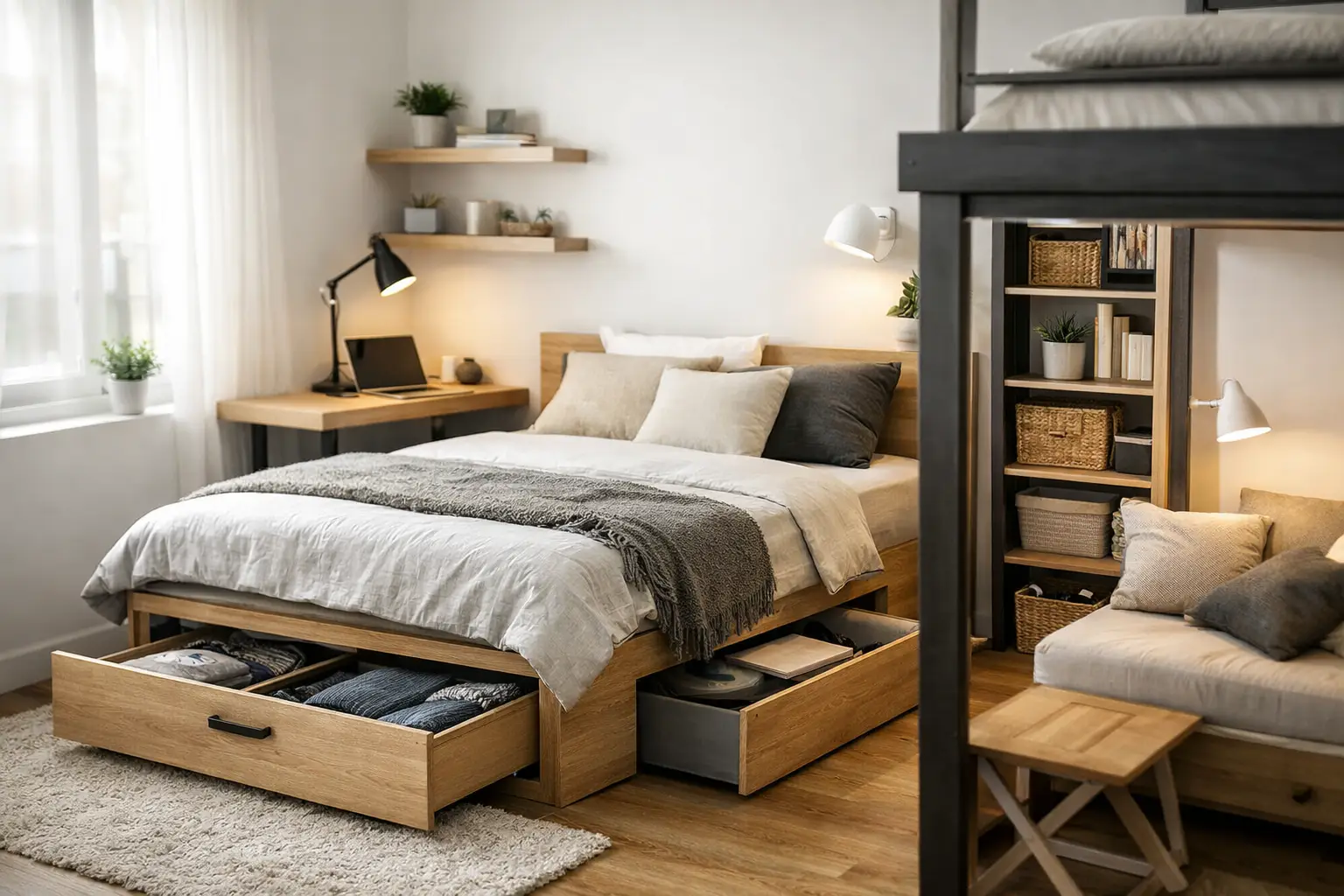
A small bedroom gets frustrating fast when the bed takes over the whole layout. That is why modern beds for small rooms need to do more than look good. They have to earn their footprint, improve storage, and make the room feel calmer instead of tighter.
The good news is that compact living does not mean settling for a basic frame or a boxy design. The best modern bed styles are clean, practical, and surprisingly flexible. If you are furnishing a guest room, upgrading a first apartment, or making a primary bedroom work harder, the right bed can change how the entire space functions.
What makes modern beds for small rooms different
A modern bed usually works in a small room because of what it leaves out as much as what it adds in. Bulky footboards, heavily carved details, oversized side rails, and thick visual lines can make a tight room feel even smaller. Modern designs tend to keep the silhouette cleaner, the profile simpler, and the finish more streamlined.
That does not mean every modern frame is automatically a smart choice. Some low platform beds look sleek online but offer no underbed use at all. Some statement headboards bring style but can overwhelm a short wall. The best choice depends on whether your room needs hidden storage, better floor clearance, or a softer visual presence.
In practical terms, a bed for a smaller room should solve at least one problem beyond sleep. It might create storage for extra bedding, remove the need for a separate guest bed, or free up enough floor area to fit a nightstand or dresser. That is where shopping by function matters more than shopping by trend alone.
The best bed types for smaller spaces
Storage beds are usually the first place to look, and for good reason. If you do not have room for extra drawers or a bulky chest, a bed with built-in storage can take pressure off the rest of the layout. Ottoman beds are especially useful because they lift up to reveal a large storage area without requiring side clearance for drawers. In a narrow bedroom, that matters.
Drawer storage beds can still be a strong option if your room has enough opening space at the sides or foot of the bed. They work well for everyday items you want to access quickly, such as linens, sleepwear, or seasonal layers. The trade-off is that they ask more from the floor plan.
Sofa beds are another smart modern solution, especially in guest rooms, home offices, or multipurpose spaces. During the day, the room keeps its flexibility. At night, you still have a proper sleep setup. If the space is doing double duty, this is often the most efficient move.
For kids’ rooms, shared bedrooms, or compact family layouts, bunk beds and high sleepers can make far better use of vertical space. The room feels more open because sleeping space moves upward, leaving room below for storage, study, or play. The look should still feel clean and contemporary, not overly bulky.
Adjustable beds can work in a smaller room too, though they are more dependent on layout. If comfort is the priority and the room is primarily for sleep rather than storage, an adjustable base can be worth the footprint. You just need to make sure surrounding furniture does not interfere with movement.
Size matters, but proportion matters more
One of the most common mistakes in small bedrooms is focusing only on bed size without thinking about the frame around it. A full-size mattress on a slim frame may fit better than a twin on an oversized upholstered bed with thick wings and a deep headboard. Dimensions on the product page matter, but so does the visual bulk.
If you are trying to maximize floor space, look closely at how much larger the bed frame is than the mattress itself. A compact modern design with tight edges and a minimal base can save valuable inches. That may not sound like much, but in a small room, a few inches can be the difference between an easy walkway and a cramped one.
Height also plays a role. Lower beds often feel less imposing and can make the ceiling appear taller. On the other hand, a slightly higher frame with underbed storage may give you better function overall. This is one of those cases where it depends on what the room lacks most.
How to keep a small bedroom looking open
The bed is usually the biggest visual element in the room, so its finish has a major effect on how spacious the room feels. Light neutrals, soft grays, natural wood effects, and simple upholstered finishes tend to keep things airy. Darker frames can look striking and modern, but in a room with limited light, they may feel heavier.
Headboards deserve extra attention. A slim padded headboard can add comfort and style without stealing too much space. Tall, deeply tufted, or wide statement styles can be beautiful, but they work best when the rest of the room is restrained. If your bedroom is already short on wall space, a lower-profile headboard may feel more balanced.
Legged frames can help a room feel lighter because you see more floor beneath them. Fully grounded divan-style bases often deliver excellent practicality, but they create a more solid block of furniture. Neither is wrong. It comes down to whether you want visual openness or maximum integrated function.
Storage changes the whole buying decision
When space is tight, a bed without storage often means you will need additional furniture somewhere else. That can lead to a crowded bedroom with too many competing pieces. In many homes, choosing a storage bed is less about convenience and more about avoiding a second purchase.
Ottoman beds are especially appealing because they offer a clean modern look while hiding a surprisingly generous amount of storage. They are ideal for spare bedding, clothes you rotate by season, shoes, or even items that would otherwise live in hallway closets. For many shoppers, that turns the bed into the hardest-working piece in the room.
If lifting storage every day sounds inconvenient, drawer beds may suit you better. If the room is too narrow to pull drawers out comfortably, an ottoman base is usually the more practical pick. This is where measuring clearance around the bed matters just as much as measuring the bed itself.
Style still matters in a compact room
A small bedroom should not feel like the place where style gets cut back. In fact, a strong modern bed can make the whole room feel more considered. Clean lines, textured fabric, matte finishes, and understated detailing all help create that polished look without adding clutter.
The key is restraint. If the bed has a bold shape or a rich upholstered finish, keep surrounding furniture simpler. If the room already includes patterned wallpaper, darker paint, or statement lighting, a quieter bed frame may create better balance. Contemporary style works best when every piece has room to breathe, even in a compact layout.
This is also where buying from a retailer with broad bedroom choice helps. It is easier to create a coordinated look when your bed, mattress, and storage furniture all sit in the same design language. Brays UK leans into that kind of easy comparison, which is exactly what busy online shoppers need when they are trying to make a small room work quickly and well.
What to check before you buy
Before committing to a bed, measure more than the sleeping area. Check door swings, window placement, radiator positions, and how much space you need to walk around the frame comfortably. If the bed includes drawers or lifts from the side or end, account for that movement too.
Think about mattress depth as well. A very deep mattress on a high base can make a compact room feel crowded and can throw off the proportions of the headboard. If you are pairing a storage bed with a new mattress, look at the overall finished height rather than choosing each item in isolation.
It is also worth considering delivery access, especially in apartments or older homes with tighter staircases. A bed that arrives in manageable parts is often far easier to live with than one that creates stress before it even reaches the bedroom.
The right small-room bed does not just fit the measurements. It makes the room easier to use, better to look at, and more comfortable day after day. Choose the design that solves the biggest pressure point in your space, and the whole bedroom starts to feel bigger than it is.