
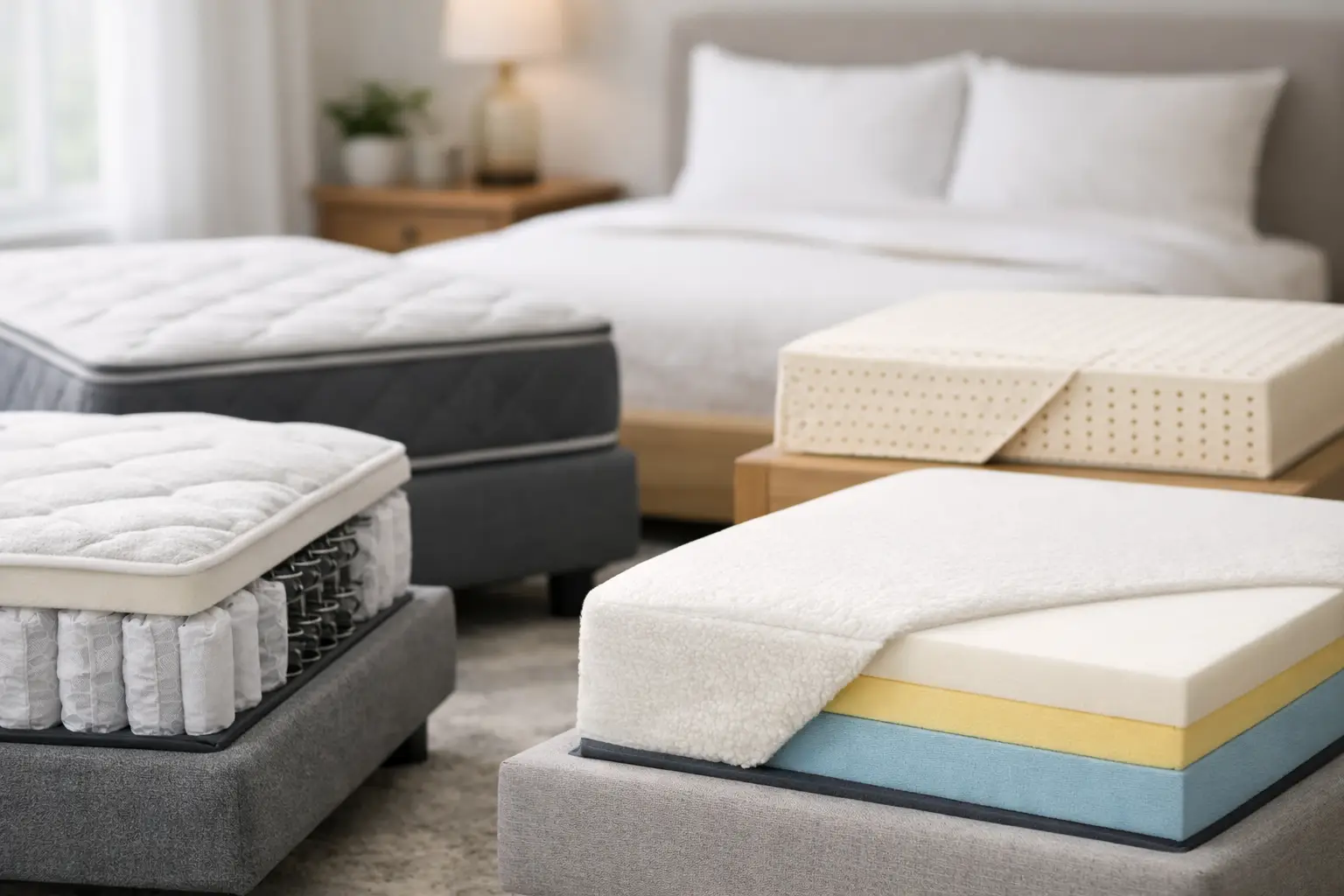
Buying a mattress can feel strangely high-stakes. Get it right, and your bedroom feels instantly more comfortable, polished, and restful. Get it wrong, and even the most stylish bed frame cannot make up for sore shoulders, restless nights, or that sinking feeling that you chose too fast. That is why mattress types explained clearly matters so much before you commit.
The good news is that most mattress shopping becomes much easier once you understand how each type actually feels in daily use. Marketing terms can make everything sound equally impressive, but the real question is simpler: what kind of support, pressure relief, temperature control, and movement response do you want night after night?
Mattress types explained: what really changes from one to another?
At a glance, mattresses can look similar. Underneath the cover, though, the materials make a major difference. They affect how firm the bed feels, how much it hugs your body, how easy it is to move around, and how well it handles heat and motion.
For most shoppers, the main mattress categories are memory foam, innerspring, hybrid, latex, and specialty designs such as pillow top or adjustable-compatible models. None is automatically best. The right choice depends on your sleep position, body weight, temperature preferences, and whether you share the bed.
Memory foam mattresses
Memory foam remains one of the most popular options because it is designed to contour around the body. If you like a mattress that cushions pressure points and creates a more cradled feel, this is often the first place to look.
This type tends to suit side sleepers particularly well because the foam can reduce pressure around the shoulders and hips. It can also be a strong option for couples, since memory foam usually absorbs movement better than spring-heavy designs. If your partner tosses and turns, you are less likely to feel every shift.
The trade-off is responsiveness. Some people love the cocooning comfort, while others feel it is harder to change positions on a deep memory foam mattress. Heat can also be a concern, although many modern designs use cooling layers or more breathable construction to counter that issue.
If you want comfort that feels plush, quiet, and body-contouring, memory foam makes sense. If you prefer a more lifted, bouncy surface, it may feel too enveloping.
Innerspring mattresses
Innerspring mattresses are the classic spring-based option. They usually have a coil support core with thinner comfort layers on top, creating a sleep surface that feels firmer, springier, and more breathable than many all-foam designs.
People who like a traditional mattress feel often gravitate here. You get more pushback from the surface, which can make it easier to move, turn over, and get in and out of bed. That can be especially appealing if you do not enjoy the sink-in sensation of foam.
There are compromises. Innerspring mattresses may not relieve pressure as effectively as memory foam or well-built hybrids, especially for dedicated side sleepers. Motion transfer can also be more noticeable, depending on the coil system. If one person moves, the other may feel more of it.
For guest rooms, occasional use, or shoppers who want straightforward support and value, innerspring can still be a smart choice. It is familiar, practical, and often a good fit for those who sleep warm.
Hybrid mattresses
If you are stuck between springs and foam, a hybrid often gives you the best balance. Hybrid mattresses combine a coil support base with thicker comfort layers made from foam, memory foam, latex, or a mix of materials.
This is one of the easiest categories to recommend because it covers so many preferences. You get more contouring and pressure relief than a standard innerspring, but usually more bounce and airflow than an all-foam mattress. For many shoppers, that middle ground feels more premium and easier to live with long term.
Hybrids work especially well for couples with different sleep preferences. They can also suit combination sleepers who move between their side, back, and stomach during the night. The support is often more versatile, and the overall feel tends to be balanced rather than extreme.
That said, not all hybrids feel alike. Some lean softer and plusher, while others feel noticeably firmer and more supportive. The word hybrid tells you the construction style, not the exact comfort level, so firmness still matters just as much.
Latex mattresses
Latex mattresses are known for responsive support, durability, and a cleaner, more buoyant feel than memory foam. Instead of sinking deeply into the bed, you tend to feel more lifted on the surface.
This can be a strong choice if you want pressure relief without that slow-moving foam sensation. Latex also tends to sleep cooler than traditional memory foam and can feel more naturally springy. For sleepers who want comfort with a fresher, less heavy feel, that is a real advantage.
The downside is preference and price. Some people simply prefer the softer, more enveloping comfort of foam, and latex models can sit at a higher price point. The feel is distinctive, so it is less about better or worse and more about whether that responsive support suits you.
Pillow top and Euro top mattresses
Pillow top and Euro top mattresses are not always separate mattress types in the same way foam or hybrid are, but they are worth understanding because they change the surface feel significantly. These designs add an extra comfort layer to the top of the mattress for a plusher first impression.
If you want your bed to feel softer, more cushioned, and a little more hotel-like, this finish can be appealing. It can make a firmer support core feel more welcoming without losing the structure underneath.
The important thing is not to confuse a plush top layer with full-body support. A mattress can feel beautifully soft when you first lie down, but still not suit your spine alignment or pressure points after a full night. Surface comfort matters, but the deeper support layers matter more.
Mattress types explained by sleep position
Your sleep position can narrow the field quickly. Side sleepers often need better pressure relief, so memory foam and softer hybrids are common winners. Back sleepers usually do well with medium to medium-firm support that keeps the spine aligned without feeling too hard, which is where many hybrids, latex mattresses, and some innersprings perform well.
Stomach sleepers generally need a firmer, more supportive feel to prevent the midsection from dipping too far. That often points toward firmer hybrids, firmer innersprings, or supportive latex models. If the mattress is too soft, the lower back can pay for it.
Combination sleepers need something responsive enough to move on easily. Hybrids and latex designs often stand out here because they offer comfort without making position changes feel like work.
How firmness changes the experience
One reason mattress shopping gets confusing is that type and firmness are not the same thing. You can find soft hybrids, firm hybrids, plush memory foam, and supportive memory foam. The materials shape the character of the mattress, while firmness changes how hard or soft it feels.
If you are lighter in weight, a mattress may feel firmer to you because you do not sink in as much. If you are heavier, the same mattress may feel softer and more compressible. This is why reviews can conflict. Two people can be describing the same mattress honestly and still have completely different experiences.
For many adults, medium or medium-firm is a practical starting point. It tends to offer the broadest comfort range, especially for shared beds. But if you know you love a plusher, cocooning feel or a firmer, more supportive surface, it is better to shop for that preference rather than settling for the middle.
What couples should pay attention to
When two people share a mattress, motion isolation becomes more important. Memory foam is often excellent here, while hybrids can also perform well depending on the coil system and comfort layers. Traditional innersprings may transfer more movement across the bed.
Edge support matters too. If you both use the full width of the mattress, stronger edges make the bed feel larger and more stable. This is especially useful in smaller rooms where upsizing the bed frame is not always practical.
Temperature can become a bigger factor for couples as well. If one or both of you sleep warm, breathable hybrids, latex, or cooler-feel spring designs may be more comfortable than dense foam-heavy builds.
The smartest way to choose
Start with how you want the mattress to feel, not just what sounds advanced. If you want contouring and pressure relief, memory foam is a strong contender. If you want bounce and airflow, look at innerspring. If you want an easy all-rounder, hybrid often earns its popularity. If you want responsive comfort with a more lifted feel, latex is worth serious attention.
Then match that type to your sleep position, preferred firmness, and whether you sleep alone or with a partner. Stylish bedrooms come together through smart choices, and the mattress is one of the few pieces that affects both the look of the room and how you feel every morning.
A beautiful bed should do more than complete the space. It should make you want to get into it at the end of the day – and feel glad you chose it when morning comes.