
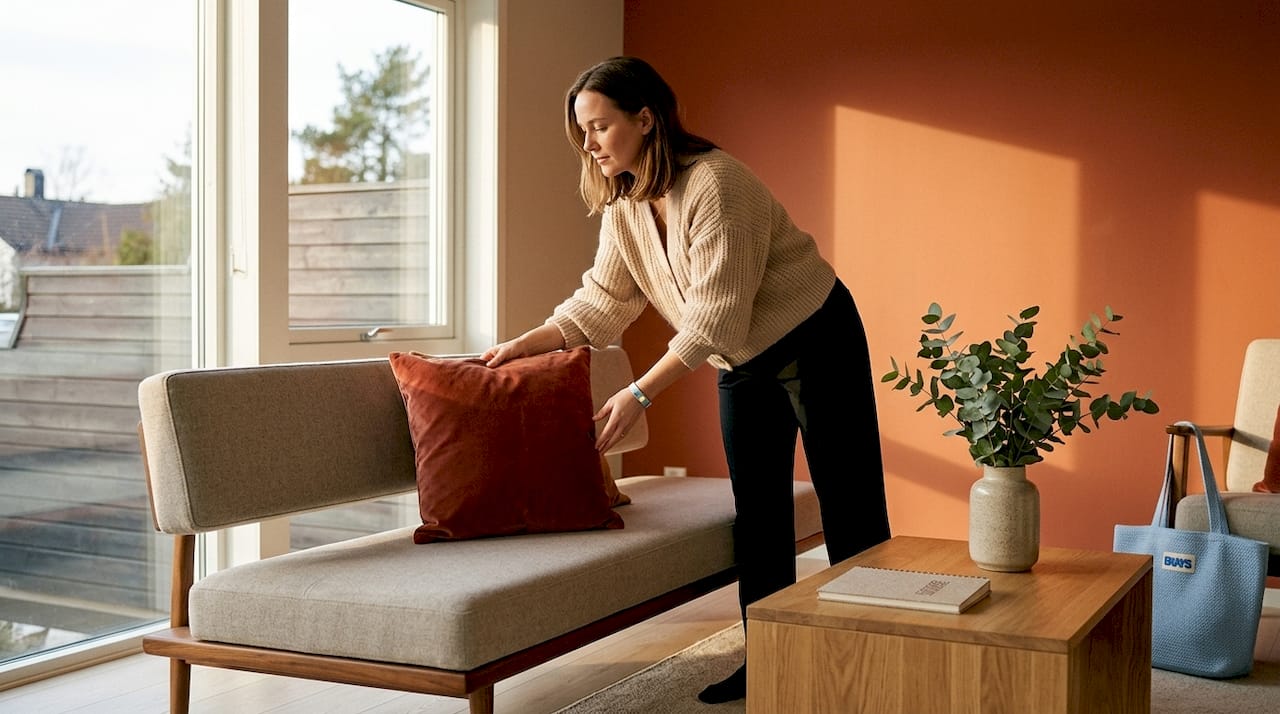
A modern sofa is defined as the primary visual anchor of a living room when its silhouette, placement, and surrounding decor are deliberately orchestrated to draw the eye and hold it. Styling a modern sofa as a focal point, known in interior design as creating a conversational centrepiece, requires three things working in concert: the right sofa form, considered spatial positioning, and proportional supporting decor. Get any one of these wrong and the sofa recedes into the background, no matter how beautiful the piece itself may be. This guide covers each principle in precise, practical terms, whether you own your home or rent it.
Which modern sofa designs best create a focal point?
The sofa silhouette is the single most powerful variable in modern living room design. Low-profile sofas with a seat height of approximately 14 to 16 inches and a back height of 28 to 32 inches create more visible vertical space, making rooms appear taller and airier than standard 18 to 20 inch seat heights allow. This is not merely an aesthetic preference. It is a spatial illusion that works in rooms of almost any ceiling height.
When selecting a contemporary sofa centrepiece, consider these defining characteristics:
- Clean, unbroken lines. Sofas with continuous arms and a low, horizontal profile read as deliberate and composed rather than bulky.
- Visual weight and material. A velvet or boucle sofa in a deep jewel tone commands attention immediately. A linen sofa in a neutral tone relies more heavily on form and placement to assert itself.
- Leg visibility. Sofas raised on slender metal or solid wood legs feel lighter and more considered than skirted or floor-flush designs, which can appear heavy in a modern scheme.
- Scale relative to the room. A sofa that is too small for the wall behind it reads as an afterthought. A sofa that fills roughly two thirds of the wall it faces holds the space with authority.
A sofa’s statement effect depends on its relationship to the room context, including ceiling height, wall space, and natural light, so audition any piece in the actual room before committing. Colour and texture that look striking in a showroom can flatten under different light conditions.
Pro Tip: If your ceilings are lower than 2.4 metres, a low-profile sofa with visible legs is the single most effective design choice you can make. It draws the eye along the horizontal plane and creates the impression of height without touching a wall.

How to position your sofa to maximise its role as a focal point
Sofa placement determines whether the piece reads as the room’s centrepiece or simply as seating. Primary seating arranged facing the room’s natural focal point, whether that is a fireplace, a picture window, or a media wall, forms an oval or rectangular conversational group that feels both inviting and intentional. Straight-line arrangements, where all seating faces one direction, flatten the room’s social energy and undermine the sofa’s visual authority.
Follow this sequence when positioning your sofa:
- Identify the architectural anchor. Locate the fireplace, window, or media wall that naturally draws the eye. Orient the sofa to face it directly.
- Pull the sofa away from the wall. Pulling the sofa 4 to 8 inches from the wall transforms the room’s spatial feel, eliminating dead zones and making the space appear larger and more intentional. This single adjustment has more impact on perceived room architecture than any accessory change.
- Set your conversation radius. Place seating within an 8 to 10 foot radius and keep individual pieces 3 to 6 feet apart. This supports natural interaction without crowding.
- Allow clear walkways. Maintain at least 90 centimetres of clear circulation space around the sofa group so the arrangement feels considered rather than cramped.
- Position the coffee table correctly. Place it 35 to 45 centimetres from the sofa’s front edge, close enough to reach comfortably but far enough to allow movement.
Pro Tip: Even a 10 centimetre gap between your sofa and the wall creates a sense of depth and intentionality that most visitors will feel but not consciously identify. It is one of the least expensive improvements you can make to a room.
What rug and coffee table sizes complement a sofa focal point?

The rug and coffee table are the two supporting elements that either ground the sofa visually or undermine it entirely. Rugs sized 8×10 feet or larger that extend at least 8 to 12 inches beyond the sofa’s sides, with the front sofa legs resting on the rug, unify the seating area and prevent the sofa from appearing to float. A rug that is too small is the most common mistake in modern living room design, and it makes even a beautiful sofa look unanchored.
The two thirds rule applies to both the rug and the coffee table. The rug should be wider than the sofa and extend beneath the front legs of all seating in the group. The coffee table should measure approximately two thirds the length of the sofa and sit 35 to 45 centimetres from its front edge.
| Element | Recommended size | Key rule |
|---|---|---|
| Rug | 8×10 ft or larger | Extends 8 to 12 inches beyond sofa sides; front legs on rug |
| Coffee table | Two thirds of sofa length | Placed 35 to 45 cm from sofa front edge |
| Side tables | Sofa arm height or slightly lower | One on each end, or asymmetric for visual interest |
| Accent chair | Scaled to sofa, not matching | Positioned at 45 degrees to sofa for conversational geometry |
Pro Tip: If your room cannot accommodate an 8×10 rug without crowding, choose a rug that at minimum holds the front legs of the sofa and the coffee table. That connection is what matters most for visual cohesion.
How to style the surrounding decor to highlight your sofa focal point
The decor surrounding your sofa either amplifies its presence or competes with it. Wall art spanning roughly two thirds of the sofa’s width ensures proportional balance and prevents either the artwork or the sofa from appearing disconnected from the other. This two thirds rule is one of the most reliable proportional guides in interior design, and it applies whether you are hanging a single large canvas or a curated gallery wall.
Consider these principles when styling the space around your sofa:
- Wall art placement. Centre artwork 15 to 20 centimetres above the sofa back. For wall art in modern interiors, scale and placement relative to the sofa are more important than the artwork’s style or subject matter.
- Cushion and throw balance. Use an odd number of cushions in two or three complementary textures. A velvet cushion, a woven throw, and a linen bolster create tactile richness without visual noise.
- Asymmetric side tables. Two identical side tables flanking a sofa can feel static. One taller lamp table on one side and a lower, sculptural piece on the other creates movement and interest.
- Negative space. Modern focal points rely on minimal but impactful elements, using negative space and scaled supporting decor to avoid overfilling. Resist the urge to fill every surface.
Pro Tip: Audition your cushions, throws, and art in the room’s natural light at different times of day before settling on a final arrangement. Colours and textures shift significantly between morning and evening light, and what reads as cohesive at noon can feel discordant by lamplight.
How can renters create a modern sofa focal point without structural changes?
Renters face real constraints, but furniture grouping, scaled rugs, and non-permanent decor replicate the effect of a designed layout without touching a single wall or fixture. The sofa itself does the heavy lifting when it is well chosen and correctly positioned.
- Choose a statement sofa that suits the existing light. A sofa in a rich, saturated colour or distinctive texture becomes the focal point by sheer presence, without any structural support.
- Use a large rug to define the zone. A generously sized rug anchors the seating group and signals intention, even in a rented space with neutral walls and generic flooring.
- Apply removable wall decor. Removable adhesive strips support framed art and mirrors up to considerable weights, allowing you to apply the two thirds rule above the sofa without damaging plaster.
- Prioritise conversation geometry. Position the sofa to face the room’s strongest natural feature, be it a window or a media unit, and arrange supporting seating in an oval or rectangular group around it.
Pro Tip: In a rented space, proportion and geometry do more work than any single decorative item. A well-positioned sofa on a correctly sized rug, facing the room’s natural anchor, will always read as intentional and designed.
Key takeaways
Styling a modern sofa as a focal point requires the right silhouette, deliberate placement away from the wall, and proportional supporting decor including a correctly sized rug, coffee table, and wall art.
| Point | Details |
|---|---|
| Sofa silhouette matters | Low-profile, clean-lined sofas with visible legs create visual authority and amplify perceived ceiling height. |
| Pull away from the wall | Positioning the sofa 4 to 8 inches from the wall creates depth and makes the room feel larger and more considered. |
| Apply the two thirds rule | Rug, coffee table, and wall art should each measure approximately two thirds of the sofa’s width or length for visual harmony. |
| Negative space is active | Leaving deliberate empty space around the sofa group strengthens its focal presence rather than weakening it. |
| Renters can achieve the same result | Furniture geometry, scaled rugs, and removable decor replicate a designed focal point without any permanent changes. |
Why proportion is the principle most people overlook
Most people approach sofa styling by focusing on colour or cushion arrangements first. Having spent considerable time observing how rooms actually read, the most common mistake is not a poor colour choice. It is a rug that is two sizes too small, a coffee table that is too short or too long, and a sofa pushed flush against the wall as though it is trying to disappear.
The two thirds rule sounds deceptively simple, but applying it consistently across the rug, the coffee table, and the wall art above the sofa produces a room that feels resolved in a way that is difficult to articulate but immediately apparent. Rooms that feel “off” almost always have a proportional mismatch somewhere in that chain.
The other insight worth sharing is this: texture does more work than colour in a modern scheme. A sofa in a complex, tactile fabric, boucle, ribbed velvet, or brushed linen, holds the eye even in a neutral palette. Colour is the first thing you notice; texture is what keeps you looking. Invest in the fabric quality of your sofa before you invest in the cushions that sit on it.
— V
Discover BraysUK’s modern sofa collection
BraysUK brings together a meticulously curated selection of modern sofas designed to serve as the elegant centrepiece of any living room, whether you are furnishing a compact flat or a generous reception room. Each piece is chosen for its considered silhouette, quality upholstery, and the kind of enduring presence that transforms a room rather than merely occupying it.

From low-profile statement sofas in rich, tactile fabrics to versatile designs that suit varied layouts and light conditions, BraysUK’s collection is built around the principle that beautiful furniture should also be liveable. Explore the range of modern sofa beds for spaces that demand both style and practicality, or discover how an oversized sofa can anchor even the most intimate room with quiet authority.
FAQ
What makes a sofa a focal point in a living room?
A sofa becomes the room’s focal point when its silhouette, placement, and surrounding decor are proportionally aligned to draw and hold the eye. Orienting it toward the room’s architectural anchor, such as a fireplace or media wall, and pulling it slightly away from the wall reinforces this effect.
What is the best sofa height for a modern living room?
A seat height of 14 to 16 inches with a back height of 28 to 32 inches suits most modern living rooms, creating a low-profile aesthetic that amplifies perceived ceiling height and visual space.
How far should a sofa be from the wall?
Pulling the sofa 4 to 8 inches from the wall eliminates dead zones and makes the room feel larger and more intentional. Even a small offset has a significant effect on how the space reads.
What rug size works best under a modern sofa?
A rug measuring 8×10 feet or larger, extending 8 to 12 inches beyond the sofa’s sides with the front legs resting on it, grounds the seating group and prevents the sofa from appearing to float.
Can renters create a sofa focal point without altering walls?
Renters achieve the same result through furniture grouping, a correctly scaled rug, and removable wall decor. Proportion and conversational geometry do the structural work that permanent fixtures would otherwise provide.
2 Replies to “How to style a modern sofa as a focal point”