
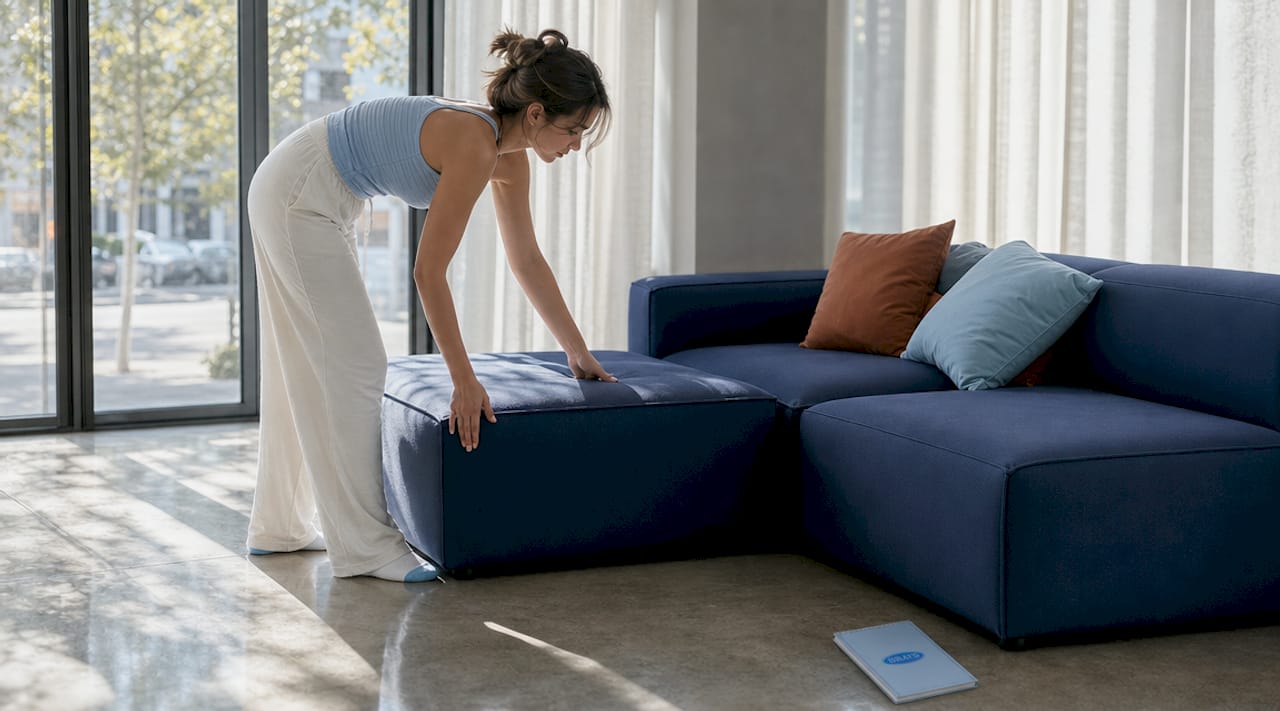
A modular sofa is defined as a seating system built from individual, interchangeable sections that can be rearranged, expanded, or reduced to suit any living space. For renters, this design is the most practical seating investment available, combining transport ease, spatial adaptability, and long-term value in a single purchase. Brands such as Swyft and retailers like ProperSofa have made modular seating central to the renter conversation, and the modular sofa benefits renters experience are too significant to overlook when furnishing a home you may not occupy permanently.
1. How modular sofas enhance flexibility in small rental spaces
Flexible configurations including straight, L-shape, U-shape, and standalone modules mean a single sofa can serve a studio flat, a two-bedroom apartment, or anything in between. This adaptability is the defining advantage of modular furniture for apartments, where no two floor plans are identical and awkward alcoves or bay windows can make standard sofas feel clumsy and ill-fitting.

Renters can add or remove modules as their household grows or shrinks, which is a practical reality that fixed sofas simply cannot match. Experts at Furnishings Pro recommend mapping circulation zones before purchase to avoid spatial overwhelm, ensuring the sofa serves the room rather than dominating it.
Key configuration benefits include:
- Straight layout: Ideal for narrow living rooms or open-plan studios where wall space is limited.
- L-shape layout: Defines a seating zone within a larger room without requiring additional furniture.
- U-shape layout: Creates an intimate social setting in spacious flats, perfect for entertaining.
- Standalone modules: Useful as occasional seating, home office chairs, or bedroom accent pieces.
Pro Tip: Before purchasing, sketch your room to scale and test at least two configurations on paper. Small rentals benefit most from one clear geometric approach rather than ad hoc rearranging, which can create visual clutter and restrict movement.
2. Why modular sofas are easier to move when you relocate
Individual modules typically weigh 50 to 80 pounds, which means a single person can carry each piece independently without professional assistance. For context, a traditional three-seater sofa can weigh upwards of 120 pounds as a single unit, making stairwells and narrow Victorian hallways a genuine obstacle.
The practical moving advantages for renters are considerable:
- Narrow access: Modules designed for box-flat delivery navigate tricky UK property access including Victorian and Edwardian stairways with far less risk of damage.
- Lift-friendly sizing: Each section fits standard residential lifts, removing the need to negotiate awkward angles on stairwells.
- DIY relocation: Renters can self-move their sofa without hiring a specialist removal firm, saving a meaningful sum per move.
- Deposit protection: Smaller pieces mean less wall contact during transit, reducing scuffs and damage that could cost you your security deposit.
The financial saving from even one self-managed move can offset a significant portion of the sofa’s original cost, which makes the investment argument for modular seating solutions particularly compelling over a renting career spanning several properties.
3. What long-term value modular sofas offer renters
Replacing individual modules rather than discarding an entire sofa extends the product’s lifespan across multiple apartment moves and preserves your investment over years rather than months. A worn armrest section or a faded corner piece can be swapped without purchasing a new sofa, which is both economically and environmentally sound.
The long-term value of modular sofas rests on three pillars:
- Expandability: Purchase a two-seat configuration today and add a chaise or extra corner module when you move to a larger flat.
- Repairability: Swap damaged or worn sections individually, avoiding the full sofa discard that contributes to landfill waste.
- Adaptability: Downsize your configuration when moving to a smaller property without losing the entire piece.
“Modular sofas are best suited for those with changing living situations, frequent moves, or evolving household needs rather than static long-term dwellers.” — ProperSofa, Best Modular Sofa UK Guide 2026
Modular sofas cost 20 to 40% more per seat than fixed sofas, reflecting the engineering required for modularity. That premium is justified when the sofa travels with you through three or four rental properties rather than being left behind or replaced at each move. Understanding sofa frame construction also helps renters assess whether a modular system will endure the repeated assembly and disassembly that relocation demands.
4. Style and comfort advantages for renters
Modular sofas allow renters to personalise spaces without permanent alterations, which is the defining constraint of rented living. You cannot paint walls or install built-in shelving, but you can entirely transform the character of a room by reconfiguring your seating layout or introducing a new module in a contrasting fabric.
The style and comfort benefits are genuinely varied:
- Chaise configurations: Add a chaise longue module for a lounging setup that rivals dedicated reading chairs.
- Ottoman modules: Introduce a central ottoman section to create a multifunctional coffee table and footrest combination.
- Work-from-home adaptability: Rearrange modules to create a focused corner seating area that separates work from leisure within a studio flat.
- Fabric and colour choices: Many modular systems offer interchangeable covers, allowing you to refresh the sofa’s appearance without replacing the frame.
Refreshing your layout seasonally keeps interiors feeling considered and alive, which matters when you are living in a space you cannot alter structurally. The advantages of modular sofas in this regard extend well beyond practicality into genuine personal expression.
5. Are there drawbacks renters should consider?
Modular sofas carry genuine trade-offs that deserve honest assessment before purchase. Connection hardware quality varies significantly between manufacturers, and poorly engineered clips or brackets will loosen over time, particularly if the sofa is reconfigured frequently. This is not a reason to avoid modular seating, but it is a reason to prioritise build quality over price alone.
Some configurations also require more planning than renters anticipate. Assembly typically takes 15 to 30 minutes per reconfiguration, which is manageable for occasional moves but can feel laborious if you rearrange frequently. The higher per-seat cost is also a real consideration for renters on tighter budgets, though the lifespan argument generally offsets this over time.
Pro Tip: Assess your lifestyle honestly before committing. If you move every one to two years and value spatial flexibility, modular seating is a sound investment. If you rarely rearrange furniture and prioritise upfront affordability, a well-built fixed sofa may serve you better.
Key takeaways
Modular sofas are the best sofas for renters because their configurable, transportable design adapts to every stage of renting life, from studio flats to family apartments, without requiring replacement.
| Point | Details |
|---|---|
| Flexibility across layouts | Straight, L-shape, and U-shape configurations suit any rental floor plan without permanent changes. |
| Easier, cheaper moving | Modules weighing 50 to 80 pounds enable self-moves and protect security deposits from transit damage. |
| Long-term financial value | Replacing individual modules costs far less than buying a new sofa after each relocation. |
| Style without structural change | Reconfiguring or refreshing modules personalises a rental home within tenancy restrictions. |
| Weigh the trade-offs | Connection hardware quality and higher per-seat cost require careful assessment before purchase. |
Why I consider modular sofas a renter’s most underrated investment
Most renters I have advised focus on price per seat when evaluating sofas, which is the wrong metric entirely. The correct question is: what will this sofa cost me across the next five years of renting? When you factor in the cost of replacing a fixed sofa after a difficult move, the removal fees for bulky furniture, and the deposit deductions from wall damage, the modular premium disappears quickly.
The misconception I encounter most often is that modularity means compromise on comfort or aesthetics. In practice, the opposite is true. A well-chosen modular system from a quality manufacturer offers the same depth of cushioning and fabric quality as any fixed sofa, with the added benefit that you can reconfigure it the moment your circumstances change. Renters who invest in a quality modular system early in their renting life consistently report that it travels with them through multiple properties without feeling dated or ill-suited to new spaces.
My practical advice: choose a system with metal connection hardware rather than plastic clips, select a neutral base fabric you can live with long-term, and consult a small space furniture guide before committing to a configuration. The investment rewards those who plan with their future self in mind.
— V
Discover modular and flexible furniture at BraysUK
BraysUK curates furniture that serves the realities of modern renting: spaces that change, budgets that matter, and a desire for interiors that feel genuinely considered rather than merely functional. Whether you are furnishing a compact studio or a larger flat, the right modular seating solution begins with understanding your space and your lifestyle.

Explore BraysUK’s small space furniture guide for practical advice on configuring modular pieces within rental constraints, alongside curated selections that combine contemporary design with lasting durability. For renters who want to understand what separates a sofa that lasts from one that doesn’t, BraysUK’s guide to sofa frame construction offers the technical grounding to make a confident, informed purchase.
FAQ
What makes modular sofas the best choice for renters?
Modular sofas offer configurable layouts, lighter individual sections for easier moving, and the ability to replace worn parts rather than the entire sofa. These qualities directly address the core challenges of rented living: changing spaces, frequent relocations, and evolving household needs.
How heavy are modular sofa sections?
Individual modules typically weigh between 50 and 80 pounds, making them manageable for one or two people without professional removal assistance.
Do modular sofas cost more than traditional sofas?
Modular sofas cost 20 to 40% more per seat than fixed sofas. The premium reflects modular engineering and connection hardware, and is typically offset by the sofa’s extended lifespan across multiple moves.
Can I add modules later as my living situation changes?
Yes. Most modular systems are designed for expansion, allowing you to purchase additional corner, chaise, or armrest sections as your flat size or household grows. This expandability is one of the core advantages of modular sofas for renters.
How long does it take to reconfigure a modular sofa?
Assembly and reconfiguration typically takes 15 to 30 minutes, as most sections connect with simple clips or brackets requiring minimal or no tools.