
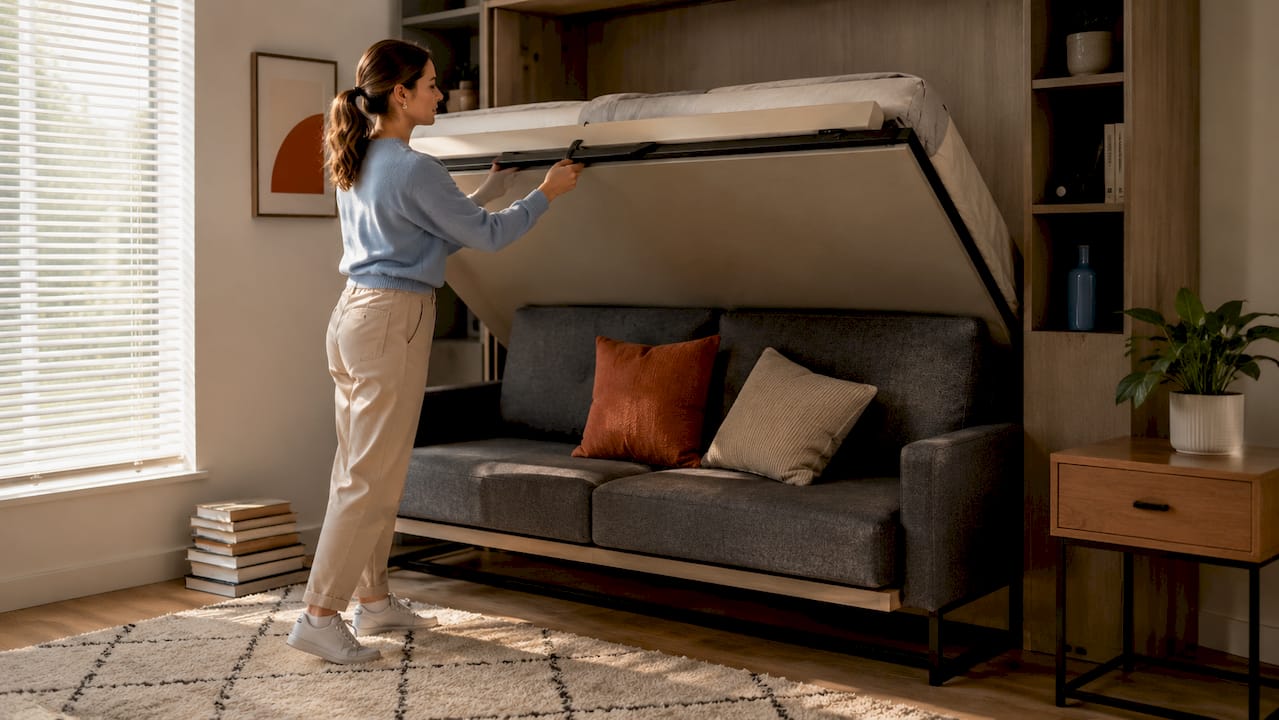
Convertible furniture design is the practice of engineering pieces that transform between two or more functions, maximising utility and space within a single room. Also known as multifunctional or transformable furniture, this discipline sits at the intersection of interior design and practical living. A sofa bed, for instance, serves multiple functions as both seating and sleeping accommodation, while an ottoman doubles as a coffee table and hidden storage. For homeowners and renters navigating compact flats or multi-use rooms, convertible furniture design offers a considered solution that refuses to sacrifice elegance for practicality.
What is convertible furniture design and what types exist?
Convertible furniture design covers a broad spectrum of pieces, each engineered around a specific transformation mechanism. Understanding the main categories helps you select the right piece for your space and lifestyle.
Sofa beds and sleeper sofas are the most widely recognised type. A sofa bed hides a metal frame and mattress within its base, unfolding to become a full sleeping surface. The Castro Convertible, introduced in 1931, is among the earliest influential designs of this kind. Modern versions include pullout frames, futon styles, and click-clack mechanisms that recline flat with a single motion.
Extendable and foldable tables serve dining rooms and kitchens where space is at a premium. A compact table seats two at rest but extends to accommodate six or eight guests. Foldable chairs follow the same logic, stacking or folding flat when not in use.

Modular seating and wall beds represent the more architectural end of convertible furniture. Modular sofas reconfigure into chaises, corner units, or individual chairs depending on the room’s demands. Wall beds, sometimes called Murphy beds, fold flush against the wall and free up the entire floor area during the day.

Combination pieces with hidden storage are perhaps the most underappreciated category. Beds with integrated drawers, ottomans with lift-up lids, and storage compartments built into seating reduce the need for additional furniture entirely.
| Type | Primary function | Secondary function | Best suited to |
|---|---|---|---|
| Sofa bed | Seating | Sleeping | Living rooms, studios |
| Extendable table | Compact dining | Expanded entertaining | Kitchens, dining rooms |
| Wall bed | Floor space | Sleeping | Bedrooms, home offices |
| Modular sofa | Seating | Room reconfiguration | Living rooms |
| Storage ottoman | Seating or surface | Hidden storage | Any room |
What are the benefits of convertible furniture for small spaces?
The core benefit of space-saving furniture solutions is straightforward: one piece replaces two or three. That reduction in furniture count directly frees floor area, which makes rooms feel larger and less cluttered. Small apartments adapt more fluidly to daily needs when each piece serves more than one purpose, without compromising comfort or visual appeal.
The practical advantages extend well beyond square footage:
- Versatility throughout the day. A sofa table converts into a work-from-home desk by morning and returns to a display surface by evening, adapting to your schedule rather than dictating it.
- Reduced clutter. Hidden storage integrated into beds and ottomans removes the need for standalone wardrobes or shelving units, keeping surfaces clear.
- Cost efficiency. Purchasing one well-made convertible piece costs less over time than buying separate items for each function.
- Aesthetic coherence. A curated selection of convertible pieces, chosen with consistent materials and finishes, produces a calmer, more considered interior than a room crowded with single-use furniture.
Pro Tip: Pair a storage ottoman with a hidden storage furniture strategy throughout your home. When every piece conceals something, the overall visual result is a room that feels deliberately styled rather than merely organised.
How do you balance design aesthetics and functionality?
The finest convertible furniture optimises small spaces without sacrificing design aesthetics. That balance is not accidental. It requires deliberate choices about proportion, material, and ease of use.
Slim, minimalist profiles are the most reliable starting point. Selecting pieces with clean lines and slim silhouettes prevents visual clutter and makes rooms appear larger. Materials such as acrylic and glass reduce visual bulk further, which is particularly valuable in rooms under 30 square metres.
Material quality determines longevity. A sofa bed with a durable upholstered frame and a solid metal conversion mechanism will outlast a cheaper alternative by years. Look for hardwood or powder-coated steel frames, and choose upholstery fabrics rated for high daily use. The conversion mechanism itself deserves scrutiny: stiff or complicated mechanisms discourage daily use and defeat the purpose of the piece.
Scale matters as much as style. A wall bed that fills an entire wall may offer generous sleeping space but can overwhelm a narrow room. Measure your available floor area before selecting any convertible piece, and account for the clearance needed during conversion.
Pro Tip: Choose contemporary sofa designs with modular elements where possible. Modular pieces adapt as your living situation changes, offering long-term value that fixed designs cannot match.
Convertible furniture ideas for every room in the home
Convertible furniture enables rooms to switch functions quickly, adding genuine flexibility to every area of the home. The right piece depends on how each room is used throughout the day.
| Room | Convertible furniture idea | Key benefit |
|---|---|---|
| Living room | Sofa bed or modular seating | Guest accommodation without a spare room |
| Bedroom | Bed with integrated storage drawers | Replaces a chest of drawers entirely |
| Kitchen/dining | Extendable table and foldable chairs | Seats two daily, eight for entertaining |
| Home office | Fold-down wall desk | Full workspace that disappears when closed |
| Studio flat | Wall bed with integrated shelving | Reclaims the entire floor area by day |
Practical tips for integrating these pieces without disrupting your interior:
- Choose a consistent finish across all convertible pieces to create visual unity.
- Position wall beds and fold-down desks on the same wall as built-in shelving to consolidate the functional zone.
- Select a sofa bed with the same upholstery colour as your existing soft furnishings to maintain a cohesive palette.
- Use modular sofa configurations that can be rearranged as your needs evolve, rather than fixed corner units.
- Avoid placing convertible pieces in circulation routes where their transformation would block movement.
The small space furniture strategy that works best treats each room as a series of zones rather than a fixed layout. When furniture can shift function, zones can shift too.
Key takeaways
Convertible furniture design delivers the most value when each piece is chosen for both its transformation mechanism and its visual contribution to the room.
| Point | Details |
|---|---|
| Core definition | Convertible furniture transforms between two or more functions to maximise space and utility. |
| Most versatile types | Sofa beds, extendable tables, wall beds, and storage ottomans cover the majority of household needs. |
| Primary benefit | One well-chosen piece replaces multiple single-use items, reducing clutter and cost. |
| Design principle | Slim profiles, quality materials, and smooth mechanisms define pieces worth investing in. |
| Room application | Every room benefits from at least one convertible piece, from fold-down desks to beds with storage. |
Why convertible furniture has changed how I think about home design
I spent years advising homeowners who believed that small rooms were simply a limitation to accept. That view shifted the moment I saw a well-designed wall bed installed in a studio flat in Shoreditch. By day, the room felt like a generous sitting room. By night, it became a proper bedroom. Nothing was compromised.
The growing prevalence of remote work has accelerated this shift considerably. When a home must serve as office, guest room, and living space simultaneously, single-use furniture becomes a liability. Convertible pieces are not a compromise. They are a more considered approach to how we actually live.
The pitfall I see most often is prioritising price over mechanism quality. A sofa bed that requires two people and ten minutes to convert will simply stop being used as a bed. The conversion must be effortless, or the second function becomes theoretical. Invest in the mechanism first, and the aesthetics second.
Convertible furniture is, at its best, a lifestyle choice. It reflects a willingness to think carefully about space, to resist accumulation, and to live with intention. That is a philosophy worth building a home around.
— V
BraysUK: multifunctional furniture for modern living
BraysUK curates furniture collections built around the principle that style and practicality are not in opposition. For homeowners and renters who want to make every square metre count, the range of multifunctional furniture for small spaces brings together pieces that convert, store, and impress in equal measure.

From sofa beds with premium upholstery to extendable dining tables with refined finishes, each BraysUK piece is selected for its conversion quality, material durability, and visual elegance. The collection is designed for those who refuse to choose between a beautiful home and a practical one. If you are ready to rethink how your rooms work, BraysUK offers the pieces to make that vision a reality.
FAQ
What is convertible furniture design in simple terms?
Convertible furniture design is the creation of pieces that serve two or more functions by transforming physically. Common examples include sofa beds, extendable tables, and wall beds.
How does a sofa bed work?
A sofa bed conceals a metal frame and mattress within its base, which unfolds to create a sleeping surface. Modern versions use pullout, futon, or click-clack mechanisms for ease of conversion.
Is convertible furniture worth it for small apartments?
Convertible furniture is particularly well suited to small apartments because a single piece replaces multiple items, freeing floor space and reducing visual clutter without sacrificing comfort.
What materials work best for convertible furniture?
Hardwood or powder-coated steel frames offer the best durability for convertible pieces. For upholstery, high-use fabrics rated for daily wear maintain their appearance far longer than standard options.
What is the difference between modular and convertible furniture?
Modular furniture reconfigures by rearranging individual sections, while convertible furniture transforms a single piece into a different function. Both approaches serve space-saving goals, and many pieces combine both qualities.