
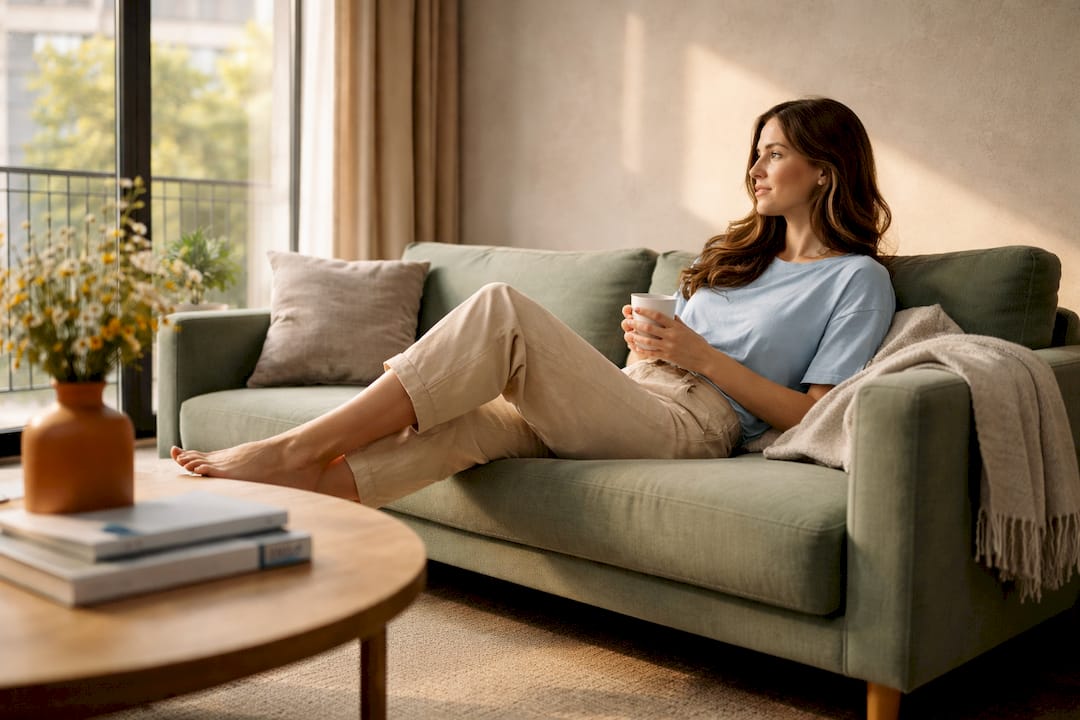
Low-profile sofas are defined by their reduced back height, slim silhouette, and often raised legs, all of which work together to create a sense of openness and refined modernity in living spaces. Understanding why low-profile sofas suit modern spaces comes down to a single design principle: less visual mass means more perceived room. Whether you are furnishing a compact city flat or an open-plan family home, this category of seating, sometimes called platform or contemporary low-back seating in the trade, delivers both aesthetic clarity and practical spatial advantage. In 2026, shoppers are increasingly drawn to these pieces precisely because they offer a premium look without the visual weight of traditional upholstered furniture.
Why low-profile sofas suit modern spaces better than traditional designs
The most compelling reason to choose a low-profile sofa is what it does to your room’s visual horizon. Lowering the visual horizon preserves sightlines across the room, preventing the sofa from acting as a visual barrier that segments the space. The eye travels smoothly from one wall to the other, creating a sense of continuity that a high-backed sofa simply cannot offer.
More visible wall space above the sofa makes ceilings appear taller. This is not a minor effect. Ceilings feel higher and the room less segmented when the sofa occupies less of the vertical plane, which is why interior designers consistently specify low-profile pieces for rooms with standard ceiling heights.

The key design traits that produce this effect include a lower back height, slim or absent arms, and raised legs that expose the floor beneath the frame. Each element reduces what designers call “visual mass,” the sense of weight and solidity that makes furniture feel imposing. Raised legs, in particular, allow light to pass beneath the sofa, compounding the feeling of airiness throughout the room.
| Feature | Low-profile sofa | Traditional high-back sofa |
|---|---|---|
| Back height | Low, preserves sightlines | High, creates visual barrier |
| Visual mass | Minimal, feels light | Substantial, anchors heavily |
| Ceiling perception | Appears taller | Can feel lower |
| Room segmentation | Minimal | Pronounced |
| Floor visibility | High (raised legs) | Low (skirted or blocked) |
Pro Tip: Pair a low-profile sofa in a pale, light-reflective fabric with a low-slung coffee table to maintain a consistent visual horizon across the entire seating area, amplifying the sense of space.
How do low-profile sofas benefit different modern living arrangements?
The advantages of low-profile seating are not limited to small rooms, though they are particularly transformative there. Small and narrow rooms benefit most directly, as the reduced visual bulk maximises the sense of openness and allows natural light to circulate more freely around the space.

In open-plan layouts, which now define a significant proportion of new-build and renovated UK homes, these sofas reduce visual barriers between zones without sacrificing definition. Modular low-profile sofas enable flexible layouts and fluid social interaction spaces, making them the natural choice for living areas that also serve as dining or working zones.
The benefits extend to how a room handles light. A low-profile sofa placed beneath a window does not block natural light from spreading across the floor, which matters enormously in rooms with moderate or north-facing light. Paired with warm ambient lighting at floor level, the effect is a calm, breathable atmosphere that feels genuinely luxurious.
From a stylistic perspective, the minimalist design philosophy that underpins low-profile furniture aligns precisely with contemporary, Japandi, and Scandinavian interior trends that continue to dominate UK home design in 2026. The clean lines and restrained proportions of these sofas complement rather than compete with architectural features, artwork, and statement lighting.
- Choose upholstery in light neutrals such as oatmeal, warm white, or soft grey to reflect light and reduce visual weight further.
- Opt for performance fabrics or leather finishes in households with children or pets, as these combine durability with the sleek aesthetic low-profile designs demand.
- Avoid heavy, dark velvets on very low frames in small rooms, as the combination can read as dense and grounding rather than airy.
- Select raised-leg models over skirted bases to maintain floor visibility and the illusion of space beneath the sofa.
Pro Tip: In a room with limited natural light, choose a sofa in a warm ivory or camel tone rather than a cool grey. Warm tones reflect ambient light more generously and prevent the space from feeling flat.
Low-profile vs modular vs high-back sofas: which suits your lifestyle?
Modern living rooms increasingly favour modular and low-profile seating for adaptability, comfort, and openness compared to traditional high-backed sofas. Understanding the distinctions helps you choose with confidence rather than compromise.
Modular sofas offer configurable layouts, allowing you to add, remove, or rearrange sections as your household evolves. When modular designs also incorporate low-profile proportions, as seen in pieces like the Ciello modular sofa and the Dawson extended silhouette, you gain both spatial elegance and practical flexibility. This combination is particularly well suited to growing families or those who move frequently.
High-back sofas, by contrast, deliver superior lumbar and neck support and create a cocooning sense of enclosure that suits dedicated media rooms or formal sitting rooms where visual openness is less of a priority. If you are comparing oversized sofa options for a snug, intimate space, a high-back design may serve you better than a low-profile alternative.
| Sofa type | Best for | Visual effect | Flexibility |
|---|---|---|---|
| Low-profile fixed | Open-plan, compact rooms | Maximum openness | Low |
| Low-profile modular | Adaptable modern homes | Openness with flexibility | High |
| High-back fixed | Media rooms, formal spaces | Enclosure, warmth | Low |
| High-back modular | Large family rooms | Defined zones | Medium |
Sofas with lower backs allow the eye to travel smoothly across the space, creating emotional ease alongside visual flow. This reduced visual interruption is particularly vital in modern open-plan and multi-functional spaces where the living area must feel welcoming rather than divided.
Practical tips for selecting and styling low-profile sofas
Choosing the right low-profile sofa begins with measuring your room’s proportions carefully. A sofa that is too wide for a narrow room will negate the spatial benefits of its low height, so prioritise width-to-room ratio before considering any other feature.
- Measure the visual horizon first. Stand at your room’s entrance and note the height at which furniture interrupts your sightline. Aim for a sofa back that sits below this line to preserve the open view.
- Prioritise frame quality. A low-profile design places the frame’s construction under greater scrutiny because there is less upholstery to conceal structural weaknesses. Understanding how frame construction determines sofa lifespan will help you invest wisely.
- Choose complementary furniture at consistent heights. A low-profile sofa paired with a tall sideboard creates visual imbalance. Keep surrounding pieces at a similar or graduated height to maintain harmony.
- Style with cushions deliberately. Two or three cushions in contrasting textures add warmth without adding visual bulk. Avoid over-stuffing a low-profile sofa with cushions, as this defeats the purpose of its restrained proportions.
- Consider the room’s colour palette holistically. Appropriate layout and colour choices compound the spacious feeling that raised legs and slim arms create.
Pro Tip: Low-profile sofas tend to be more affordable than traditional upholstered designs while delivering a contemporary look. This makes them an excellent entry point for shoppers exploring the affordable luxury furniture category without overextending their budget.
Key takeaways
Low-profile sofas suit modern spaces because their reduced visual mass, lower back height, and raised legs preserve sightlines, enhance perceived ceiling height, and create a calm, breathable atmosphere that traditional high-back designs cannot replicate.
| Point | Details |
|---|---|
| Visual horizon management | Lowering the sofa’s back height preserves sightlines and prevents room segmentation. |
| Ceiling height illusion | Reduced visual mass and raised legs make ceilings appear taller and rooms feel larger. |
| Open-plan compatibility | Low-profile designs reduce visual barriers between zones without sacrificing spatial definition. |
| Styling precision matters | Light upholstery, raised legs, and consistent furniture heights compound the spacious effect. |
| Modular options add flexibility | Low-profile modular sofas combine spatial elegance with adaptable layouts for evolving households. |
Why I believe low-profile sofas are the defining furniture choice of this decade
Having observed how people actually live in their homes, rather than how they imagine they will live in them, I have come to a firm conclusion: most people buy sofas that are too tall for their rooms. The instinct to choose a sofa that feels substantial in a showroom consistently works against the room it is placed in. A high-backed sofa that commands attention in isolation becomes a wall once it is against your living room wall.
What strikes me most about low-profile designs is their emotional generosity. Refined simplicity creates balanced and emotionally comfortable living areas, and this is something you feel before you consciously register it. Rooms with low-profile seating feel calmer, more considered, and more genuinely welcoming than rooms dominated by upholstered bulk.
The counter-intuitive truth is that a smaller-looking sofa often makes a room feel more luxurious, not less. When the space around the sofa breathes, the quality of the piece itself becomes more visible. The fabric, the leg detail, the cushion arrangement: all of these read more clearly when they are not competing with sheer volume. For anyone serious about creating a modern interior that feels as good as it looks, the low-profile sofa is not a compromise. It is the correct choice.
— V
Discover BraysUK’s curated collection for modern homes
BraysUK brings together a meticulously chosen selection of contemporary sofas and living room furniture designed to transform your space with effortless elegance. Whether you are furnishing a compact flat or reimagining an open-plan family room, the BraysUK collection offers pieces that balance refined aesthetics with lasting durability.

For those working with limited square footage, BraysUK’s small space furniture guide offers practical, room-by-room strategies for selecting and placing furniture that maximises both style and function. You will also find detailed sofa styling advice to help you position your new sofa as a genuine focal point rather than simply a place to sit. BraysUK is committed to helping you make confident, considered choices that reflect your taste and serve your lifestyle for years to come.
FAQ
What makes a sofa low-profile?
A low-profile sofa is characterised by a reduced back height, slim or absent arms, and often raised legs that expose the floor beneath the frame. These design traits reduce visual mass and make interiors feel lighter and more open.
Are low-profile sofas comfortable for everyday use?
Yes, provided the seat depth and cushion density are appropriate for your body and lifestyle. Many contemporary low-profile models, including modular options like the Ciello and Dawson ranges, are designed specifically for daily comfort alongside their visual appeal.
Do low-profile sofas work in large rooms?
Low-profile sofas work well in large rooms when paired with appropriately scaled furniture and a considered layout. In very large spaces, a modular low-profile configuration maintains the open aesthetic while providing sufficient seating volume.
Are low-profile sofas a good choice for small flats?
Low-profile sofas are particularly well suited to small flats because they maintain visual flow and reduce barriers between zones, making compact rooms feel significantly more spacious than high-back alternatives.
How do I style a low-profile sofa without it looking sparse?
Layer textures through cushions and a throw, introduce a low-slung coffee table at a consistent height, and add a statement rug to anchor the seating area. This creates warmth and depth while preserving the clean, open proportions that make low-profile designs so effective.
One Reply to “Why low-profile sofas suit modern spaces”