
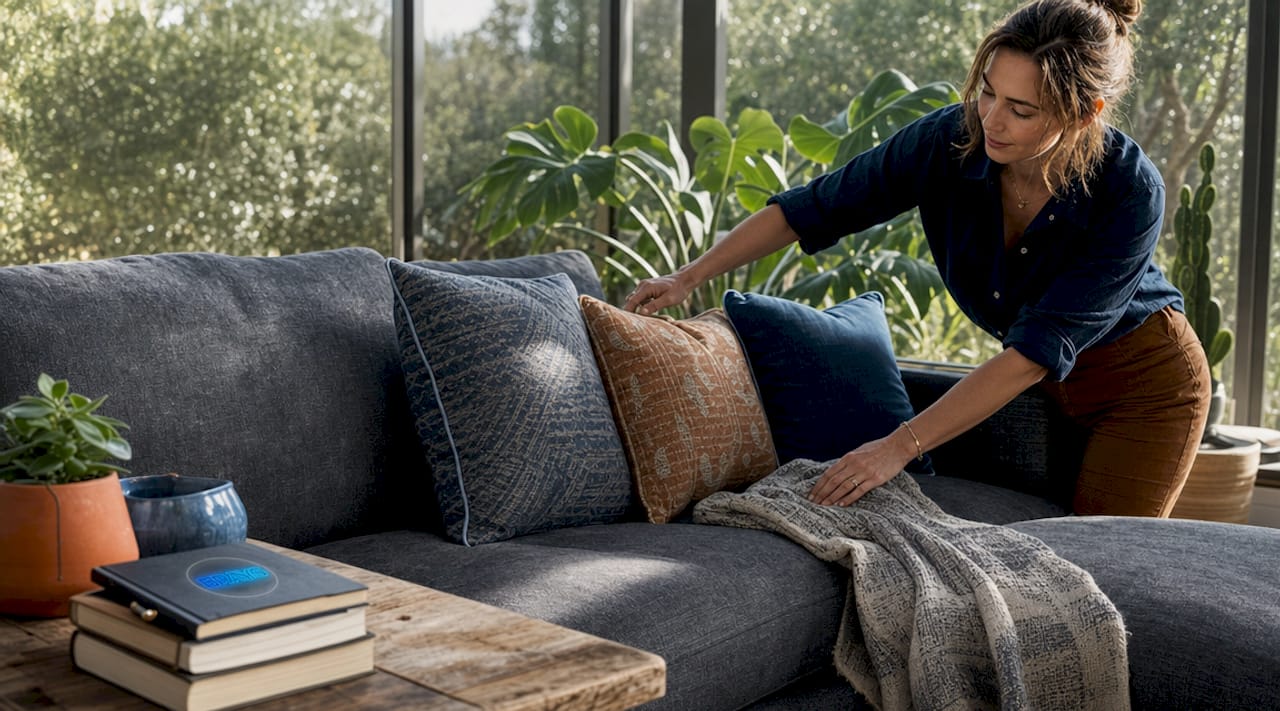
Soft furnishings are defined as the textile-based elements of a room, including curtains, cushions, rugs, throws, and upholstered furniture, and they are the single most impactful category of change you can make to a living room without structural work. Interior designer Ilse Crawford has long argued that tactile comfort is as important as visual beauty in residential spaces, and the science supports her position. The benefits of soft furnishings span acoustic performance, thermal regulation, air quality, and emotional well-being, making them far more than decorative accessories. This article explains precisely why soft furnishings transform living rooms and how to use them with intention.
Why soft furnishings transform living rooms: the environmental case
The practical, measurable effects of textiles on a living room’s environment are often underestimated. Soft furnishings moderate multiple environmental factors simultaneously, including heat retention, sound absorption, airflow disruption, and lighting softness, contributing to a holistic sense of comfort that no single piece of furniture can replicate alone.
Acoustic absorption
Heavier fabrics like velvet and thick wool provide superior sound absorption and thermal insulation, particularly when curtains are hung with an air gap of 90 to 110mm behind them. This means a room fitted with floor-length velvet curtains and a wool rug will feel noticeably quieter than the same room with bare floors and blinds. Upholstered furniture, heavy curtains, and rugs absorb sound and reduce echo, lowering footstep noise and improving overall calmness. Crucially, laboratory acoustic test results tend to underestimate real-world performance, which improves further with layered fabric treatments and installation techniques that incorporate air gaps and fullness.
Thermal comfort
Soft textiles moderate heat loss, making rooms feel warmer even at the same thermostat setting by reducing cold surface exposure and lowering radiant heat loss from the body. A well-dressed window with lined curtains can meaningfully reduce the chill felt near glazing during winter months. Layering a rug over hard flooring adds a further thermal barrier underfoot, which is particularly valuable in ground-floor rooms or properties with suspended timber floors.
Indoor air quality
Soft furnishings act as the home’s largest passive air filter, trapping particulate matter and allergens from the air. However, material choice matters considerably: indoor VOC levels can be up to 10 times higher than outdoor levels, and certain synthetic fabrics or chemically treated textiles contribute to this. Choosing natural fibres such as linen, cotton, or untreated wool reduces VOC risk while retaining the air-filtering benefit.
Key environmental benefits at a glance:
- Velvet and wool curtains with air gaps deliver the strongest acoustic and thermal performance
- Lined curtains reduce radiant heat loss near windows in winter
- Rugs over hard flooring add thermal insulation and reduce impact noise
- Natural fibre textiles trap allergens without contributing to VOC levels
- Layering multiple textile types compounds all environmental benefits
How do soft furnishings enhance visual and tactile appeal?
The impact of soft furnishings on a room’s appearance and sensory atmosphere is immediate and profound. Hard surfaces such as timber floors, plaster walls, and glass create visual clarity but also a certain coldness. Textiles interrupt that coldness with warmth, depth, and personality.
Textural layering with bouclé, linen, and velvet improves sensory balance, signalling warmth and safety psychologically. Designers consistently report that rooms with diverse textures feel less clinically detached, and the 2026 textural layering trend reflects a broader cultural appetite for spaces that feel emotionally grounding rather than merely photogenic. Combining a linen sofa with a bouclé cushion, a jute rug, and velvet curtains creates a layered sensory experience that no single material achieves alone.
Colour plays an equally decisive role. Warm-toned textiles in terracotta, ochre, or deep teal draw the eye and create focal points, while neutral palettes in oatmeal, stone, or soft grey allow furniture to breathe. The combination of rugs, curtains, and cushions transforms the perception of a space effectively, reducing visual harshness and supporting calmer sensory experiences. For those exploring Afrocentric living room decor, bold textile patterns and rich colour combinations demonstrate precisely how soft furnishings carry cultural identity and visual power simultaneously.

Soft furnishings are also the most flexible design tool available. Unlike paint or flooring, cushions, throws, and rugs can be changed seasonally or whenever your taste evolves, without cost or commitment.
What should you consider when choosing textiles for your space?
Selecting the right soft furnishings requires balancing aesthetics, practicality, and the specific demands of your living room and lifestyle.

| Fabric type | Best for | Consideration |
|---|---|---|
| Velvet | Acoustic absorption, luxury feel | Requires regular brushing; not ideal for high-traffic homes with pets |
| Linen | Breathable, natural, low VOC | Creases easily; suits relaxed or Scandinavian-inspired schemes |
| Wool | Thermal insulation, durability | Heavier weight; excellent for rugs and curtains in cooler rooms |
| Bouclé | Textural depth, contemporary look | Less durable under heavy use; best for accent cushions or low-use sofas |
| Synthetic blends | Budget-friendly, easy-care | May contribute to VOC levels; choose low-emission certified options |
For minimalist interiors, high-quality neutral-toned textiles provide the luxury and depth that spare schemes require to avoid feeling sterile and unfinished. A single oversized linen cushion or a well-chosen wool throw can do more for a minimalist room than a dozen decorative objects. Maximalist and eclectic schemes, by contrast, benefit from pattern mixing and layering across multiple textile categories simultaneously.
Renters have particular reason to prioritise soft furnishings. Soft furnishings are flexible and removable, allowing personalisation without violating lease agreements. A renter can transform a bland, magnolia-walled living room with a statement rug, layered cushions, and floor-length curtains, then take every piece to the next property. For practical guidance on making the most of limited or rented spaces, BraysUK’s guide to multifunctional furniture for small spaces pairs well with a considered textile approach.
Pro Tip: When changing your scheme seasonally, swap heavy wool throws and velvet cushions for lightweight linen and cotton in warmer months. You retain the layered look while adjusting the thermal weight of the room.
What are the most effective ways to layer soft furnishings?
A structured layering approach produces the most cohesive and comfortable results. Follow this sequence for a living room that feels considered rather than cluttered:
- Base upholstery first. Your sofa fabric sets the dominant texture and colour. Choose a fabric that works with your lifestyle, whether that is a performance weave for families or a plush velvet for a more formal sitting room.
- Anchor with a rug. A rug defines the seating zone, adds thermal and acoustic insulation, and grounds the colour palette. In open-plan areas, rugs are the primary tool for creating distinct zones without physical dividers.
- Frame with curtains. Floor-length curtains add height, warmth, and acoustic mass. Hang them as high and wide as the wall allows to maximise both visual impact and thermal performance.
- Layer cushions with intention. Use three to five cushions in varying sizes and textures. Combine a plain base cushion with a textured or patterned accent to add depth without visual noise.
- Add a throw as the final layer. A throw draped over the arm or back of a sofa introduces a fifth texture and signals comfort. It also serves a practical function on cooler evenings.
Maintenance is non-negotiable if you want to retain the health benefits of your textiles. Regular deep cleaning is required to maintain air-filtering benefits and avoid allergen release. Vacuuming alone is insufficient; cushion covers, throws, and curtains need periodic washing or professional cleaning to function as genuine air filters rather than allergen reservoirs.
Pro Tip: Rotate cushion covers and throws through a wash cycle every six to eight weeks. This simple habit preserves indoor air quality and keeps textiles looking fresh far longer.
Key takeaways
Soft furnishings transform living rooms by simultaneously improving acoustic comfort, thermal performance, air quality, visual depth, and emotional warmth, making them the most versatile investment in any home.
| Point | Details |
|---|---|
| Environmental performance | Velvet, wool, and layered textiles reduce echo, retain heat, and filter airborne particulates. |
| Sensory and visual depth | Combining bouclé, linen, and velvet creates warmth and prevents rooms feeling clinical or sterile. |
| Fabric selection matters | Natural fibres reduce VOC risk; fabric weight determines acoustic and thermal gains. |
| Renters’ best tool | Soft furnishings personalise spaces without permanent changes, making them ideal for rented homes. |
| Maintenance is essential | Deep cleaning every six to eight weeks preserves air-filtering benefits and prolongs textile life. |
The case for putting softness first
Most people approach a living room refresh by thinking about furniture first and textiles as an afterthought. In my experience, that order produces rooms that look complete but never quite feel right. The sofa might be beautiful, but if the floor is bare, the windows are undressed, and the cushions are sparse, the room will still feel cold and acoustically harsh.
What I find genuinely surprising is how much of a room’s perceived quality comes from textile weight and layering rather than the price of individual pieces. A mid-range sofa dressed with well-chosen velvet cushions, a generous wool throw, and floor-length linen curtains will outperform an expensive sofa sitting alone in a bare room every time. The textiles do not just decorate the sofa. They complete the room.
The flexibility argument is also underrated. You can repaint a room once every few years. You can restyle it with textiles every season, every mood, every life stage. That adaptability has real value, particularly for renters who cannot alter their walls or floors. Soft furnishings are not a compromise. They are the most responsive and personal design tool available to you.
— V
Transform your living room with BraysUK
BraysUK understands that a truly comfortable living room is built from the inside out, with quality textiles and furnishings that work together rather than in isolation.

BraysUK’s curated selection of sofas, upholstered pieces, and living room accessories is designed to complement a layered textile approach, combining contemporary design with lasting durability at accessible prices. Whether you are a homeowner investing in a long-term scheme or a renter seeking adaptable, removable styling solutions, BraysUK offers pieces that anchor a room beautifully. Explore how bedroom furniture affects daily comfort for further guidance on how considered furnishing choices improve well-being throughout the home, and browse BraysUK’s living room range to find your starting point.
FAQ
What are soft furnishings in a living room?
Soft furnishings are the textile-based elements of a room, including curtains, cushions, rugs, throws, and upholstered furniture. They differ from hard furnishings such as tables and shelving in that they add tactile comfort, acoustic absorption, and visual warmth.
Do soft furnishings actually improve sound quality in a room?
Yes. Upholstered furniture, heavy curtains, and rugs absorb sound and reduce echo, with heavier fabrics like velvet and wool delivering the strongest acoustic performance, particularly when curtains are installed with an air gap behind them.
Are soft furnishings suitable for minimalist interiors?
Soft furnishings are particularly important in minimalist interiors. High-quality neutral-toned textiles add the tactility and depth that spare schemes require to avoid feeling sterile, without compromising the clean aesthetic.
Can renters use soft furnishings to personalise their homes?
Soft furnishings are the ideal tool for renters because they are entirely removable and require no permanent alterations. Rugs, curtains, cushions, and throws can transform a rented living room completely and travel with you to your next home.
How often should soft furnishings be cleaned?
Regular deep cleaning is required every six to eight weeks to maintain the air-filtering benefits of textiles and prevent allergen build-up. Vacuuming alone is insufficient for cushion covers, throws, and curtains.