Modern living room with sleek furniture and natural lighting

Top 5 wikipedia.org Alternatives for Modern Furniture 2026

Finding a modern furniture retailer that balances design quality, price transparency and consistent service remains challenging for UK and North American buyers. Well-known chains often sacrifice customisation, reliable delivery or sustained durability, leaving shoppers caught between mass-market compromise and luxury markup. This comparison weighs catalogue breadth, support, aftercare and true cost at five direct-to-consumer and high-street modern furniture retailers so you can choose one that aligns with your home and project needs.

Table of Contents

Brays UK

https://braysuk.com

At a Glance

VAT exemption for long-term illness applies to qualifying purchases, which can materially reduce the cost of a medically specified bed. Brays UK specialises in electric adjustable beds and support mattresses made to order in the UK, pairing traditional craftsmanship with modern adjustable bases.

Core Features

Brays UK combines specialist sleep hardware with customer-facing support and custom options.

  • Electric adjustable bases with remote control functions for personalised sleeping positions.
  • Memory and pocket spring support systems that target pressure relief and spinal alignment.
  • Lumbar adjusters for targeted firmness changes where you need them most.
  • Made-to-order choices on fabrics and features, plus warranty cover and VAT exemption assistance for qualifying customers.

Key Differentiator

A focused product set for medical and mobility needs. Brays UK centres its range on health-orientated adjustable beds that can be tailored in firmness, support system and base configuration while offering VAT relief routes for long-term illness.

Pros

  • Wide selection of adjustable beds and mattresses suited to mobility and health requirements, helping care providers and households find specific support combinations.
  • Advanced support choices such as pocket springs and memory foam deliver layered cushioning and targeted rebound for back pain and pressure relief.
  • Customisable firmness and fabric options let you match aesthetics and therapeutic needs at the point of order rather than accepting off-the-shelf limits.
  • Warranty provision and made-to-order production imply attention to durability and build quality, which matters if you see a bed as a multi-year health investment.
  • The product range aligns with BraysUK’s broader service promise to combine contemporary design, lasting durability and everyday functionality for modern living spaces.

Cons

  • Higher price points relative to budget mattress retailers mean some customers will find the range unaffordable; the premium positioning reflects customisation and medical support features rather than mass-market pricing.

Who It’s For

Health-conscious individuals, older adults and care providers who prioritise adjustable support, pressure relief and tailor-made options. Buyers who value craftsmanship, durable build and the possibility of VAT relief will get the most from Brays UK.

Unique Value Proposition

The ability to buy an electric adjustable bed that is configured for medical needs and then reduced in cost through VAT exemption is the concrete advantage here. That combination changes the purchasing calculus for households and care facilities that require specific sleep ergonomics.

Real World Use Case

A customer with chronic back pain orders a pocket sprung mattress paired with an adjustable base and lumbar adjuster. They set a reclined sleeping position with a remote, gain better overnight support and access warranty cover and VAT exemption guidance during purchase.

Pricing

Most products sit in the £700–£1500 range with some premium models exceeding £2000. Prices normally include both mattress and base and Brays UK advertises VAT exemptions for qualifying customers which can reduce outlay for eligible buyers.

Website: https://braysuk.com

Wayfair

https://wayfair.com

At a Glance

Numerous vendors list home furnishings on Wayfair alongside a built-in Room planner and curated sale collections, making it a one-stop destination for visual shopping and bargain hunting.

The marketplace serves mainly North American and European customers and aims to combine variety with easy browsing and frequent promotions.

Core Features

Wayfair supports vendor onboarding and product listing management so suppliers can add items across categories.

It presents curated collections such as bestsellers, on-sale items and gift sets to simplify discovery for shoppers.

The site offers a Room planner, customer reviews and multiple payment and delivery options to help you visualise and buy with confidence.

Key Differentiator

A very wide product assortment sits beside visual tools and editorial curation, which lets you assemble a room and then hunt the sale for the lowest price. That mix of visual planning and scale is the service’s primary angle.

Pros

  • Vast selection across furniture, lighting and outdoor categories gives you more chance of finding a specific style or size.

  • Curated categories and filters make browsing faster than scrolling raw catalogue pages.

  • The Room planner helps you place a sofa, rug and table to check proportions before buying, reducing guesswork.

  • Frequent discounts and promotional events improve affordability for budget-conscious shoppers.

  • Straightforward order placement and clear product pages mean you can complete a full living room purchase in a few clicks.

Cons

  • Product quality varies widely across vendors, with many reviews citing durability problems and inconsistent build standards.

  • Customer service experiences are mixed; reports of slow or unhelpful support complicate returns and refunds.

  • Delivery outcomes are inconsistent, and damaged or incorrect items arrive often enough to affect overall satisfaction.

When It May Not Fit

If you need guaranteed premium materials or white glove delivery, Wayfair’s marketplace model can feel risky because quality and carrier reliability depend on individual sellers.

For projects that require tight deadlines and reliable aftercare, the variable support and delivery patterns make this a poor primary vendor.

Who It’s For

Decor enthusiasts, renters and budget-conscious homeowners who value choice and visual design tools. It suits people comfortable assessing reviews and tolerating some variability in finish and delivery for lower prices.

Real World Use Case

A homeowner planning a living room redo uses the Room planner to test a three-seat sofa and coffee table layout, buys both during a promotion with free shipping over the threshold, then contacts support about a damaged table top and navigates a slow returns process.

Pricing

Prices span affordable to mid-range depending on brand and category. The vendor advertises frequent discounts and promotional offers and free shipping over a certain threshold, for example around $35 on qualifying orders.

Website: https://wayfair.com

West Elm

https://westelm.com

At a Glance

Customer reviews frequently report delivery delays, damaged items and inconsistent quality — complaints that sit uneasily beside West Elm’s strong design reputation. West Elm trades broad, on-trend assortment for a shopping experience that can be unpredictable for some buyers.

Core Features

  • Curated collection emphasising contemporary furniture and home décor across living, bedroom and dining categories.
  • Exclusive collaborations with designers and artists that produce limited-run pieces and seasonal drops.
  • Special promotions and sales events that reduce mid-to-premium price points periodically.
  • Dedicated customer support for product questions, order tracking and returns.

Key Differentiator

The brand leans hard on contemporary styling and visible designer collaborations rather than commodity pricing. That focus gives you access to trend-led pieces and limited runs that are hard to replicate from mass-market retailers, making style the primary reason customers choose West Elm.

Pros

  • Strong visual identity helps you create cohesive modern interiors quickly; product photography and curated room sets make styling decisions easier.
  • A wide range of categories lets you source sofas, tables, lighting and accessories from a single brand without hunting multiple shops.
  • Collaborations expand choices with distinctive pieces you are less likely to find elsewhere, which suits design-led homes.
  • Regular sales reduce sticker shock on pricier items and make seasonal updates more affordable for design-conscious shoppers.
  • Customer support exists for order issues and enquiries, providing a single point of contact when problems occur.

Cons

  • Customer service response times and resolution rates are reported as inconsistent, which can leave buyers waiting for answers or refunds.
  • Delivery reliability problems include delays and damaged goods arriving — a risk for purchasers of large items like sofas.
  • Shipping and return fees are often high, adding materially to the final cost of an order.
  • Product quality is reported as variable; some items match the imagery, others fall short on finish or durability.

When It May Not Fit

If you live outside North America you may face limited shipping options or substantially higher costs, which reduces value for money. If flawless, on-time delivery and perfect product-match are non negotiable, West Elm’s service and consistency reports indicate this is not the safest choice.

Who It’s For

Style-conscious homeowners and interior designers seeking trendy, modern furnishings and statement pieces. Ideal when design and exclusivity matter more than the lowest price or guaranteed delivery precision.

Real World Use Case

A buyer orders a mid-priced sofa plus matching cushions during a sale. The sofa is a distinct design statement but arrives with a scuffed leg and a two-week delay. Customer service arranges a replacement, and the buyer absorbs higher return shipping while awaiting resolution.

Pricing

Most items sit in a mid-to-premium price bracket and individual product prices vary significantly by material and size. Shipping and handling fees typically apply and can add a noticeable sum to larger purchases.

Website: https://westelm.com

IKEA

https://ikea.com

At a Glance

Most categories at IKEA sit between US$10 and US$300, which explains why the brand relies on flat-pack supply chains to keep prices low. The company pairs mass distribution with a design language rooted in Scandinavian simplicity, while third-party reviews sometimes point to mixed quality and delivery problems.

Core Features

IKEA sells a wide product range covering furniture, lighting, textiles and homeware for rooms of every size.

IKEA supports online shopping with optional delivery and paid assembly services in many markets.

Sustainability sits on the product roadmap with recycled materials, energy-aware manufacturing and eco-friendly initiatives.

Regular themed collections and limited editions refresh the catalogue, while a large global store footprint makes in-person browsing possible.

Key Differentiator

The business model combines Scandinavian design with low prices through efficient manufacturing and flat-pack logistics. That supply chain focus lets IKEA offer recognisable, contemporary pieces at prices that most high-street competitors cannot match.

Pros

  • Affordable pricing makes furnishing accessible. For budget-conscious households the price range above lets you kit out a room without large upfront spend.

  • A clear, modern aesthetic simplifies decisions. The consistent look across ranges makes mixing items straightforward for a cohesive interior.

  • The catalogue breadth means you can furnish entire apartments or offices in a single shop visit or checkout.

  • Visible sustainability commitments give shoppers greener choices, from LED lighting to products using recycled fibre.

  • In-store staff generally help navigate choices and product availability, which speeds up large purchases or returns.

Cons

  • Product quality and durability can be mixed; some ranges feel short-lived compared with bespoke or higher-end manufacturers.

  • Delivery has frequent reports of delays or missing items, and those experiences are reflected in independent reviews.

  • Customer service interactions sometimes involve long waits and poor communication, creating friction when issues arise.

  • Customisation is limited for buyers seeking made-to-measure or artisan finishes; modular choices exist but full bespoke work is not the offer.

When It May Not Fit

If you need fully customised, handcrafted furniture with long lifespans, IKEA’s mass-produced ranges will disappoint. The product lines favour breadth and price over bespoke materials and joinery.

If you live outside IKEA’s core markets or in a rural region, delivery options and local stock can be restricted. That limitation affects people who cannot easily access a large store or who need rapid replacement parts.

Who It’s For

IKEA suits budget-conscious individuals, young professionals and families furnishing first homes or renting properties. It also works for offices seeking ergonomic basics at scale and for shoppers who accept self-assembly in exchange for lower prices.

Real World Use Case

A young professional orders an entire small flat’s furnishings online, schedules delivery and pays for assembly. Despite a short delay in delivery, the combination of low cost, modern design and on-call assembly produces a finished home quicker than sourcing from multiple suppliers.

Pricing

Most items fall in the US$10–US$300 bracket; delivery charges vary by region and service level. IKEA runs seasonal promotions and occasional reductions, but it does not operate subscription pricing or standard bulk-discount tiers.

Website: https://ikea.com

Article

https://article.com

At a Glance

Most categories on Article sit between $79 and $2,999, and the vendor offers free shipping on orders above $999, which makes larger living room or bedroom bundles noticeably cheaper to buy at one go. The retailer operates primarily across the US and Canada and sells direct to consumer to keep prices lower.

Core Features

Article maintains a broad catalogue that covers living rooms, bedrooms, dining, outdoor and decor, with curated bundle options to create a cohesive look quickly.

  • Bundled collections for cohesive styling and volume discounts.
  • 30 day satisfaction guarantee with straightforward returns.
  • Multiple financing lanes, including interest free plans, for larger purchases.
  • Contract grade and outdoor collections aimed at durability where required.

Key Differentiator

The clearest selling point is Article’s direct to consumer model paired with a focus on sleek minimalist design at accessible prices. That combination reduces markup and targets buyers who want modern style without boutique price tags, especially across North America.

Pros

  • Clean modern aesthetic appeals to buyers who prefer simple lines and neutral palettes, making coordination across rooms easier.

  • Direct manufacturer relationships translate into lower price points compared with many traditional retailers, particularly for bundled sets.

  • The catalogue includes both indoor and weather resistant outdoor options, so you can source complementary pieces for patios and terraces.

  • Customers frequently report positive experiences with packaging and assembly, and the company supplies clear instructions with most items.

  • Availability of contract grade pieces makes Article usable for designers specifying furniture for short term rental or hospitality projects.

Cons

  • Some third party reviews report inconsistent durability on certain mid price items, which suggests you should vet build materials for heavy use settings.

  • There are noted customer service gaps on warranty and defect claims, with some buyers describing slow responses.

  • Limited physical presence means you cannot always inspect finishes or sit in a sofa before purchase; returns add friction.

  • Delivery and assembly experiences vary by region and carrier, so timelines and service quality are not uniform.

When It May Not Fit

If you require a long term heirloom sofa for daily heavy use, Article’s mid market ranges may not meet your durability expectations. Likewise, customers outside the US and Canada will find shipping options limited and costs prohibitive. If you need immediate in person testing before purchase, this online first model will frustrate you.

Who It’s For

Design conscious homeowners and apartment dwellers in North America who want a modern minimalist look without the traditional retail markup. Also useful for interior designers seeking coordinated bundles and for buyers who prefer online shopping with financing options.

Real World Use Case

A first time flat owner selects a living room bundle, uses the site’s financing to spread the cost, and assembles the pieces over a weekend using the supplied guides. They then commission a short interior design session for styling advice and receive compliments on the cohesive aesthetic.

Pricing

Article lists most individual items from about $79 up to $2,999, with bundled collections discounted relative to single item purchases. Free shipping applies to orders above $999 and interest free financing is offered on qualifying purchases.

Website: https://article.com

Comparing Modern Furniture Retailers for Style and Functionality

When selecting a retailer to furnish your space, considerations of design, functionality, pricing, and service come to the fore. Here, we compare the offerings and unique strengths of Brays UK, Wayfair, West Elm, IKEA, and Article to identify distinguishing factors that may guide your choice.

Customisation and Quality of Offerings

Brays UK excels in offering customisable, made-to-order furniture solutions, particularly their adjustable electric beds and fine mattresses. This is tailored for individuals requiring medical support and specific ergonomic preferences. By stark contrast, Wayfair’s broad catalogue serves a general audience with a versatile range of options, albeit with a variability in quality owing to its marketplace model. For IKEA, the focus lies on affordability and ease of access, often leveraging flat-pack conveniences that might compromise on custom appeal. If uniqueness in design stands as your priority, West Elm provides curated contemporary pieces enriched by designer collaborations, appealing to style-conscious buyers.

Pricing and Accessibility

The pricing structures across these retailers show distinct differences in the trade-offs they present. IKEA targets affordability, making it a primary choice for budget-conscious buyers and those furnishing first homes or transient spaces like rented apartments. Meanwhile, Article’s mid-range pricing, paired with bundled options and financing, offers a balanced choice for modern aesthetics without premium pricing levels, suitable for scalable projects or room enhancement overhauls. The price range of Brays UK, reflecting its tailored craftsmanship and medical-grade options, positions it as a considered investment for long-term use.

Best Fit Scenarios

  • Choose Brays UK if you require customisable, high-quality adjustable beds and mattresses designed for ergonomic and medical support.
  • Opt for Wayfair when broad access to styles and competitive pricing are key priorities, balancing against quality variations.
  • Consider West Elm for a highly curated, design-led shopping experience to anchor statement furnishings in modern decor.
  • Select IKEA for cost-effective furnishing solutions, especially for initial home setups or swiftly staged projects.
  • Go with Article if cohesive, minimalist collections and transparent pricing are features you seek for stylish yet functional interiors.

Our Pick

For those whose requirements orbit around bespoke ergonomics paired with finely crafted build standards, Brays UK emerges as a compelling choice. Its unique ability to address specialised sleep and comfort needs solidifies its value proposition. However, customers focusing on broader home furnishing tasks with diverse visual objectives might explore alternatives such as Wayfair or West Elm for a wider service range.

Modern Furniture Retailers Comparison

Explore this comparison to identify the offering that best aligns with your preferences for bespoke furniture, affordability, quality, and convenience.

Product Key Differentiator Best For Pricing Notable Limitation
Brays UK Medical-specific customisable adjustable beds Individuals needing health-centric sleep options £700–£1500, premium models exceeding £2000 Premium pricing limits accessibility for some buyers
Wayfair Broad vendor network and extensive product assortment Shoppers seeking variety with budget options Affordable to mid-range Quality consistency issues across vendors
West Elm Trend-focused design with exclusive collaborations Homeowners prioritising modern, stylish interiors Mid-to-premium variety Delivery delays and high return costs reported
IKEA Scandinavian design paired with affordable flat-pack furniture Budget-friendly first-home furnishing US$10–US$300 Durability concerns for mass-produced items
Article Direct-to-consumer modern minimalist designs Design-oriented buyers in North America $79–$2,999, free shipping above $999 Inconsistent durability on mid-price items reported

Discover Stylish and Functional Furniture Beyond Wikipedia.org Alternatives

When searching for reliable and modern furniture options beyond generic Wikipedia.org alternatives, it can be challenging to find pieces that balance style, comfort and durability without overwhelming choices. BraysUK offers a tailored solution combining contemporary design with craftsmanship — perfect for those who want their home to reflect personal taste and stand the test of time.

Experience:

  • Carefully selected modern furnishings
  • Durable, premium-looking materials
  • Trusted customer service and smooth online purchase process

Explore BraysUK and transform your living space with pieces designed for both everyday use and lasting appeal. Don’t wait to take control of your home’s style and comfort. Visit now and discover how BraysUK can help you find furniture that fits your lifestyle seamlessly.

BraysUK offers furniture solutions designed just for you — build an elegant, welcoming home that feels truly yours today.

Browse all collections and take the next step towards a home that combines modern aesthetics with enduring quality.

Frequently Asked Questions

What are the benefits of BraysUK’s adjustable beds for individuals with long-term illnesses?

BraysUK offers customisable electric adjustable beds that provide targeted support for health concerns. With features like lumbar adjusters and memory foam systems, these beds deliver optimal pressure relief and spinal alignment tailored to individual needs. To experience these benefits, consider placing an order tailored specifically for your health requirements.

How does BraysUK’s pricing compare to competitors like Wayfair?

Wayfair is known for its vast selection at a variety of price points, often more budget-friendly. In contrast, BraysUK focuses on health-oriented adjustable beds that may range from £700 to £2000, reflecting the customisation and medical support features. For those prioritising tailored medical needs over cost, investing in BraysUK might be worthwhile.

Can I find warranty options with BraysUK’s products?

Yes, BraysUK offers warranty provision on their made-to-order beds, ensuring durability and support for a long-term investment. Their attention to build quality reinforces the confidence in their products for individuals viewing a bed as a health investment. It’s a good idea to review warranty details when making your choice.

What differentiates BraysUK from other modern furniture retailers?

BraysUK stands out with its focus on adjustable beds customised to medical and mobility needs. Meanwhile, retailers like IKEA offer general furniture with a broad appeal but lack the specific health-oriented features found in BraysUK’s products. This focus on medical support may be crucial for buyers with specific health concerns.

Are BraysUK beds suitable for both personal and professional care settings?

BraysUK beds are indeed suitable for both personal and professional care settings, thanks to their emphasis on pressure relief and customisable support. This makes them ideal for care providers seeking specific support combinations for patients. Professionals should consider BraysUK for care facilities that require tailored ergonomic solutions.

Man relaxing on modern ergonomic sofa

Comfort features modern sofas offer: 2026 guide

Modern sofas are defined by their capacity to support the body across multiple postures, from upright reading to fully reclined lounging, through a combination of ergonomic geometry, advanced cushioning, and durable fabric technology. The comfort features modern sofas offer have moved well beyond simple padding, with brands like Koala, Burrow, and DreamSofa setting new standards for how seating supports daily life. Whether you are furnishing a rented flat or a family home, understanding these features helps you invest wisely in a piece you will use every day.

1. Ergonomic sofa features that shape how you sit

Comfort is not only about cushion softness. It depends heavily on seat and back geometry that supports multiple sitting positions without strain. This is the most overlooked factor when people shop for sofas.

Close-up ergonomic sofa seat and cushions

Back height is the starting point. Emily Henderson’s guidance recommends a back height of 30 to 36 inches for versatile support, accommodating both upright posture and relaxed lounging without leaving your neck unsupported. A high back sofa comfort advantage is most apparent during extended reading or working sessions, where a lower back leaves the upper spine without contact.

Seat depth determines whether you sit in or on your sofa. A depth of around 21 to 23 inches suits upright sitting, while deeper seats of 24 to 27 inches invite a more reclined, casual position. Armrest height matters too: armrests set at roughly 25 inches from the floor allow your shoulders to drop naturally, reducing tension across the upper back.

  • Back height: 30 to 36 inches for full spinal contact
  • Seat depth: 21 to 23 inches for upright support; 24 to 27 inches for lounging
  • Armrest height: approximately 25 inches to prevent shoulder elevation
  • Seat height: 17 to 19 inches off the floor for comfortable entry and exit

Pro Tip: Before purchasing, sit in at least three postures: upright, curled sideways, and reclined. A sofa that fails in any one of these positions will frustrate you within weeks.

2. How sofa seat cushions and support systems sustain comfort

The internal construction of sofa seat cushions determines how a sofa feels after two years, not just two minutes. High-resilience foam combined with spring layers maintains support and prevents the premature sagging that plagues budget sofas.

Sinuous springs, also called serpentine springs, run across the seat base and distribute weight evenly. Edge support mechanisms, typically firmer foam borders around the cushion perimeter, prevent the seat from collapsing when you sit near the edge. Together, these systems create a firm yet supportive feel that does not bottom out under sustained use.

“Cushions that never need refluffing or adjusting, even under kids’ use, represent the gold standard of modern cushion engineering.” — HGTV Koala Torquay Modular Sofa Review 2026

The Koala Torquay modular sofa demonstrates this principle clearly. Its cushions hold shape without requiring adjustment, even after varied and heavy household use. This is the practical benefit of pairing high-resilience foam with a well-engineered suspension layer: the sofa performs consistently over time rather than requiring weekly maintenance.

  • High-resilience foam: retains its original density under repeated compression
  • Sinuous springs: distribute body weight across the full seat base
  • Edge support: firmer perimeter foam prevents collapse at seat edges
  • Shape retention: reduces the need for daily refluffing or reshaping

Replacing individual cushion cores using high-resiliency foam or ethical down alternatives extends a sofa’s lifespan without requiring full replacement. This modular approach to cushioning is both cost-effective and environmentally considered.

3. Performance fabrics and durable build features

The fabric covering your sofa is as much a comfort feature as the cushioning beneath it. Stain-resistant performance fabrics from brands like Burrow maintain both appearance and tactile comfort over years of daily use, which matters enormously for households with children or pets.

Performance fabrics typically use tightly woven synthetic or blended fibres that resist liquid absorption and surface soiling. Moisture-wicking fabrics take this further by drawing perspiration away from the body during extended sitting, keeping the seating surface cool and dry. This feature is particularly valued in warmer climates or in homes where the sofa serves as a primary relaxation space.

Frame construction underpins everything. DreamSofa uses aerospace-grade aluminium reinforcements alongside kiln-dried hardwood to prevent warping and extend structural lifespan. A sofa frame that flexes or creaks within a few years undermines every comfort feature built above it.

  1. Choose performance or stain-resistant upholstery for households with children or pets
  2. Look for moisture-wicking fabric properties if the sofa will be used for long periods daily
  3. Confirm the frame uses kiln-dried hardwood or reinforced materials for long-term rigidity
  4. Prioritise sofas with removable, washable covers for practical maintenance

Pro Tip: Run your hand firmly across the fabric grain. Quality performance upholstery resists pilling and returns to its original texture. Fabrics that snag or stretch immediately are unlikely to last.

4. Why choose sectional sofas for adaptable living spaces

Sectional sofas are the most practical format for modern living because they adapt to the space rather than forcing the space to adapt to them. DreamSofa’s modular ecosystem enables reconfiguration without tools, making it straightforward to reshape your seating arrangement as your household evolves.

For renters especially, this adaptability is significant. A sectional that reconfigures into a chaise, a standard sofa, or an L-shape can move between properties and fit different room layouts without requiring a new purchase. The comfort benefit is equally real: sectionals allow multiple people to sit in their preferred posture simultaneously, with one person upright and another fully reclined, without compromising either position.

The best sofas for relaxation in a family context are almost always sectionals, precisely because they offer enough surface area for varied use throughout the day.

5. Advanced features in luxury reclining and massage sofas

Luxury reclining sofas represent the most technologically advanced comfort features available in modern seating. Ergonomic recliner mechanisms support natural body alignment and reduce joint and spinal pressure, making them particularly beneficial for those who spend long hours seated or who experience lower back discomfort.

Adjustable lumbar support is a defining feature of premium recliners. Unlike fixed lumbar cushions, adjustable systems allow you to position support precisely at the curve of your lower spine, which varies between individuals. This personalisation transforms a recliner from a comfort indulgence into a genuinely therapeutic piece of furniture.

Massage sofas extend this further. Multiple massage modes with adjustable intensity and built-in heat therapy address muscle tension and improve circulation during extended rest. Brands like My Aashis combine these functions with ergonomic seating geometry, so the therapeutic benefit is not undermined by poor posture support.

  • Recliner mechanisms: support spinal alignment and reduce pressure on joints
  • Adjustable lumbar support: personalised positioning for individual spinal curves
  • Massage modes: variable intensity settings targeting different muscle groups
  • Heat therapy: built-in warmth that relaxes muscle tension during rest
  • Style integration: premium recliners now match contemporary living room aesthetics without sacrificing function

These features are most valuable for older adults, those with chronic back conditions, and anyone whose lifestyle involves prolonged periods of seated rest. The investment reflects both the mechanical complexity and the genuine health benefit these sofas deliver.


Key takeaways

The most comfortable modern sofas combine ergonomic seat geometry, high-resilience cushioning, and durable performance fabrics to deliver consistent support across every posture and every year of use.

Point Details
Ergonomic geometry matters most Back height of 30 to 36 inches and appropriate seat depth determine posture support more than cushion softness.
Cushion construction drives longevity High-resilience foam paired with sinuous springs prevents sagging and eliminates the need for daily refluffing.
Performance fabrics sustain comfort Stain-resistant and moisture-wicking upholstery maintains both tactile comfort and appearance over years of use.
Modular designs offer lasting value Sectional and modular sofas adapt to changing spaces and lifestyles without requiring full replacement.
Luxury features deliver real benefit Adjustable lumbar support and massage functions in reclining sofas provide genuine therapeutic value, not merely indulgence.

What I have learned from years of watching people choose sofas

Most people walk into a showroom, sit down for thirty seconds, and decide a sofa is comfortable. That thirty-second test tells you almost nothing. The posture you hold after two hours of television, or the way your lower back feels after a Sunday afternoon of reading, is what actually matters.

The insight that changed how I think about sofa comfort is this: evaluating comfort across multiple postures is the only honest test. Sit upright. Curl sideways. Lie flat. If the sofa fails in any one of those positions, it will fail you regularly. The geometry of the seat and back matters far more than the initial softness of the cushion.

I have also come to believe that modular sofas are undervalued by people who think they are buying a sofa for life. Your life changes. Your home changes. A sofa that reconfigures without tools, and whose cushion cores can be replaced individually, is a far wiser investment than a fixed piece with a beautiful silhouette that deteriorates within five years.

The balance between style and lasting comfort is real, and it is achievable. But it requires looking past the fabric and asking harder questions about what is underneath.

— V


Discover BraysUK’s collection of comfort-led home furnishings

BraysUK understands that a truly comfortable home extends beyond the sofa. Every piece in the BraysUK range is selected with the same principles that define the best modern seating: ergonomic consideration, durable construction, and materials that maintain their quality over time.

https://braysuk.com

If the comfort principles behind adjustable lumbar support and pressure-relieving cushioning resonate with you, the Flexisleep Electric Adjustable Divan Base brings those same ideas to your bedroom. For those who want to complete their living space with considered, stylish pieces, explore BraysUK’s upholstered headboards and the full range of comfort-led furniture at BraysUK.


FAQ

What ergonomic features should I look for in a modern sofa?

Back height between 30 and 36 inches, seat depth suited to your preferred sitting posture, and armrests at approximately 25 inches from the floor are the three most important ergonomic sofa features. These dimensions support the spine across upright, lounging, and reclined positions.

How do I know if sofa seat cushions will last?

Look for high-resilience foam paired with a spring or suspension layer, as this combination resists sagging and maintains its original density under repeated use. Cushions that hold their shape without refluffing, as seen in the Koala Torquay modular sofa, indicate quality internal construction.

Are luxury reclining sofas worth the investment?

Luxury reclining sofas with adjustable lumbar support and ergonomic mechanisms deliver genuine postural and therapeutic benefit, particularly for those with lower back discomfort or who spend extended periods seated. The added cost reflects both the mechanical complexity and the long-term health value.

What fabric is best for a comfortable sofa that lasts?

Performance fabrics that are stain-resistant and moisture-wicking maintain both comfort and appearance over years of daily use. Burrow’s 2026 range demonstrates that these fabrics can be paired with quality cushioning without sacrificing tactile softness.

Why choose a sectional sofa over a standard sofa?

Sectional sofas allow multiple people to sit in different postures simultaneously and can be reconfigured to suit changing room layouts, making them the most adaptable format for modern living. For renters especially, a tool-free modular sectional offers flexibility that a fixed sofa cannot match.

How to Buy an Ottoman Bed That Fits

How to Buy an Ottoman Bed That Fits

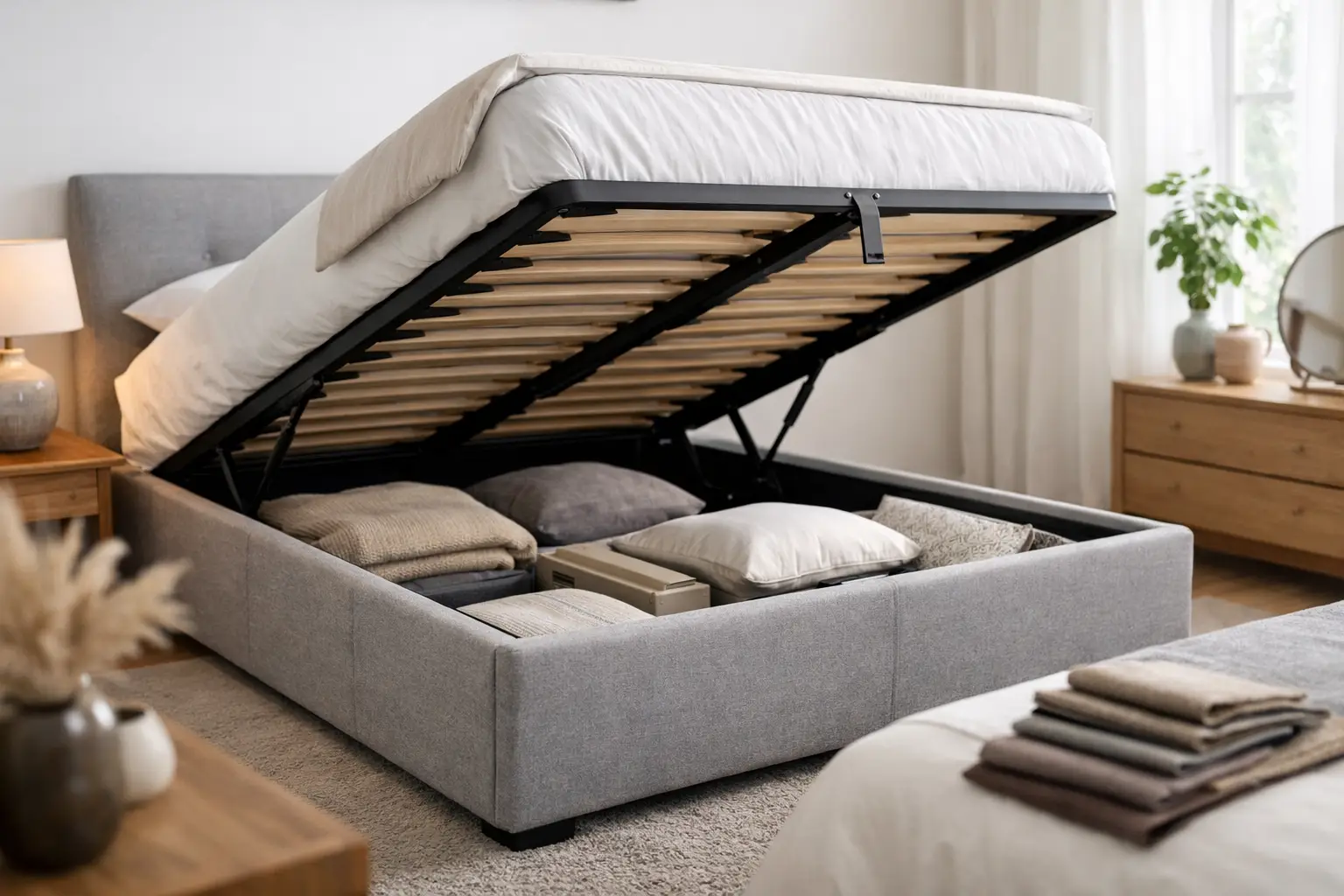
A good ottoman bed can solve two problems at once – it gives you a strong, stylish centerpiece for the bedroom and puts hard-working storage exactly where you need it. If you’re wondering how to buy an ottoman bed without ending up with the wrong size, awkward access, or not enough room to lift it properly, the smart move is to think beyond the look of the frame.

Ottoman beds are popular for a reason. They make better use of floor space than adding another chest or storage bench, and they keep the room feeling cleaner and more streamlined. But not every ottoman bed suits every layout, mattress, or lifestyle. The right choice comes down to how you live, what you need to store, and how much space your bedroom really has once the bed is in place.

How to Buy an Ottoman Bed Without Regret

The first thing to get right is the bed size. That sounds obvious, but storage beds can feel larger in a room than standard frames because they have more visual presence and a more solid base. A king-size ottoman bed may look ideal on screen, but if it leaves only narrow walkways around the bed, the room can quickly feel cramped.

Start with your mattress size and room dimensions together, not separately. If you are upgrading from a standard bed, measure the existing space around it, then check how much clearance you’ll still have with an ottoman design. You want enough room to move comfortably, open nearby drawers, and access wardrobes or nightstands without the bed dominating the entire layout.

If the room is compact, a full or queen ottoman bed often strikes the best balance between comfort and practicality. In larger bedrooms, king-size options can look especially polished and give you the full storage benefit underneath. The point is not simply to buy the biggest bed that fits on paper. It is to choose a size that still lets the room function well day to day.

Check the lift direction before you buy

This is one of the most overlooked details. Ottoman beds do not all open in the same way. Some lift from the foot end, while others are side-opening. That choice matters more than many shoppers expect.

A foot-end lift is often a great fit in rooms with clear space at the end of the bed. It gives straightforward access to the full storage area and works well in more symmetrical layouts. A side-opening ottoman bed can be a better option when the bed sits close to a wall or when the room shape makes end access awkward.

Think about how you will actually use the storage. If you plan to open it regularly for extra bedding, seasonal clothes, or kids’ spare linens, access should feel easy rather than like a workaround. If lifting the bed requires shifting furniture or squeezing into a tight gap, it will get annoying fast.

Storage Depth Matters More Than You Think

Many people shop for an ottoman bed because they want “more storage,” but it helps to define what that means before buying. Are you storing bulky comforters, boxed shoes, guest bedding, or everyday clothing? A deep storage base can be a game changer, but only if it suits the items you need to keep out of sight.

A shallow compartment may be enough for spare sheets and throws. If you are hoping to replace a dresser or free up closet space, look for a model with a more generous internal depth. The construction of the base also matters. A well-designed ottoman bed should feel sturdy and practical, not like an afterthought built around the lifting mechanism.

You should also consider how organized you want the storage area to be. Ottoman beds give you a large hidden space, which is brilliant for capacity, but that can turn into a catch-all if you are not realistic about what you will keep inside. For some buyers, a large open compartment is perfect. For others, it helps to use soft storage bags or organizers inside so items stay easy to find.

Make sure the lift mechanism feels practical

The appeal of an ottoman bed depends heavily on how smooth the lift feels. Most quality designs use gas-lift mechanisms to help raise the mattress platform safely and with less effort. Even so, the experience can vary depending on the frame design, the mattress weight, and overall build quality.

This is where it pays to look closely at product details rather than shopping by image alone. A stylish frame is important, especially in a modern bedroom, but convenience is what makes an ottoman bed worth the investment over time. You want a mechanism that feels stable, balanced, and easy enough for regular use.

There is also a trade-off here. A more substantial frame with a stronger base can feel more premium and supportive, but it may come at a higher price. Lighter builds can be more budget-friendly, though they may not deliver the same reassuring feel. If the bed is going to be a long-term piece, structure matters.

Style Still Counts

Storage is the selling point, but design is what makes the bed feel right in your home. Ottoman beds now come in a wide range of finishes, from upholstered statement pieces to cleaner wooden or paneled styles. The best choice depends on the bedroom you want to create.

An upholstered ottoman bed can add softness and a more luxurious feel, especially in neutral tones, textured fabrics, or modern vertical-panel headboard designs. This works well if you want the bed to bring warmth and a polished focal point to the room. On the other hand, simpler contemporary frames can feel sharper and more minimal, which may suit smaller spaces or a cleaner design scheme.

It is worth thinking about headboard height and visual weight too. A tall, padded headboard can look striking, but in a room with low ceilings or limited floor space it may feel heavier than expected. A lower-profile design often keeps things airy while still delivering hidden storage underneath.

If you are furnishing more than one room or trying to coordinate bedroom furniture, choose a finish that will still work if other pieces change over time. Trend-led design is great, but versatility usually gives better value in the long run.

Mattress Compatibility Can Change the Experience

If you already own a mattress, check that it is suitable for the ottoman frame you are considering. The size must be exact, but weight and flexibility matter too. Some mattresses are significantly heavier than others, and that can affect how easy the bed is to lift.

This does not mean you need the lightest mattress possible. It means the mattress and frame should work as a pair. A high-quality ottoman bed should support the mattress properly and still allow practical access to the storage compartment. If you are buying both together, it is often easier to create the right combination from the start.

Comfort and storage should not compete with each other. A stylish bed that opens beautifully but does not support your sleep properly is not a smart buy. Likewise, a premium mattress on the wrong frame can make the storage less convenient than it should be.

Think About Assembly, Delivery, and Real-World Value

When buying larger furniture online, the product itself is only part of the decision. Delivery, packaging, assembly requirements, and return reassurance all matter, especially for a bed frame with moving parts.

Check what is included, how the bed arrives, and whether assembly will require two people. Ottoman beds are more complex than a simple slatted frame, so it is worth being realistic about setup. A great price can lose its appeal if the process feels difficult from the moment it arrives.

Value is not just about the lowest number on the page. It is about what you are getting for the money: storage capacity, design quality, lifting mechanism, material finish, and the confidence that comes with secure payment and a fair return window. For many shoppers, that combination makes a slightly higher spend feel far more worthwhile.

A quick checklist for how to buy an ottoman bed

Before you choose, make sure you can answer a few basic questions. What size suits both your mattress and your room? Do you need side-opening or end-opening access? What will actually be stored inside? Does the design fit the bedroom style you want? And will the mattress weight work well with the lift mechanism?

If those answers are clear, the buying process becomes much simpler. You are no longer choosing between nice-looking frames. You are choosing the bed that fits your room, your routine, and your storage needs with fewer compromises.

A well-chosen ottoman bed does more than hide clutter. It makes the whole bedroom work harder while still looking put together – and that is usually the difference between a piece you simply own and one you are genuinely glad you bought.

Couple relaxing on sofa bed in small apartment

Sofa beds for small apartments: a practical guide

Living in a compact flat forces a particular kind of clarity about what furniture actually earns its place. The role of sofa beds in small apartments goes well beyond offering a spare sleeping surface. A well-chosen sleeper sofa, as the industry commonly terms it, replaces two pieces of furniture with one, reclaiming precious floor space without asking you to sacrifice either comfort or style. Many buyers still carry outdated assumptions about these pieces, imagining thin, creaking mattresses and cumbersome frames. Modern sleeper sofas have moved far beyond that, and this guide will show you precisely how to choose, size, and style one for your home.

Table of Contents

Key takeaways

Point Details
Open-bed depth matters most Measure the fully extended bed length, not just the sofa footprint, before purchasing.
Futon styles suit tighter rooms Compact futon-style sleeper sofas offer a smaller footprint and simpler conversion for limited spaces.
Mattress thickness is a trade-off Thicker mattresses (6 to 12 inches) sleep better but fold with more resistance; thinner ones convert easily.
Sofa beds beat Murphy beds on cost Entry-level sleeper sofas cost less and suit renters who cannot install wall-mounted solutions.
Styling extends lifespan Choosing durable upholstery and maintaining the mechanism regularly preserves both function and appearance.

The role of sofa beds in small apartments

The sleeper sofa occupies a genuinely unique position among small space furniture. It is the only piece that performs two full-time jobs without demanding double the floor area. When closed, it functions as a proper sofa for everyday living. When opened, it provides a real sleeping surface for guests or, in studio flats, for the resident themselves.

What makes this particularly relevant today is the shrinking footprint of urban apartments. Studios and one-bedroom flats in most British cities now routinely measure under 50 square metres. In spaces like these, every piece of furniture must justify its presence, and anything that serves only one purpose is a luxury many residents cannot afford.

The importance of sofa beds extends beyond pure practicality, though. Contemporary designs now arrive in a range of upholstery options, leg finishes, and arm styles that allow them to anchor a living space with genuine visual confidence. The assumption that a sofa bed must look utilitarian or compromise the room’s character is simply no longer accurate.

It is worth separating two distinct use cases from the outset. The first is the occasional guest scenario, where the sofa bed opens perhaps a dozen times per year. The second is the studio flat scenario, where the resident uses it as their primary sleeping surface every night. The right sofa bed for each situation differs considerably, and conflating them leads to poor purchases.

Sofa bed types and designs for small spaces

Not all sleeper sofas are built with compact living in mind. Understanding the key design categories helps you narrow your options quickly.

Pull-out sleeper sofas are the traditional format. The mattress folds beneath the seat cushions and pulls forward on a metal frame. These tend to have a larger sofa footprint and require more clearance when open, but they typically accommodate full, queen, or even king mattress sizes. They suit apartments where guest comfort is a priority and space, while limited, allows for the extended bed depth.

Man setting up pull-out sofa bed in living space

Futon-style sleeper sofas, by contrast, offer a meaningfully smaller footprint. Twin-size futons fit between armchair and loveseat dimensions, making them genuinely viable in rooms where a full pull-out would overwhelm the space. The conversion mechanism is also simpler: the back folds flat rather than a frame unfolding outward. This makes day-to-day use far less effortful.

Fold-flat sofas represent a middle ground. The back reclines to a flat position without a separate mattress mechanism, keeping the profile low and the conversion quick. These work particularly well as sofa beds for limited space where the sleeping function is secondary to daily seating comfort.

Key design considerations include:

  • Mechanism type: Bi-fold frames are generally more durable than tri-fold for heavier mattresses; click-clack mechanisms on futon styles are the simplest to operate daily.
  • Arm style: Tight, low arms reduce the overall width and allow the sofa to sit closer to walls.
  • Leg height: Higher legs make the sofa easier to clean beneath and can create a sense of visual lightness in a small room.
  • Mattress size options: Twin (approximately 38 x 75 inches), full (54 x 75 inches), and queen (60 x 80 inches) are the most common for sleeper sofas; queen sizes require substantially more room clearance when open.

Sizing and spatial planning for your room

This is where most buyers make their most costly mistake. They measure the sofa’s closed dimensions, confirm it fits against the wall, and purchase. Then they discover the opened bed extends so far into the room that walking around it becomes impossible.

Open-bed depth for pull-out sleeper sofas typically runs between 85 and 96 inches, which is 7 to 8 feet. That measurement extends from the back of the sofa toward the centre of the room. In a room that is only 10 feet deep, the opened bed leaves roughly 2 feet of clearance at the foot. That is not enough to move comfortably, and it certainly is not enough if the bed sits opposite a television unit or wardrobe.

The recommended minimum walking clearance around an open sofa bed is 24 inches, with 30 inches being the more comfortable standard. Precise clearance measurement is not optional in small apartments. It is the difference between a layout that functions and one that frustrates.

Mattress size Sofa width (approx.) Open-bed depth (approx.) Minimum room depth needed
Twin 72 to 80 cm 190 to 210 cm 280 to 300 cm
Full 130 to 140 cm 200 to 220 cm 290 to 310 cm
Queen 150 to 160 cm 210 to 240 cm 310 to 340 cm

One detail many buyers overlook: mattress width is often narrower than the sofa frame itself, due to mechanical tolerances and the thickness of the upholstered sides. Always measure the actual mattress dimensions rather than the frame when assessing fit.

Pro Tip: Lay out the open-bed footprint on your floor using masking tape before you purchase. Walk around it, open your wardrobe doors, and check whether your room still functions. This five-minute exercise prevents expensive regret.

Corner or sectional sleeper sofas deserve a mention here. They use corner space efficiently, freeing the central floor area despite having a larger overall footprint. In an L-shaped room or an open-plan studio, this can be a genuinely clever spatial solution.

Infographic showing sofa bed room measurement steps

Mattress thickness and sofa bed comfort

The mattress is where sofa beds have historically disappointed, and where modern designs have made the most meaningful progress. Sleeper sofa mattresses range from approximately 4 to 5 inches at the thinner end to 6 to 12 inches for more substantial options.

Here is the honest trade-off:

  • 4 to 5 inch mattresses fold with ease, place less strain on the bi-fold mechanism, and keep the sofa’s seated profile lower. They are adequate for occasional overnight guests but fall short for anyone sleeping on them regularly.
  • 6 to 8 inch mattresses represent a practical middle ground. They offer noticeably better support and cushioning while remaining manageable for most fold-out mechanisms.
  • 10 to 12 inch mattresses deliver sleep quality that genuinely rivals a standard bed. However, thicker mattresses require robust fold-out mechanisms to handle the additional weight and resistance without deteriorating prematurely.

Memory foam has transformed this category. Where older sleeper sofas used thin innerspring mattresses that transferred every bar of the metal frame to the sleeper’s back, memory foam options contour to the body and distribute weight far more effectively. If you are selecting a sofa bed for a studio flat where it will see regular use, a memory foam mattress is not a luxury addition. It is a practical necessity. Braysuk’s mattress comfort guide offers a thorough breakdown of comfort layers if you want to understand what to look for before committing.

Pro Tip: If your chosen sofa bed comes with a thinner mattress, check whether the manufacturer offers a replacement or upgrade option. Many do, and fitting a better mattress to a frame you already love is far more economical than purchasing an entirely new piece.

It is also worth noting that using a sofa bed as your primary daily sleep surface is generally discouraged unless the mattress thickness and quality are genuinely comparable to a standalone bed. For frequent use, investing in a thicker memory foam option or pairing the sofa bed with a quality mattress topper makes a significant difference to long-term comfort and spinal health.

Sofa beds versus other space-saving sleeping options

Understanding where sleeper sofas sit relative to alternatives helps you make a genuinely informed decision rather than defaulting to the most familiar option.

Feature Sofa bed Murphy bed Daybed
Cost (entry level) £400 to £700 £500 to £800 £300 to £600
Installation required No Yes (wall mounting) No
Setup time 1 to 3 minutes 30 to 60 seconds Instant
Suitable for renters Yes Often not Yes
Daily seating function Full sofa None (when closed) Lounge seating
Sleep quality Moderate to good Good Moderate

Murphy beds cost slightly more at entry level and require wall installation, which most rental agreements prohibit. Their setup time is faster, and they offer a better sleeping surface for daily use. However, they provide no seating function when closed, meaning you still need a separate sofa. For a small apartment, that negates much of the space saving.

Daybeds occupy a different category entirely. As design director John O’Leary notes, the key distinction between daybeds and sofa beds lies in intention: daybeds are designed for lounging, sofa beds for practicality. A daybed offers a comfortable perch and a reasonable sleeping surface for one person, but it does not convert into a proper sofa with back support for seated use.

Sofa beds are particularly well suited to renters, shared living spaces, and anyone who needs a genuine seating solution that occasionally transforms for guests. If you host infrequently and your primary concern is daily comfort, a Murphy bed paired with a separate sofa might serve you better. If you need one piece to do both jobs reliably, a quality sleeper sofa remains the most versatile compact living solution available.

Styling and maintaining your sofa bed

A sofa bed that looks like an afterthought undermines the entire room. The good news is that contemporary multi-functional furniture includes genuinely beautiful sleeper sofas in fabrics and finishes that hold their own against any standard sofa.

  1. Choose upholstery that suits your lifestyle. Performance fabrics in tightly woven weaves resist pilling and clean easily, which matters when a sofa sees both daily seating and sleeping use. Velvet and bouclé add visual richness but require more care. Neutral tones integrate across changing décor; deeper shades like forest green or charcoal add character without overwhelming a small room.

  2. Prioritise hidden storage where possible. Many sleeper sofas now incorporate under-seat storage compartments, which are ideal for bedding, pillows, and throws. This removes the need for a separate storage ottoman or blanket box, freeing further floor space.

  3. Maintain the mechanism regularly. Fold-out frames benefit from occasional lubrication at the hinge points. Check the frame for any loosening bolts every six months. A well-maintained mechanism extends the usable life of the piece considerably.

  4. Style it as a sofa first. Use cushions, a throw, and a side table to dress the piece as a proper sofa during the day. Guests should not immediately identify it as a sofa bed. This approach also encourages you to keep the piece looking its best, which supports the room’s overall aesthetic.

My honest take on sofa beds in small flats

I’ve seen a great many people approach the sofa bed decision with the wrong question. They ask, “Is this comfortable enough to sleep on?” when they should be asking, “Does this work brilliantly as a sofa, and can I sleep on it when I need to?”

The hierarchy matters. You will sit on this piece every day. You will sleep on it far less often. Buying a sofa bed that prioritises sleep comfort at the expense of daily seating quality is a trade-off that will frustrate you 350 days a year.

What I’ve found actually transforms the experience is spatial planning done before purchase, not after. The masking tape exercise I mentioned earlier is not optional. I’ve watched people return perfectly good sofa beds simply because they had not accounted for the open-bed depth in their room.

My other strong conviction: do not buy a sleeper sofa without sitting on it. Modern sleeper sofas have improved enormously, but quality still varies widely between manufacturers. The seated feel tells you more about build quality than any specification sheet. If you cannot visit a showroom, read verified reviews that specifically address the seated comfort, not just the sleep surface.

The role of sofa beds in small apartments is genuinely significant when the piece is chosen with care and precision. When it is not, it becomes an expensive obstacle in the middle of your living room.

— very

Discover Braysuk’s sofa bed collection

At Braysuk, we understand that choosing the right sleeper sofa for a compact home requires more than browsing a catalogue. It requires confidence that the piece you select will perform beautifully as both seating and sleeping surface, day after day.

https://braysuk.com

Our curated range includes sleeper sofas with memory foam mattresses, sturdy fold-out frames, and upholstery options to suit every interior sensibility, from understated linen tones to richly textured performance fabrics. For those weighing up mattress options, our mattress comfort guide offers clear, practical guidance on comfort layers and support ratings. If you are also considering other space-saving solutions, our ottoman bed guide and memory foam comparison are excellent next steps. Explore Braysuk’s full range and find the piece that transforms your space with both elegance and purpose.

FAQ

What size sofa bed fits in a small apartment?

A twin or full-size sleeper sofa suits most small apartments. The open-bed depth typically runs 7 to 8 feet, so measure your room’s available depth before purchasing and allow at least 24 inches of walking clearance around the extended bed.

Are sofa beds comfortable enough for regular use?

Modern sleeper sofas with memory foam mattresses of 6 inches or more offer genuine comfort for occasional use. For nightly use as a primary bed, a mattress of 10 inches or thicker is recommended, ideally paired with a quality topper.

How do sofa beds compare to Murphy beds for small flats?

Sofa beds cost less at entry level and require no installation, making them ideal for renters. Murphy beds convert faster and sleep better for daily use, but they provide no seating function and cannot be installed in most rental properties.

What is the difference between a sofa bed and a futon?

A sofa bed typically has a pull-out mattress stored beneath the seat cushions, while a futon-style sleeper folds flat from the back. Futon styles have a smaller footprint and simpler mechanism, making them better suited to very tight spaces.

How do I maintain a sofa bed mechanism?

Lubricate the hinge points of the fold-out frame periodically and check for loose bolts every six months. Keeping the mechanism clean and free of debris also prevents premature wear and preserves ease of conversion.

Article generated by BabyLoveGrowth

Couple planning decor with affordable furniture

Get the luxury look with budget furniture

You want your home to feel considered, polished, and genuinely beautiful. You do not want to spend a small fortune achieving it. The desire to get a luxury look with budget furniture is one of the most common challenges in home styling, and the good news is that it is far more achievable than most people realise. The techniques that separate a room that looks expensive from one that simply looks cheap have very little to do with price tags. They are about proportion, detail, texture, and a few well-placed decisions. This guide walks you through every practical step, from budget allocation to finishing touches.

Table of Contents

Key takeaways

Point Details
Prioritise statement pieces Allocate roughly 40% of your furniture budget to one or two standout items that anchor the room’s aesthetic.
Hardware transforms everything Swapping original handles and knobs for brass or steel alternatives costs very little but dramatically lifts perceived quality.
Texture creates depth Layering linen, knit, wood, and ceramic across a neutral palette makes budget pieces read as collected and curated.
DIY upgrades add bespoke detail Cane webbing, added legs, and trim moulding disguise flat-pack origins and create an architectural, custom feel.
Accessories seal the look Thoughtful lighting, trays, and art under £20 each contribute as much to a luxurious atmosphere as the furniture itself.

How to get the luxury look with budget furniture

The interior design industry uses the term affordable luxury to describe spaces that feel high-end without relying on high-end price points. The distinction matters because it shifts your focus from what things cost to how they look, feel, and sit together in a room. Luxury perception comes more from silhouette and detail than from expensive materials placed everywhere. Once you accept that, the entire project becomes a question of strategy rather than spending power.

The most effective starting point is a clear budget split. A well-regarded design approach recommends a 60/40 budget allocation: 60% of your furniture spend on functional basics that provide comfort and structure, and 40% on one or two statement pieces that carry the room’s visual weight. Rooms styled this way typically cost between £1,900 and £3,000, compared to £6,000 or more for an all-designer approach. The savings are significant without any visible compromise.

Your basics are the pieces that must work hard every day. A comfortable sofa, a sturdy bed frame, a practical storage unit. These do not need to be beautiful on their own. They need to be well proportioned, neutral in tone, and physically comfortable. The statement pieces are where your eye should land first. A sculptural accent chair with soft curves and a monochrome finish, for instance, can deliver a designer silhouette at a fraction of the cost, particularly when paired with thoughtfully chosen accessories.

  • Choose statement pieces with strong, clean silhouettes rather than ornate detailing that dates quickly
  • Opt for neutral upholstery on basics so they work with future statement additions
  • Invest in one quality lighting piece, such as a floor lamp or pendant, to anchor the room’s atmosphere
  • Consider an upholstered headboard as a bedroom statement piece, as it commands visual presence without requiring a full furniture overhaul

Pro Tip: When browsing for statement pieces, photograph the item against a white background on your phone and compare the silhouette to designer pieces you admire. If the outline reads as elegant, the piece will deliver the luxury effect regardless of its price.

Transforming flat-pack furniture with hardware and paint

This is where the most dramatic transformations happen, and where the least money is required. The original hardware on flat-pack furniture is almost always the most obvious signal of its budget origins. Thin plastic knobs, stamped metal pulls with a chrome finish that chips within months. Replacing them is the single highest-impact upgrade available to you.

Brass or stainless steel hardware upgrades cost just a few pounds per handle yet radically change the look and feel of an entire piece. A plain chest of drawers becomes something that reads as considered and deliberate. The key is choosing hardware with visual weight: solid metal, architectural shapes, and a consistent finish across the piece.

Follow these steps for a clean, professional result:

  1. Measure the hole spacing precisely. Most flat-pack pieces use 96mm or 128mm centre-to-centre spacing. Measure hole spacing before purchasing any hardware to avoid misalignment.
  2. Create a paper template. Mark your desired hole positions on a strip of paper and use it as a guide across all drawers to keep spacing perfectly consistent.
  3. Fill any old holes if switching to a different configuration. Use wood filler, allow it to cure fully, then sand flush before painting.
  4. Sand the entire surface lightly with 120-grit sandpaper, then wipe clean with a damp cloth. This step is as important as the hardware itself. Surface preparation on flat-pack items is critical to achieving a finish that looks applied rather than sprayed on in a factory.
  5. Apply a furniture primer, particularly if the piece has a laminate surface. Two thin coats of primer prevent peeling and give the topcoat something to grip.
  6. Choose your topcoat carefully. Soft, chalky tones such as warm white, dusty sage, or deep charcoal read as sophisticated and timeless. Avoid stark bright whites or glossy finishes, which tend to emphasise imperfections rather than conceal them.
  7. Seal with a water-based varnish in a satin or eggshell finish for durability without the plastic sheen of a high-gloss coat.

Pro Tip: If you are renting or prefer reversible upgrades, skip the paint entirely and focus on hardware and styling alone. Swapping handles requires no permanent alteration and can be reversed in minutes.

Layering textures and neutral colour palettes

The reason certain rooms feel warm, collected, and expensive while others feel flat has almost nothing to do with the furniture itself. It is texture. Layering neutrals with varied textures builds the kind of depth and warmth that makes a budget sofa read as a considered design choice rather than a practical necessity.

Layered neutral textures in cozy living room

The most effective neutral families to work with are soft whites, warm beiges, muted taupes, and earthy greys. These tones have enough warmth to feel inviting while remaining sophisticated enough to carry the room without competing with your statement pieces. The secret is variation within the palette rather than exact matching. A warm white linen cushion, a natural jute rug, and a bleached oak side table all belong to the same neutral family but offer entirely different tactile and visual qualities.

Effective texture layering for chic budget home furnishings includes:

  • Linen and cotton throws draped loosely over a sofa arm, not folded neatly, which reads as lived-in rather than staged
  • Knitted or boucle cushions alongside smooth velvet ones to create contrast without colour conflict
  • Natural wood elements such as a tray, a small stool, or a picture frame to ground the palette with organic warmth
  • Ceramic vessels in matte finishes, which absorb light rather than reflecting it, lending an understated, gallery-like quality
  • Woven baskets or rattan accessories that introduce artisanal texture at very low cost

The principle is that layering textiles and materials adds visual depth that no single expensive piece can replicate. Three budget cushions in varied textures will do more for a sofa than one expensive cushion in a plain fabric.

DIY techniques for a bespoke, high-end effect

Beyond hardware and paint, there are several hands-on techniques that transform the actual silhouette and structural detail of budget pieces. These are the approaches that make guests assume you paid considerably more than you did.

Infographic of five steps to affordable luxury furniture

Cane webbing is one of the most effective. Replacing the solid panel fronts of drawer units with cane webbing introduces a mid-century, artisanal quality that reads as genuinely bespoke. A full cane webbing upgrade including materials, tools, and paint costs under £100 and involves cutting the existing panel, stapling the webbing to a frame, and painting the surrounding structure in a contrasting tone.

Adding legs is perhaps the simplest upgrade of all. Replacing squat, flat feet with tapered wooden or metal legs immediately lifts a piece visually, creating space beneath it that makes a room feel larger and more considered. Most furniture legs screw directly into existing fixings.

Follow this sequence for the cleanest DIY results:

  1. Remove existing feet or legs and measure the existing mounting points
  2. Source replacement legs in a material and finish that complements your hardware choices
  3. Attach legs using appropriate fixings, checking for level before tightening fully
  4. Add base moulding and trim around the bottom of large pieces such as wardrobes or bookcases to create the appearance of built-in cabinetry

Trim and moulding deserve particular attention. Applying simple wooden trim strips to the face of a plain wardrobe door creates the panelled look associated with bespoke joinery. Mitre the corners cleanly, fill the joins, paint over everything in the same tone, and the result is indistinguishable from a piece that cost several times more.

Technique Approximate cost Visual impact
Hardware swap £10 to £40 Very high
Paint and primer £20 to £50 High
Cane webbing panels £40 to £100 High
Replacement legs £15 to £60 Medium to high
Trim and moulding £10 to £30 High

Pro Tip: Always paint trim and moulding in the same colour as the piece itself. Two-tone finishes can look intentional, but a single unified colour creates the architectural weight that makes a piece read as custom rather than assembled.

Styling and accessorising for an affordable luxury feel

The furniture is only half the story. Styling is where luxury looking furniture on a budget truly comes together, and it is also where the most affordable interventions live. Small decor swaps such as updated lighting, personalised accessories, and considered placement contribute as much to a luxurious atmosphere as any single piece of furniture.

Lighting is the most underestimated tool in the room. A bare bulb or a basic shade immediately signals that a space has not been finished. Replacing ceiling pendants, adding a floor lamp with a warm-toned bulb, or placing table lamps at eye level when seated transforms the mood of an entire room for well under £50.

High-impact styling choices that cost very little:

  • Replace plastic soap dispensers and utility items with ceramic or glass alternatives for a spa-like quality in bathrooms and kitchens
  • Group accessories in odd numbers, typically threes, which reads as more natural and considered than symmetrical pairs
  • Use a tray to corral small items on a coffee table or dresser, which creates the impression of intentional curation rather than clutter
  • Hang art at eye level rather than too high, and choose frames in a consistent finish across the room
  • Layer a rug over plain flooring to define zones and add warmth, even in rooms with existing carpet

Furniture placement matters as much as the pieces themselves. Pulling sofas and chairs slightly away from walls creates a sense of deliberate arrangement rather than furniture simply pushed to the perimeter. This single change makes most rooms feel more spacious and more considered without spending anything at all.

My honest perspective on the luxury look for less

I have spent years looking at homes that achieve a genuinely elevated feel on modest budgets, and the pattern is always the same. The rooms that work are not the ones where every item was carefully researched and expensively sourced. They are the ones where someone made two or three genuinely good decisions and then stopped second-guessing everything else.

The most common mistake I see is spreading the budget too thinly across too many pieces, resulting in a room full of items that are all slightly underwhelming. One beautiful, well-proportioned piece will do more for a room than six mediocre ones. Spend where it shows. Save everywhere else.

I also think comfort is non-negotiable, and I say this because I have seen people sacrifice it entirely in pursuit of a look. A sofa that photographs beautifully but is uncomfortable to sit on will make you resent your own home within a fortnight. Style and comfort are not in opposition. The best spaces deliver both, and that is entirely achievable on a careful budget.

My strongest advice is to personalise your space with intention. A room that reflects your actual preferences, even imperfectly, will always feel more luxurious than one that looks copied from a catalogue.

— very

Discover Braysuk’s premium pieces for less

At Braysuk, the belief is that every home deserves to feel genuinely luxurious, regardless of budget. The carefully curated collection brings together premium-looking furniture and décor at accessible prices, so you can create the kind of space that feels considered, warm, and beautifully finished without compromise.

https://braysuk.com

An upholstered headboard is one of the most powerful statement pieces available for a bedroom, transforming the entire feel of the room with a single addition. For those seeking functional elegance, the guide to choosing a dressing table with mirror storage helps you select a piece that works as hard as it looks beautiful. And because true luxury begins with genuine rest, the Braysuk mattress comfort guide ensures that the comfort beneath your styled space is as considered as everything above it.

FAQ

What is the best way to make budget furniture look expensive?

Replace the original hardware with solid brass or steel alternatives, apply a quality paint finish with proper preparation, and layer varied textures across a neutral colour palette. These three changes deliver the highest visual return for the least investment.

How much should I spend on a statement piece versus basics?

A practical approach is to allocate roughly 40% of your total furniture budget to one or two statement pieces and 60% to functional basics. This split delivers a luxury effect at a fraction of the cost of an all-designer approach.

Can I upgrade flat-pack furniture without painting it?

Yes. Hardware swaps, added legs, cane webbing inserts, and trim moulding are all reversible or semi-reversible upgrades that require no paint. These are particularly suitable for rental properties where permanent alterations are not permitted.

Which accessories have the biggest impact on a luxury aesthetic?

Lighting upgrades, quality-looking trays, ceramic vessels, and consistently framed artwork contribute the most to an expensive feel. Decor swaps under £20 each can significantly lift the perceived value of an entire room.

Does furniture placement affect how luxurious a room feels?

Pulling furniture slightly away from walls and grouping accessories in odd numbers creates a sense of deliberate, considered arrangement that reads as professionally styled, without any additional cost.

Article generated by BabyLoveGrowth

A Guide to Mattress Comfort Levels

A Guide to Mattress Comfort Levels

Choosing a mattress gets confusing fast when every option claims to be supportive, pressure relieving, and designed for better sleep. A practical guide to mattress comfort levels makes that decision much easier, because comfort is not just about whether a bed feels soft or firm for 30 seconds in a showroom. It is about how the mattress responds to your body night after night, how it supports your sleep position, and whether the feel still suits you after the novelty wears off.

If you are comparing modern mattresses online, comfort level is one of the quickest ways to narrow the shortlist. But it only helps if you know what the labels actually mean.

What mattress comfort levels really mean

Mattress comfort level describes the initial feel of the sleep surface and how much cushioning you notice when you lie down. Most mattresses are grouped into soft, medium soft, medium, medium firm, and firm. Some brands simplify this even further, but the idea stays the same – it is a scale of feel, not a fixed measure of quality.

That distinction matters. A softer mattress is not automatically more luxurious, and a firmer mattress is not automatically better for your back. The right choice depends on your body weight, sleeping style, and personal preference. Comfort is subjective, but support still needs to be there underneath the comfort layers.

A good mattress usually balances both. The top layers provide pressure relief and a welcoming feel, while the core keeps your spine in a healthier alignment. If either part is off, the mattress can feel great for a few minutes and wrong by morning.

A guide to mattress comfort levels by feel

Soft

A soft mattress has more sink-in and a plusher surface feel. It often suits side sleepers who want extra cushioning around the shoulders and hips, especially lighter-weight sleepers who may not press deeply into firmer models.

The trade-off is that soft comfort can feel less stable for some people. Stomach sleepers and heavier sleepers often find that they sink too far, which can throw the lower back out of alignment. If you like a cloud-like top layer, soft can be appealing, but it needs enough support below to avoid that swallowed-up feeling.

Medium soft to medium

This is where many shoppers land. Medium and medium soft mattresses tend to offer a more balanced feel – enough contouring for pressure points, with enough pushback to keep the body supported. Couples often prefer this range because it can work reasonably well for two different body types and sleeping positions.

Medium is also a practical choice if you change positions during the night. It usually feels more adaptable than very soft or very firm models. If you are unsure where to start, medium is often the safest comparison point.

Medium firm

Medium firm is one of the most popular comfort levels for a reason. It usually gives a flatter, more supportive surface than medium, but still includes enough cushioning to avoid feeling hard. Back sleepers often do well here, and combination sleepers frequently like the balance of comfort and stability.

For shoppers who want a mattress that feels supportive without going fully firm, this category can be the sweet spot. It is especially useful if you want a streamlined, contemporary bed setup that looks stylish but still needs to deliver practical all-night comfort.

Firm

A firm mattress has less sink and a more lifted feel. Some back and stomach sleepers prefer it because it can help keep the hips from dipping too low. Heavier sleepers may also find that firm models offer better long-term support and feel more durable under greater pressure.

That said, firm is not for everyone. Side sleepers often find it too unyielding around the shoulders and hips, which can lead to pressure buildup rather than relief. Firm should feel supportive, not rigid.

How sleeping position affects comfort level

Your preferred sleeping position has a huge impact on which comfort level feels right.

Side sleepers usually need more cushioning. The shoulder and hip press more deeply into the mattress, so a soft to medium feel often works better. If the surface is too firm, those areas take the pressure and comfort drops quickly.

Back sleepers usually need a more balanced feel. A medium to medium firm mattress often helps support the natural curve of the spine while still giving enough comfort through the upper back and hips. Too soft, and the body can sink unevenly. Too firm, and the mattress may not contour enough.

Stomach sleepers generally do better with medium firm to firm comfort. This helps keep the midsection from dipping too much, which can strain the lower back. If you sleep partly on your stomach and partly on your side, the best choice may sit in the middle rather than at either extreme.

Combination sleepers need versatility. If you move around a lot at night, a mattress that is too plush can make changing position harder, while one that is too firm can feel unforgiving. Medium or medium firm usually works best here.

Body weight changes the feel

One of the biggest reasons mattress reviews can seem inconsistent is simple – comfort level feels different depending on body weight.

Lighter sleepers often experience mattresses as firmer because they do not compress the top layers as much. A mattress labeled medium might feel closer to medium firm for someone with a lighter build.

Average-weight sleepers usually get the most accurate version of the advertised comfort feel. This is why so many mattress descriptions seem centered around medium and medium firm.

Heavier sleepers often experience more sink, so a medium mattress may feel softer in real use. In many cases, a firmer comfort level provides the better balance of cushioning and support over time.

This is why there is no universal best mattress comfort. The label on the product page matters, but how your body interacts with it matters more.

Mattress materials also shape comfort

Comfort level is not only about firmness. The materials inside the mattress change how that firmness is delivered.

Memory foam tends to contour closely and absorb movement well. A medium memory foam mattress may feel softer than a medium pocket spring model because of the way it hugs the body. This can be great for pressure relief, but some sleepers prefer a more lifted sensation.

Pocket spring mattresses usually offer a more responsive feel. They can still be plush on top, but they often have a little more bounce and easier movement. If you dislike feeling stuck in bed, this construction may feel more natural.

Hybrid mattresses combine foam and springs, which is why they appeal to so many shoppers. They often deliver a modern balance of comfort, support, and movement. If you want cushioning without losing structure, hybrid is often worth a closer look.

Latex-style comfort layers tend to feel springier and cooler than traditional memory foam. They can suit shoppers who want pressure relief with a bit more responsiveness.

Common mistakes when choosing comfort level

The first mistake is choosing based on a quick hand test or a few minutes sitting on the edge. Mattresses are designed to support your full body in a lying position, so surface softness alone tells you very little.

The second is assuming firm always means orthopedic or better for pain. Sometimes a mattress feels supportive at first because it is hard, but if it does not cushion pressure points properly, sleep quality can suffer.

The third is ignoring who else uses the bed. For couples, the best comfort level is often the one that works well enough for both people rather than perfectly for one. Medium and medium firm are popular for exactly that reason.

The fourth is focusing only on comfort and not on bed setup. Your bed frame, slat support, and even pillow choice can influence how a mattress feels in everyday use.

How to choose with more confidence

Start with your sleeping position, then factor in body weight and whether you prefer a more cushioned or more supportive feel. After that, look at mattress materials to refine the choice. This approach is much more reliable than shopping by marketing terms alone.

If you sleep on your side and like a softer, more enveloping surface, start around medium soft or medium. If you sleep on your back or switch positions, medium to medium firm is usually a smart zone. If you sleep on your stomach or need a more stable feel, medium firm to firm is often the better fit.

It also helps to think about how you want the bed to feel after an hour, not just in the first minute. A mattress should feel inviting, but it should also keep your body supported through the night. That balance is what turns a stylish bedroom upgrade into something you actually look forward to using.

When you are shopping online, the smartest move is not chasing the softest or firmest option. It is choosing the comfort level that fits your body, your sleep habits, and the kind of support you want to come home to every night.

Mattress Types Explained for Better Sleep

Mattress Types Explained for Better Sleep

Buying a mattress can feel strangely high-stakes. Get it right, and your bedroom feels instantly more comfortable, polished, and restful. Get it wrong, and even the most stylish bed frame cannot make up for sore shoulders, restless nights, or that sinking feeling that you chose too fast. That is why mattress types explained clearly matters so much before you commit.

The good news is that most mattress shopping becomes much easier once you understand how each type actually feels in daily use. Marketing terms can make everything sound equally impressive, but the real question is simpler: what kind of support, pressure relief, temperature control, and movement response do you want night after night?

Mattress types explained: what really changes from one to another?

At a glance, mattresses can look similar. Underneath the cover, though, the materials make a major difference. They affect how firm the bed feels, how much it hugs your body, how easy it is to move around, and how well it handles heat and motion.

For most shoppers, the main mattress categories are memory foam, innerspring, hybrid, latex, and specialty designs such as pillow top or adjustable-compatible models. None is automatically best. The right choice depends on your sleep position, body weight, temperature preferences, and whether you share the bed.

Memory foam mattresses

Memory foam remains one of the most popular options because it is designed to contour around the body. If you like a mattress that cushions pressure points and creates a more cradled feel, this is often the first place to look.

This type tends to suit side sleepers particularly well because the foam can reduce pressure around the shoulders and hips. It can also be a strong option for couples, since memory foam usually absorbs movement better than spring-heavy designs. If your partner tosses and turns, you are less likely to feel every shift.

The trade-off is responsiveness. Some people love the cocooning comfort, while others feel it is harder to change positions on a deep memory foam mattress. Heat can also be a concern, although many modern designs use cooling layers or more breathable construction to counter that issue.

If you want comfort that feels plush, quiet, and body-contouring, memory foam makes sense. If you prefer a more lifted, bouncy surface, it may feel too enveloping.

Innerspring mattresses

Innerspring mattresses are the classic spring-based option. They usually have a coil support core with thinner comfort layers on top, creating a sleep surface that feels firmer, springier, and more breathable than many all-foam designs.

People who like a traditional mattress feel often gravitate here. You get more pushback from the surface, which can make it easier to move, turn over, and get in and out of bed. That can be especially appealing if you do not enjoy the sink-in sensation of foam.

There are compromises. Innerspring mattresses may not relieve pressure as effectively as memory foam or well-built hybrids, especially for dedicated side sleepers. Motion transfer can also be more noticeable, depending on the coil system. If one person moves, the other may feel more of it.

For guest rooms, occasional use, or shoppers who want straightforward support and value, innerspring can still be a smart choice. It is familiar, practical, and often a good fit for those who sleep warm.

Hybrid mattresses

If you are stuck between springs and foam, a hybrid often gives you the best balance. Hybrid mattresses combine a coil support base with thicker comfort layers made from foam, memory foam, latex, or a mix of materials.

This is one of the easiest categories to recommend because it covers so many preferences. You get more contouring and pressure relief than a standard innerspring, but usually more bounce and airflow than an all-foam mattress. For many shoppers, that middle ground feels more premium and easier to live with long term.

Hybrids work especially well for couples with different sleep preferences. They can also suit combination sleepers who move between their side, back, and stomach during the night. The support is often more versatile, and the overall feel tends to be balanced rather than extreme.

That said, not all hybrids feel alike. Some lean softer and plusher, while others feel noticeably firmer and more supportive. The word hybrid tells you the construction style, not the exact comfort level, so firmness still matters just as much.

Latex mattresses

Latex mattresses are known for responsive support, durability, and a cleaner, more buoyant feel than memory foam. Instead of sinking deeply into the bed, you tend to feel more lifted on the surface.

This can be a strong choice if you want pressure relief without that slow-moving foam sensation. Latex also tends to sleep cooler than traditional memory foam and can feel more naturally springy. For sleepers who want comfort with a fresher, less heavy feel, that is a real advantage.

The downside is preference and price. Some people simply prefer the softer, more enveloping comfort of foam, and latex models can sit at a higher price point. The feel is distinctive, so it is less about better or worse and more about whether that responsive support suits you.

Pillow top and Euro top mattresses

Pillow top and Euro top mattresses are not always separate mattress types in the same way foam or hybrid are, but they are worth understanding because they change the surface feel significantly. These designs add an extra comfort layer to the top of the mattress for a plusher first impression.

If you want your bed to feel softer, more cushioned, and a little more hotel-like, this finish can be appealing. It can make a firmer support core feel more welcoming without losing the structure underneath.

The important thing is not to confuse a plush top layer with full-body support. A mattress can feel beautifully soft when you first lie down, but still not suit your spine alignment or pressure points after a full night. Surface comfort matters, but the deeper support layers matter more.

Mattress types explained by sleep position

Your sleep position can narrow the field quickly. Side sleepers often need better pressure relief, so memory foam and softer hybrids are common winners. Back sleepers usually do well with medium to medium-firm support that keeps the spine aligned without feeling too hard, which is where many hybrids, latex mattresses, and some innersprings perform well.

Stomach sleepers generally need a firmer, more supportive feel to prevent the midsection from dipping too far. That often points toward firmer hybrids, firmer innersprings, or supportive latex models. If the mattress is too soft, the lower back can pay for it.

Combination sleepers need something responsive enough to move on easily. Hybrids and latex designs often stand out here because they offer comfort without making position changes feel like work.

How firmness changes the experience

One reason mattress shopping gets confusing is that type and firmness are not the same thing. You can find soft hybrids, firm hybrids, plush memory foam, and supportive memory foam. The materials shape the character of the mattress, while firmness changes how hard or soft it feels.

If you are lighter in weight, a mattress may feel firmer to you because you do not sink in as much. If you are heavier, the same mattress may feel softer and more compressible. This is why reviews can conflict. Two people can be describing the same mattress honestly and still have completely different experiences.

For many adults, medium or medium-firm is a practical starting point. It tends to offer the broadest comfort range, especially for shared beds. But if you know you love a plusher, cocooning feel or a firmer, more supportive surface, it is better to shop for that preference rather than settling for the middle.

What couples should pay attention to

When two people share a mattress, motion isolation becomes more important. Memory foam is often excellent here, while hybrids can also perform well depending on the coil system and comfort layers. Traditional innersprings may transfer more movement across the bed.

Edge support matters too. If you both use the full width of the mattress, stronger edges make the bed feel larger and more stable. This is especially useful in smaller rooms where upsizing the bed frame is not always practical.

Temperature can become a bigger factor for couples as well. If one or both of you sleep warm, breathable hybrids, latex, or cooler-feel spring designs may be more comfortable than dense foam-heavy builds.

The smartest way to choose

Start with how you want the mattress to feel, not just what sounds advanced. If you want contouring and pressure relief, memory foam is a strong contender. If you want bounce and airflow, look at innerspring. If you want an easy all-rounder, hybrid often earns its popularity. If you want responsive comfort with a more lifted feel, latex is worth serious attention.

Then match that type to your sleep position, preferred firmness, and whether you sleep alone or with a partner. Stylish bedrooms come together through smart choices, and the mattress is one of the few pieces that affects both the look of the room and how you feel every morning.

A beautiful bed should do more than complete the space. It should make you want to get into it at the end of the day – and feel glad you chose it when morning comes.

Ottoman Bed Gas Lift Guide: Easy Checks

Ottoman Bed Gas Lift Guide: Easy Checks

A storage bed feels like a smart upgrade right up until the lift stops feeling smooth. If the frame suddenly feels heavy, won’t stay up, or drops faster than it should, an ottoman bed gas lift guide helps you understand what’s going on before you assume the whole bed needs replacing.

Gas lift ottoman beds are designed to make everyday storage feel easy, not awkward. The lift mechanism does the hard work, but like any moving part, it performs best when it’s properly matched to the bed frame, mattress weight, and how often you use it. That’s why small issues can feel dramatic – and why the fix is not always as expensive as people expect.

What an ottoman bed gas lift actually does

The gas lift is the assisted-opening mechanism that helps raise and support the mattress platform. Most ottoman beds use a pair of gas struts fitted to a metal lift frame. When the mechanism is working as it should, the base lifts with controlled resistance and stays open while you access the storage space underneath.

The key detail is that the gas struts are not doing the job alone. They work as part of a full system that includes the hinge points, the frame geometry, the mattress weight, and the quality of the platform itself. If one part is off, the whole bed can feel harder to lift or less stable once open.

This is where many shoppers get caught out. A bed that is difficult to raise does not always have faulty struts. Sometimes the mattress is too light, too heavy, or simply different from the one the lift system was designed around.

Ottoman bed gas lift guide: signs something is wrong

The most obvious warning sign is a bed that suddenly feels much heavier to open. If it used to lift comfortably and now requires a real tug, the gas struts may be losing pressure. Over time, that can happen through wear, age, or repeated daily use.

Another common issue is when the bed opens but will not stay fully raised. That usually points to tired gas struts, but it can also mean the fittings have loosened or the frame is slightly out of alignment. If the platform looks uneven when lifted, check the overall mechanism, not just the struts.

A bed that lifts too aggressively can also be a problem. That tends to happen when the struts are too strong for the mattress weight. It sounds better than a weak lift, but in practice it can make the frame harder to close safely and put extra strain on the hinges.

Noise matters too. A small amount of mechanical sound is normal, but grinding, clunking, or twisting noises suggest wear at the joints or movement where bolts should be tight. Gas struts themselves are usually quiet. If the mechanism is loud, look at the wider frame.

Why mattress weight changes everything

This is the detail most people miss. Ottoman lift systems are calibrated around resistance and counterbalance. A heavier mattress may overload the mechanism, while a much lighter one may not create enough opposing weight for controlled movement.

If you recently swapped to a thicker hybrid or memory foam mattress, that may explain why the bed feels harder to lift than before. On the other hand, replacing a substantial mattress with a lighter foam model can make the platform spring upward more sharply or fail to settle correctly when closing.

That does not mean you cannot change mattresses on an ottoman bed. It means you should treat the bed frame and mattress as a pairing. A stylish storage bed only feels premium when the opening action is smooth, balanced, and safe.

The most common causes of gas lift problems

Wear and age are the obvious ones, especially on beds used daily for bedding, seasonal clothing, or kids’ room storage. Gas struts lose effectiveness over time, just as other moving furniture parts eventually do.

Incorrect installation is another big factor. If the struts were fitted on the wrong side, attached at the wrong angle, or tightened unevenly, the mechanism can feel wrong from day one. In those cases, replacement is not always the first answer.

Loose fixings are easy to overlook. Repeated opening and closing can gradually work bolts loose, particularly if the bed is moved during cleaning or house moves. Even slight movement at one connection point can affect how the whole platform lifts.

Frame distortion is less common but more serious. If the bed has been assembled on an uneven floor, overtightened in places, or damaged during relocation, the geometry of the lifting system can shift. When that happens, new struts alone may not solve the issue.

How to check your ottoman bed safely

Start with the simplest test. Open the bed carefully and pay attention to whether both sides rise evenly. If one side lags or twists, stop there and inspect the fittings before using force. Continuing to lift a misaligned frame can make the problem worse.

Next, check visible bolts, brackets, and hinge points. You are looking for looseness, bending, or metal-on-metal wear. A secure mechanism should feel stable and symmetrical.

Then consider the mattress. Has it changed recently? Has extra bedding been stored on top while lifting? Even a mattress topper can slightly alter the feel, and several layers together can affect balance more than people expect.

Finally, look at the gas struts themselves. If there is obvious oil leakage, denting, or damage around the end fittings, replacement is usually the right move. Gas struts are pressurized components, so they should never be drilled, heated, or tampered with beyond standard fitting and replacement.

Repair or replace?

It depends on what has failed. If the issue is loose hardware or minor misalignment, a careful adjustment may restore normal movement. If the struts have genuinely lost pressure, replacing them is often more cost-effective than replacing the whole bed.

That said, replacement only works if the new struts are the correct specification. Strength rating, extended length, compressed length, mounting points, and bed-opening orientation all matter. Choosing the wrong part can leave you with the same issue or create a new one.

If the bed frame itself is damaged, bent, or poorly supported, investing in fresh struts may not be worthwhile. A contemporary ottoman bed should feel dependable and polished in daily use. If the mechanism has become a constant frustration, it may be time to weigh the cost of repair against the value of upgrading to a better-built frame.

Buying tips if you are choosing a new ottoman bed

A well-designed ottoman bed should offer more than hidden storage. It should also feel easy to live with. Look for a sturdy lift frame, solid base construction, and a mechanism matched to the size of the bed. Single, full, queen, and king ottoman beds do not all place the same demands on their gas lift systems.

Check whether the bed opens from the side or the foot end, because room layout matters. In tighter bedrooms, the wrong opening direction can make storage less convenient than expected.

It is also worth thinking about who will use it most. If the storage compartment will be opened every day, smooth operation matters just as much as the fabric finish or headboard design. For many shoppers, the best choice is the one that balances clean modern styling with everyday practicality – exactly the sort of combination Brays UK focuses on across its bed range.

How to help the mechanism last longer

A little restraint goes a long way. Avoid dropping the frame shut, overloading the storage area so items push against the base, or forcing the lift from one side only. Ottoman beds are built for convenience, but they still benefit from balanced use.

It also helps to check fittings from time to time, especially after delivery, assembly, or moving the bed to another room. Catching a small issue early is much better than dealing with a twisted frame later.

And if you are replacing the mattress, treat that as a compatibility check, not just a comfort upgrade. The right mattress should work with the mechanism, not against it.

A good ottoman bed should make your room feel cleaner, smarter, and easier to organize. When the gas lift works properly, the whole design feels effortless – and that is exactly how storage furniture should feel every day.

Upholstered Headboards for Bedrooms That Work

Upholstered Headboards for Bedrooms That Work

The quickest way to make a bedroom feel finished is often not a new paint color or a bigger dresser – it’s the headboard. Upholstered headboards for bedrooms add softness, shape, and a more considered look in one move, while also making everyday comfort noticeably better when you sit up to read, scroll, or watch TV.

That mix of style and practicality is exactly why upholstered designs remain a favorite for modern homes. They soften harder furniture lines, make a bed feel more inviting, and can shift the whole mood of the room without demanding a full redesign. If you want a bedroom that looks polished but still feels easy to live with, this is one of the smartest upgrades to start with.

Why upholstered headboards for bedrooms stay in demand

A wooden or metal headboard can look striking, but upholstery changes the experience of the room. Fabric brings texture, padding brings comfort, and both together create a warmer visual balance. In bedrooms with lots of straight lines – wardrobes, chests, bedside tables, mirrors – that softness matters.

There’s also a practical side. An upholstered headboard gives you a more comfortable backrest than harder materials, which is useful if your bed doubles as a place to work through emails, unwind with a book, or enjoy a slow weekend morning. For many shoppers, that daily comfort is what turns a headboard from a decorative extra into a worthwhile part of the bed setup.

The other reason they work so well is range. You can find clean panel designs for minimalist spaces, deep-buttoned styles for a more classic look, and winged silhouettes that add a boutique-hotel feel. That breadth makes it easier to coordinate with existing furniture rather than starting over.

What to look for before you buy

The right upholstered headboard is rarely just about the fabric swatch. Size, scale, maintenance, and the way you actually use the bedroom all matter.

Start with proportion, not just bed size

Matching the headboard to your mattress size is the first step, but it’s not the full picture. A headboard can technically fit the bed and still look too tall, too narrow, or too heavy for the room. In a smaller bedroom, a slimline design with simple padding often feels cleaner and less crowded. In a larger room with higher ceilings, a taller statement headboard can make the bed feel properly anchored.

If your room already has strong visual features – bold wallpaper, dark fitted wardrobes, oversized bedside tables – a quieter headboard usually works better. If the room feels flat or unfinished, a taller shape, channel stitching, or winged edges can add just enough presence.

Think about how the fabric will live day to day

Fabric choice affects more than appearance. Velvet can look rich and contemporary, but it tends to show pressure marks and may need a little more upkeep. Linen-look fabrics feel relaxed and versatile, though lighter tones may need more frequent cleaning. Faux leather is often easier to wipe down, which can be useful in busy homes, but it creates a different look and feel than woven upholstery.

There isn’t one best material for every shopper. If the bedroom is a calm, low-traffic adult space, a softer and more texture-led fabric may be an easy choice. If you have pets, children, or simply prefer low-maintenance furniture, practicality may matter more than the initial showroom look.

Padding and comfort matter more than many expect

Some upholstered headboards are lightly cushioned and mainly decorative. Others offer enough padding to make sitting upright much more comfortable. If you regularly lean against your headboard, check whether the design is truly padded or just fabric-covered.

This is one of those details that feels minor when browsing and becomes obvious once the bed is in daily use. A stylish headboard that looks right but feels too firm can still leave the room short of what you wanted.

Choosing a style that suits your bedroom

The best upholstered headboards for bedrooms don’t fight the rest of the furniture. They bring the room together.

For modern bedrooms

If your space leans contemporary, look for straight lines, subtle stitching, and neutral tones such as gray, beige, taupe, or black. Panel headboards and vertical channel designs work especially well in modern settings because they add detail without making the bed feel overly traditional.

These styles are easy to pair with storage beds, sleek nightstands, and mirrored or high-gloss accents. They also tend to age well visually, which matters if you want a bedroom that still feels current after a few seasonal décor changes.

For a softer, more decorative look

Curved tops, button detailing, and wingback shapes create a more dressed feel. They suit bedrooms where the bed is meant to be the star of the room and where layered bedding, textured throws, and warmer tones all play a role.

That said, decorative does not always mean formal. A softly shaped upholstered headboard in a muted fabric can still feel fresh and approachable rather than overly traditional. The difference usually comes down to the details and the scale.

For smaller spaces

A large statement headboard can be beautiful, but in a compact bedroom it may overwhelm the layout. Lower-profile upholstered designs often make more sense, especially if you also need space for wardrobes, storage chests, or a dressing table.

This is where restraint pays off. A neat, well-proportioned headboard in a versatile fabric can make a room feel more refined without stealing space visually.

Color choices that are easy to live with

Neutral upholstery remains popular for good reason. It gives you flexibility with bedding, rugs, and wall colors, and it generally has more staying power than trend-led shades. Gray remains a dependable modern choice, beige and stone bring warmth, and deeper tones like navy or charcoal can add contrast and depth.

If you like a bolder bedroom, the headboard can still be the place to introduce color. Just be honest about longevity. A fashion-forward shade may feel exciting now, but a headboard is a larger furniture choice than a cushion or throw. If you enjoy refreshing your look often, it may be wiser to keep the main piece neutral and bring trend colors in through accessories.

Practical details shoppers often overlook

Installation is one of the easiest things to underestimate when buying online. Some headboards attach directly to the bed frame, while others are wall-mounted or come as part of a full bed design. Before ordering, it helps to check compatibility rather than assume any headboard will fit any base.

Height is another detail that gets missed. If you prefer thick pillows or layered bedding, a lower headboard may disappear once the bed is dressed. On the other hand, very tall designs can compete with artwork, sloped ceilings, or low windows.

Delivery access matters too, especially for larger beds and apartment living. A generously sized upholstered piece can transform the room, but it still has to get through doorways, stairs, and hallways first. For online furniture shopping, those practical checks are part of buying well, not overthinking it.

Are upholstered headboards worth it?

For most bedrooms, yes – if you choose with real use in mind. The value is not just in looks. You get added comfort, a more finished visual focal point, and a style element that can make even simple bedding feel more elevated.

The trade-off is maintenance. Upholstery requires more care than a painted metal frame or plain wood surface. Dust, fabric texture, and the occasional mark are part of the package. But for many shoppers, that is a fair exchange for the softness and comfort it brings to the room.

It also helps that there are options at different price points. You do not need a heavily detailed, oversized design to get the benefit. Even a clean, well-made upholstered headboard can bring the ultimate combination of comfort and style to a bedroom without pushing the space too far in one direction.

Finding the right fit for your home

The strongest bedroom choices usually come from balancing appearance with everyday function. If you want a bed that feels more comfortable to use, more cohesive with the rest of your furniture, and more current without a full room makeover, an upholstered headboard is a smart place to invest.

The key is to buy for the room you actually have and the way you actually live. Choose a shape that suits the scale, a fabric you can maintain, and a color you will still enjoy once the newness wears off. Get those parts right, and the whole bedroom starts to feel calmer, more stylish, and much easier to enjoy.

How to Choose a Wardrobe That Fits

How to Choose a Wardrobe That Fits

A wardrobe can make a bedroom feel pulled together – or instantly cramped. That is why knowing how to choose a wardrobe matters long before you get to colors, handles, or sale prices. The right one needs to fit your room, hold what you actually wear, and work with your daily routine, not just look good in a product photo.

Most wardrobe mistakes come down to one thing: buying for appearance first and use second. A sleek design may catch your eye, but if the doors cannot open properly, the hanging space is too short, or the drawers are too shallow, it will feel like a compromise every single day. A better approach is to start with function, then narrow down the style.

How to choose a wardrobe for your space

The first decision is not the finish or the brand. It is the footprint. Measure the width of the wall, the ceiling height, and the depth your room can comfortably handle. In smaller bedrooms, even a few extra inches in depth can affect how easily you move around the bed or open nearby drawers.

It also helps to think beyond the wardrobe itself. You need clearance for doors, enough room to walk past when they are open, and space for other furniture to work properly. If your bedroom already has a bed frame with storage drawers, a nightstand, or a dressing table, the wardrobe has to fit into that layout without turning the room into a squeeze.

Sliding door wardrobes are often the smart choice where floor space is tight because the doors do not swing outward. Hinged door wardrobes can feel more traditional and often give you a full view of the interior at once, but they need more breathing room. Neither option is better in every case. It depends on the shape of the room and how you use it.

Think about visual scale, not just measurements

A wardrobe can technically fit and still feel too large. Tall, wide units create strong visual weight, especially in compact bedrooms. If your room is already furnished with a substantial bed and headboard, a bulky wardrobe may overpower the whole space.

Mirrored doors can help lighten the look while adding a practical feature. Lighter finishes also tend to keep a room feeling open and contemporary. Darker woods and matte black details can look striking, but they usually suit larger rooms better unless the rest of the furniture is kept clean and minimal.

Start with what you need to store

If you are wondering how to choose a wardrobe without regretting it later, look at your clothing before you look at the product range. A wardrobe should match your storage habits, not an imaginary version of them.

Someone with lots of dresses, coats, and shirts on hangers will need generous hanging space. Someone who folds knitwear, denim, and loungewear may get more value from shelves and drawers. Couples often need a mix of both, along with clearly divided sections so one side does not slowly take over the other.

This is where internal layout matters more than many shoppers expect. A double wardrobe with one rail and one shelf sounds simple, but it is not always efficient. You may be better served by a design with double hanging rails for shorter items, integrated drawers for accessories, or extra shelving for shoes and bags.

Be realistic about hanging length

Long hanging space is useful, but not everyone needs an entire wardrobe dedicated to it. If your closet mostly holds shirts, jackets, and folded basics, a double rail layout can dramatically increase storage capacity. On the other hand, if you wear long dresses, coats, or formalwear regularly, cutting that space in half will quickly become frustrating.

The right balance usually comes from taking stock of your current storage pain points. If clothes are crushed, stacked in piles, or stored in random baskets, that tells you what the new wardrobe needs to solve.

Match the wardrobe to your bedroom style

Once function is clear, style becomes much easier to choose. The best wardrobes do not fight the room. They support it.

For a contemporary bedroom, clean lines, minimalist handles, and smooth finishes tend to work well. Gloss fronts can create a polished, light-reflecting look, while matte finishes feel softer and more understated. Wood-effect finishes add warmth and are especially useful if you want the bedroom to feel relaxed rather than ultra sleek.

You do not need every piece to match perfectly, but there should be a clear connection. That could be repeated hardware, a similar wood tone, or a shared design language between the wardrobe, bed, and nightstands. If your room already has a statement bed, a simpler wardrobe often creates better balance. If the rest of the space is quiet, the wardrobe can take on more design presence.

Consider longevity, not just trend appeal

Fashion-forward furniture is exciting, but wardrobes are not small impulse buys. A bold finish or highly decorative front may feel current now, then harder to live with after a few years. That does not mean you should only choose neutral pieces. It means the larger and more permanent the item, the more useful it is to think about staying power.

A wardrobe in a versatile finish gives you more flexibility if you later swap textiles, wall color, or your bed. That is often the smarter value play, especially if you are furnishing the whole room over time.

Door style changes the day-to-day experience

Wardrobe doors affect more than appearance. They shape how easy the piece is to use every morning.

Sliding doors are practical and streamlined, especially in modern homes where bedrooms need to work hard with limited square footage. They also create a neat front elevation, and mirrored sliding doors can add extra function without taking up more room. The trade-off is that you only access one side at a time.

Hinged doors offer wider opening access and can make organizing easier because everything is visible at once. They also often work well with more traditional interior layouts. The trade-off is space. If the room is narrow, opening them may interfere with the bed or nearby furniture.

Neither choice is wrong. The better one is the one that suits your floor plan and your habits.

Do not overlook build quality

A wardrobe may look stylish online, but daily use quickly reveals whether the construction is up to the job. Pay attention to materials, door mechanisms, handle quality, and how sturdy the interior fittings appear. Shelves need to support real weight. Drawers should glide smoothly. Doors should feel reliable, not flimsy.

This is also where trusted furniture retailers earn their place. When you are buying a larger item online, confidence matters. Clear product details, secure payment, transparent delivery information, and a fair returns policy help remove some of the uncertainty that comes with choosing furniture from a screen.

For many shoppers, value is not simply the lowest price. It is getting the right combination of design, function, and buying confidence. That is especially true when coordinating bigger bedroom purchases like beds, mattresses, and wardrobes together.

When a bigger wardrobe is worth it

It is easy to assume the largest wardrobe you can fit is the best buy, but that is not always true. If it dominates the room or leaves no space for a dresser, mirror, or comfortable movement around the bed, it may solve one problem while creating another.

That said, going too small is often the more expensive mistake because it pushes clutter elsewhere. If you are choosing between two sizes and your room can genuinely support the larger one, it is often worth leaning toward extra storage. Bedrooms tend to collect more than just clothing, and a little flexibility goes a long way.

A well-chosen wardrobe should make the room feel calmer, not fuller. That is the real benchmark. It should streamline your routine, support your style, and help the entire bedroom work better as a space. Choose with that in mind, and the right design usually becomes much easier to spot.