
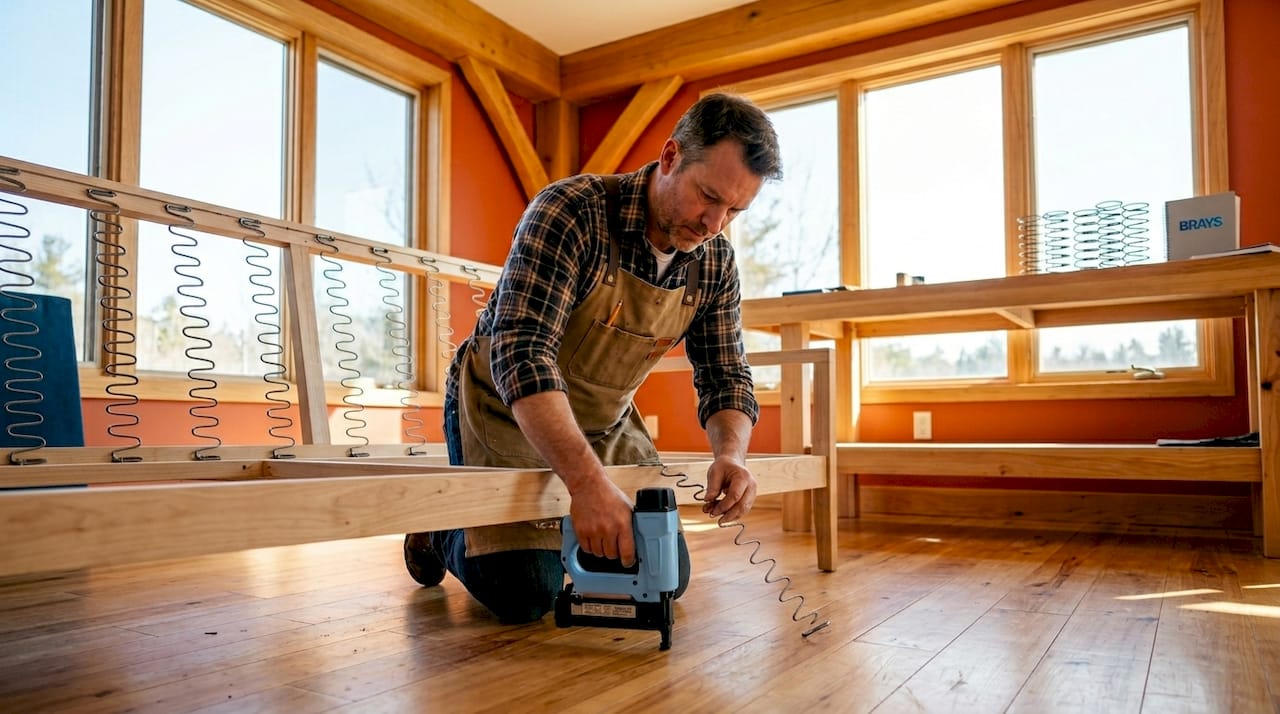
Most people sit down on a sofa, decide whether it feels comfortable, and give little thought to what lies beneath the upholstery. Yet the support system underneath is what determines how the sofa performs over years of daily use. Understanding what is sinuous spring sofa support, technically known as a zigzag or serpentine spring system, can transform the way you shop for, assess, and maintain your furniture. This article covers precisely what these springs are, how to judge their quality, how they compare to alternatives, and what practical steps you can take to keep them performing beautifully.
Table of Contents
- Key takeaways
- What is sinuous spring sofa support?
- Sinuous spring quality and durability
- Sinuous springs vs other sofa supports
- Inspecting, maintaining, and repairing your sofa
- My honest take on sinuous springs
- Discover quality upholstered furniture at BraysUK
- FAQ
Key takeaways
| Point | Details |
|---|---|
| Sinuous springs defined | Zigzag wire runs front-to-back across the seat frame, distributing weight evenly across the base. |
| Quality depends on gauge | At least 8-gauge wire with silent-tie reinforcement indicates a durable, well-constructed system. |
| Comparison with alternatives | Eight-way hand-tied springs offer greater longevity, but sinuous springs suit many frames and budgets well. |
| Common failure points | Popped retaining clips and loose tie wires cause sagging, not always the springs themselves. |
| Maintenance extends lifespan | Regular inspection and prompt clip repair can significantly prolong comfort and structural integrity. |
What is sinuous spring sofa support?
Sinuous spring sofa support is a suspension system built from continuous S-shaped steel wires, each one running from the front rail to the back rail of the seat frame. You may also see them described as zigzag springs, serpentine springs, or no-sag springs. All these names refer to the same construction: a series of repeating curves, fixed to the frame at each end with metal retaining clips, and reinforced across the width with shorter tie wires or cross bracing.
Pressing the fabric deck under the cushions reveals sinuous springs as long, continuous wires rather than distinct individual coils. They sit nearly flat with a slight arc, and that gentle tension is what pushes back against your weight when you sit down. Typically, the springs are installed with a spacing of 2 to 3 inches between each wire, running parallel from front to back across the entire seat area.
The geometry is simple but effective. Each spring absorbs and distributes load along its full length, transferring pressure evenly across the frame rather than concentrating it at a single point. This is what gives a well-made sinuous spring sofa that firm yet yielding feel underfoot when you first lower yourself onto the seat.

Pro Tip: Before purchasing a sofa, try pressing the seat firmly without a cushion in place. A quality sinuous spring system will feel taut and even, with no soft patches or pronounced gaps between wires.
Sinuous spring quality and durability
Not all sinuous springs are made equal. The difference between a sofa that holds its shape for a decade and one that sags within two years often comes down to three factors: wire gauge, spring geometry, and the quality of the attachment hardware.
Quality sinuous springs use at least 8-gauge wire, and thicker is generally better for longevity. Thinner wire bends more readily under sustained load, which accelerates the loss of tension over time. Alongside gauge, the shape of the spring curves matters considerably. Closer, smaller turns in the zigzag pattern are superior to wide, open S-curves because they resist deformation more effectively under concentrated weight.
Reinforcement is the third pillar of quality. Silent-tie wires, clipped horizontally across the springs, prevent each wire from twisting or bowing sideways under load. Without them, springs can shift out of alignment and create uneven support across the seat. Signs of quality craftsmanship to look for include:
- Wire gauge of 8 or thicker (lower number means thicker gauge)
- Tight, small-turn spring geometry rather than wide S-curves
- Cross ties or silent-tie wires connecting each spring laterally
- Secure metal clips at every attachment point on the frame
- Consistent, even spacing between springs across the full seat width
A budget shortcut that appears frequently is the absence of cross ties entirely, leaving springs free to move independently. This approach reduces material costs but significantly compromises durability. Sinuous spring longevity depends heavily on the attachment hardware, so even technically strong springs can underperform if the clips and ties are inadequate.
Sinuous springs vs other sofa supports
Understanding sinuous spring sofa support fully requires knowing where it sits relative to the other suspension systems you will encounter in the market.

| Support type | Durability | Cost | Comfort feel | Best suited for |
|---|---|---|---|---|
| Eight-way hand-tied springs | Excellent | High | Deep, responsive | Premium sofas, frequent use |
| Sinuous springs (quality) | Good | Moderate | Firm, consistent | Mid-range and modern frames |
| Sinuous springs (budget) | Poor to fair | Low | Variable | Entry-level pieces |
| Individual coil springs | Good | Moderate | Bouncy, distinct | Traditional styles |
| Webbing or mesh straps | Poor | Low | Flat, minimal give | Occasional use only |
Eight-way hand-tied springs are widely regarded as the gold standard for upholstery. Each individual coil spring is tied at eight points with twine, creating a system that responds fluidly in multiple directions and distributes weight across a wide area. The process is labour-intensive and costly, but the result is a seat that resists sagging for decades under regular use. Sinuous springs are quicker to install, which is why they dominate mass-market production and allow manufacturers to offer competitively priced pieces without sacrificing basic comfort.
Webbing and mesh systems represent the budget end of the spectrum. Rubber or polypropylene straps stretched across the frame offer minimal resistance and tend to lose tension relatively quickly, particularly in seats that receive daily use.
One nuance worth noting: sinuous springs are sometimes the only practical choice for certain furniture designs, particularly swivel gliders and deep-profile modern frames where the linear geometry fits where coil systems cannot. In these contexts, a well-specified sinuous spring system is not a compromise. It is the considered, correct solution.
Inspecting, maintaining, and repairing your sofa
Knowing how the system works gives you the ability to diagnose and address problems before they worsen. Here is a practical approach to inspection and upkeep.
- Remove the seat cushions and press firmly across the fabric deck. You should feel even resistance throughout, with no pronounced dips or areas that give way sharply.
- Look underneath the sofa if the base allows access, or unzip any deck fabric. Check that all springs lie flat and parallel, with no wires bowed out of plane or twisted sideways.
- Check the retaining clips where each spring attaches to the front and back frame rail. Broken or missing clips cause springs to lose tension, creating seat dips that can easily be mistaken for cushion failure.
- Inspect the cross ties. Inspect for even spacing and confirm that silent-tie wires are present, intact, and not significantly corroded.
- Test the cushions separately by pressing them on a firm floor. If they feel full and resilient away from the frame, the support issue is in the springs, not the cushion fill.
For basic repairs, a popped clip can often be reattached using a replacement sinuous spring clip, available from upholstery suppliers, and fitted using pliers without specialist tools. A single bent or broken spring wire can be replaced individually without dismantling the entire system. When multiple springs have failed, or when the frame itself has warped, a professional upholsterer is the appropriate next step.
Pro Tip: Rotating your seat cushions every few weeks distributes wear evenly across the spring system and can extend the life of both cushions and springs by several years.
My honest take on sinuous springs
I’ve spent considerable time examining how sofas are constructed and what separates long-lasting pieces from those that disappoint within a couple of years. My honest view is that sinuous springs have an undeserved reputation in certain quarters as an inferior choice. That reputation is only partly justified, and only when applied to poorly specified examples.
What I’ve observed is that the technology itself is sound. Where sofas fail is in the hardware and the gauge. Manufacturers who cut costs on wire thickness or omit cross ties create systems that were never going to last, regardless of how the springs are marketed. When the wire is properly gauged and the tie wires are in place, a sinuous spring sofa can serve a household admirably for many years.
The mistake I see buyers make most often is focusing on fabric and cushion depth while completely overlooking what lies beneath. A beautiful sofa with a poorly built support system is a beautiful sofa that will disappoint you within five years. Ask the retailer about spring gauge and reinforcement. If they cannot answer, treat that as information about the quality of the product.
— V
Discover quality upholstered furniture at BraysUK

At BraysUK, we understand that the most beautiful piece of furniture must also be built to endure. The knowledge you have gained about spring systems, wire gauge, and reinforcement reflects the same rigorous standards we apply when selecting every piece in our collection. For those interested in how advanced spring technology translates into outstanding sleeping and resting comfort, our Flexisleep electric adjustable base and the eco natural dual tension bed exemplify what meticulous internal engineering feels like in practice.
If you are building a considered, elegant living space, explore our range of upholstered headboards to discover how craftsmanship and design can work beautifully together across every room in your home.
FAQ
What are sinuous springs also called?
Sinuous springs are also referred to as zigzag springs, serpentine springs, or no-sag springs, all describing the same S-shaped wire suspension system used across sofa seat frames.
Are sinuous springs good quality?
Sinuous springs can be excellent quality when made from 8-gauge or thicker wire with cross-tie reinforcement. Durability depends heavily on build quality and hardware rather than the technology itself.
How do I know if my sofa has sinuous springs?
Remove the seat cushions and press the fabric deck firmly. Sinuous springs feel like long, rigid wires running front-to-back, unlike individually distinct coil springs.
Why is my sinuous spring sofa sagging?
Sagging is most commonly caused by broken or popped retaining clips rather than spring failure itself. Replacing the clips often restores tension and corrects the sag without a full repair.
How long do sinuous spring sofas last?
A well-specified sinuous spring system with proper gauge wire and reinforcement can last ten or more years with regular maintenance, including cushion rotation and periodic clip inspection.