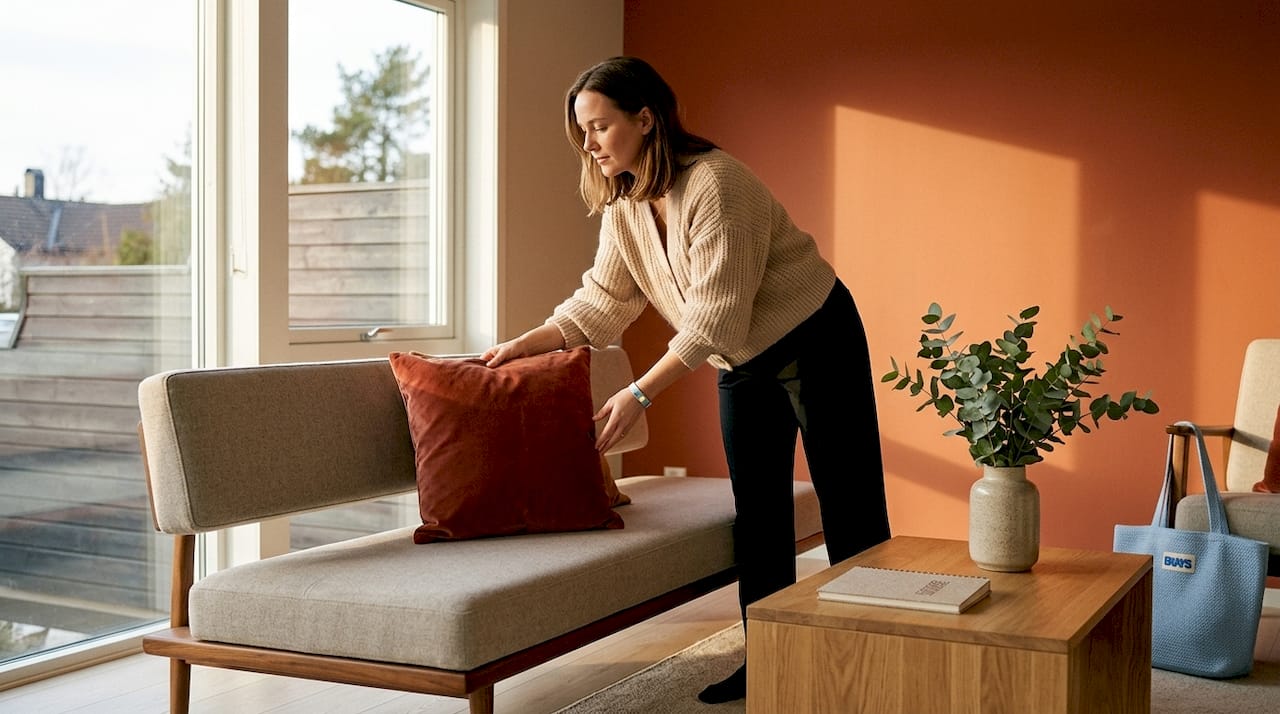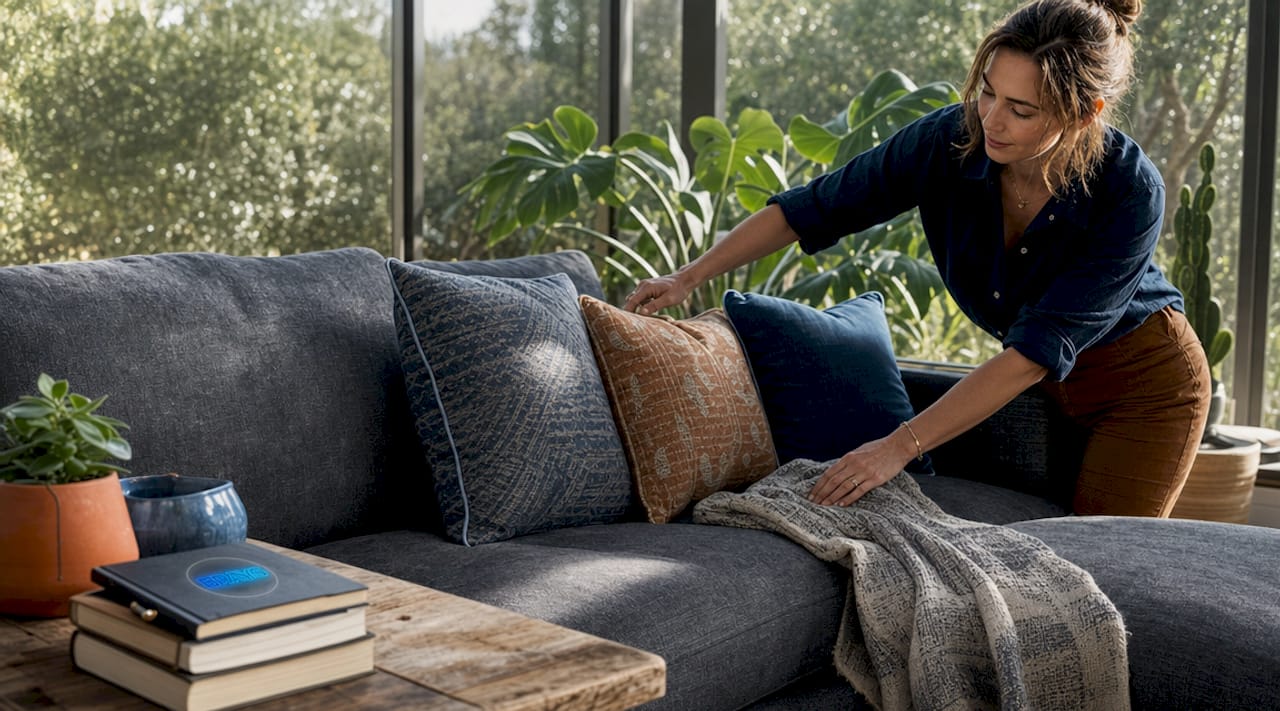
Woman arranging cushions on sofa in living room

Why soft furnishings transform living rooms

Soft furnishings are defined as the textile-based elements of a room, including curtains, cushions, rugs, throws, and upholstered furniture, and they are the single most impactful category of change you can make to a living room without structural work. Interior designer Ilse Crawford has long argued that tactile comfort is as important as visual beauty in residential spaces, and the science supports her position. The benefits of soft furnishings span acoustic performance, thermal regulation, air quality, and emotional well-being, making them far more than decorative accessories. This article explains precisely why soft furnishings transform living rooms and how to use them with intention.

Why soft furnishings transform living rooms: the environmental case

The practical, measurable effects of textiles on a living room’s environment are often underestimated. Soft furnishings moderate multiple environmental factors simultaneously, including heat retention, sound absorption, airflow disruption, and lighting softness, contributing to a holistic sense of comfort that no single piece of furniture can replicate alone.

Acoustic absorption

Heavier fabrics like velvet and thick wool provide superior sound absorption and thermal insulation, particularly when curtains are hung with an air gap of 90 to 110mm behind them. This means a room fitted with floor-length velvet curtains and a wool rug will feel noticeably quieter than the same room with bare floors and blinds. Upholstered furniture, heavy curtains, and rugs absorb sound and reduce echo, lowering footstep noise and improving overall calmness. Crucially, laboratory acoustic test results tend to underestimate real-world performance, which improves further with layered fabric treatments and installation techniques that incorporate air gaps and fullness.

Thermal comfort

Soft textiles moderate heat loss, making rooms feel warmer even at the same thermostat setting by reducing cold surface exposure and lowering radiant heat loss from the body. A well-dressed window with lined curtains can meaningfully reduce the chill felt near glazing during winter months. Layering a rug over hard flooring adds a further thermal barrier underfoot, which is particularly valuable in ground-floor rooms or properties with suspended timber floors.

Indoor air quality

Soft furnishings act as the home’s largest passive air filter, trapping particulate matter and allergens from the air. However, material choice matters considerably: indoor VOC levels can be up to 10 times higher than outdoor levels, and certain synthetic fabrics or chemically treated textiles contribute to this. Choosing natural fibres such as linen, cotton, or untreated wool reduces VOC risk while retaining the air-filtering benefit.

Key environmental benefits at a glance:

  • Velvet and wool curtains with air gaps deliver the strongest acoustic and thermal performance
  • Lined curtains reduce radiant heat loss near windows in winter
  • Rugs over hard flooring add thermal insulation and reduce impact noise
  • Natural fibre textiles trap allergens without contributing to VOC levels
  • Layering multiple textile types compounds all environmental benefits

How do soft furnishings enhance visual and tactile appeal?

The impact of soft furnishings on a room’s appearance and sensory atmosphere is immediate and profound. Hard surfaces such as timber floors, plaster walls, and glass create visual clarity but also a certain coldness. Textiles interrupt that coldness with warmth, depth, and personality.

Textural layering with bouclé, linen, and velvet improves sensory balance, signalling warmth and safety psychologically. Designers consistently report that rooms with diverse textures feel less clinically detached, and the 2026 textural layering trend reflects a broader cultural appetite for spaces that feel emotionally grounding rather than merely photogenic. Combining a linen sofa with a bouclé cushion, a jute rug, and velvet curtains creates a layered sensory experience that no single material achieves alone.

Colour plays an equally decisive role. Warm-toned textiles in terracotta, ochre, or deep teal draw the eye and create focal points, while neutral palettes in oatmeal, stone, or soft grey allow furniture to breathe. The combination of rugs, curtains, and cushions transforms the perception of a space effectively, reducing visual harshness and supporting calmer sensory experiences. For those exploring Afrocentric living room decor, bold textile patterns and rich colour combinations demonstrate precisely how soft furnishings carry cultural identity and visual power simultaneously.

Hands layering textured cushions in warm-toned living room

Soft furnishings are also the most flexible design tool available. Unlike paint or flooring, cushions, throws, and rugs can be changed seasonally or whenever your taste evolves, without cost or commitment.

What should you consider when choosing textiles for your space?

Selecting the right soft furnishings requires balancing aesthetics, practicality, and the specific demands of your living room and lifestyle.

Infographic illustrating steps to choose soft furnishings

Fabric type Best for Consideration
Velvet Acoustic absorption, luxury feel Requires regular brushing; not ideal for high-traffic homes with pets
Linen Breathable, natural, low VOC Creases easily; suits relaxed or Scandinavian-inspired schemes
Wool Thermal insulation, durability Heavier weight; excellent for rugs and curtains in cooler rooms
Bouclé Textural depth, contemporary look Less durable under heavy use; best for accent cushions or low-use sofas
Synthetic blends Budget-friendly, easy-care May contribute to VOC levels; choose low-emission certified options

For minimalist interiors, high-quality neutral-toned textiles provide the luxury and depth that spare schemes require to avoid feeling sterile and unfinished. A single oversized linen cushion or a well-chosen wool throw can do more for a minimalist room than a dozen decorative objects. Maximalist and eclectic schemes, by contrast, benefit from pattern mixing and layering across multiple textile categories simultaneously.

Renters have particular reason to prioritise soft furnishings. Soft furnishings are flexible and removable, allowing personalisation without violating lease agreements. A renter can transform a bland, magnolia-walled living room with a statement rug, layered cushions, and floor-length curtains, then take every piece to the next property. For practical guidance on making the most of limited or rented spaces, BraysUK’s guide to multifunctional furniture for small spaces pairs well with a considered textile approach.

Pro Tip: When changing your scheme seasonally, swap heavy wool throws and velvet cushions for lightweight linen and cotton in warmer months. You retain the layered look while adjusting the thermal weight of the room.

What are the most effective ways to layer soft furnishings?

A structured layering approach produces the most cohesive and comfortable results. Follow this sequence for a living room that feels considered rather than cluttered:

  1. Base upholstery first. Your sofa fabric sets the dominant texture and colour. Choose a fabric that works with your lifestyle, whether that is a performance weave for families or a plush velvet for a more formal sitting room.
  2. Anchor with a rug. A rug defines the seating zone, adds thermal and acoustic insulation, and grounds the colour palette. In open-plan areas, rugs are the primary tool for creating distinct zones without physical dividers.
  3. Frame with curtains. Floor-length curtains add height, warmth, and acoustic mass. Hang them as high and wide as the wall allows to maximise both visual impact and thermal performance.
  4. Layer cushions with intention. Use three to five cushions in varying sizes and textures. Combine a plain base cushion with a textured or patterned accent to add depth without visual noise.
  5. Add a throw as the final layer. A throw draped over the arm or back of a sofa introduces a fifth texture and signals comfort. It also serves a practical function on cooler evenings.

Maintenance is non-negotiable if you want to retain the health benefits of your textiles. Regular deep cleaning is required to maintain air-filtering benefits and avoid allergen release. Vacuuming alone is insufficient; cushion covers, throws, and curtains need periodic washing or professional cleaning to function as genuine air filters rather than allergen reservoirs.

Pro Tip: Rotate cushion covers and throws through a wash cycle every six to eight weeks. This simple habit preserves indoor air quality and keeps textiles looking fresh far longer.

Key takeaways

Soft furnishings transform living rooms by simultaneously improving acoustic comfort, thermal performance, air quality, visual depth, and emotional warmth, making them the most versatile investment in any home.

Point Details
Environmental performance Velvet, wool, and layered textiles reduce echo, retain heat, and filter airborne particulates.
Sensory and visual depth Combining bouclé, linen, and velvet creates warmth and prevents rooms feeling clinical or sterile.
Fabric selection matters Natural fibres reduce VOC risk; fabric weight determines acoustic and thermal gains.
Renters’ best tool Soft furnishings personalise spaces without permanent changes, making them ideal for rented homes.
Maintenance is essential Deep cleaning every six to eight weeks preserves air-filtering benefits and prolongs textile life.

The case for putting softness first

Most people approach a living room refresh by thinking about furniture first and textiles as an afterthought. In my experience, that order produces rooms that look complete but never quite feel right. The sofa might be beautiful, but if the floor is bare, the windows are undressed, and the cushions are sparse, the room will still feel cold and acoustically harsh.

What I find genuinely surprising is how much of a room’s perceived quality comes from textile weight and layering rather than the price of individual pieces. A mid-range sofa dressed with well-chosen velvet cushions, a generous wool throw, and floor-length linen curtains will outperform an expensive sofa sitting alone in a bare room every time. The textiles do not just decorate the sofa. They complete the room.

The flexibility argument is also underrated. You can repaint a room once every few years. You can restyle it with textiles every season, every mood, every life stage. That adaptability has real value, particularly for renters who cannot alter their walls or floors. Soft furnishings are not a compromise. They are the most responsive and personal design tool available to you.

— V

Transform your living room with BraysUK

BraysUK understands that a truly comfortable living room is built from the inside out, with quality textiles and furnishings that work together rather than in isolation.

https://braysuk.com

BraysUK’s curated selection of sofas, upholstered pieces, and living room accessories is designed to complement a layered textile approach, combining contemporary design with lasting durability at accessible prices. Whether you are a homeowner investing in a long-term scheme or a renter seeking adaptable, removable styling solutions, BraysUK offers pieces that anchor a room beautifully. Explore how bedroom furniture affects daily comfort for further guidance on how considered furnishing choices improve well-being throughout the home, and browse BraysUK’s living room range to find your starting point.

FAQ

What are soft furnishings in a living room?

Soft furnishings are the textile-based elements of a room, including curtains, cushions, rugs, throws, and upholstered furniture. They differ from hard furnishings such as tables and shelving in that they add tactile comfort, acoustic absorption, and visual warmth.

Do soft furnishings actually improve sound quality in a room?

Yes. Upholstered furniture, heavy curtains, and rugs absorb sound and reduce echo, with heavier fabrics like velvet and wool delivering the strongest acoustic performance, particularly when curtains are installed with an air gap behind them.

Are soft furnishings suitable for minimalist interiors?

Soft furnishings are particularly important in minimalist interiors. High-quality neutral-toned textiles add the tactility and depth that spare schemes require to avoid feeling sterile, without compromising the clean aesthetic.

Can renters use soft furnishings to personalise their homes?

Soft furnishings are the ideal tool for renters because they are entirely removable and require no permanent alterations. Rugs, curtains, cushions, and throws can transform a rented living room completely and travel with you to your next home.

How often should soft furnishings be cleaned?

Regular deep cleaning is required every six to eight weeks to maintain the air-filtering benefits of textiles and prevent allergen build-up. Vacuuming alone is insufficient for cushion covers, throws, and curtains.

Modern living room with low-profile sofa and natural light

Why low-profile sofas suit modern spaces

Low-profile sofas are defined by their reduced back height, slim silhouette, and often raised legs, all of which work together to create a sense of openness and refined modernity in living spaces. Understanding why low-profile sofas suit modern spaces comes down to a single design principle: less visual mass means more perceived room. Whether you are furnishing a compact city flat or an open-plan family home, this category of seating, sometimes called platform or contemporary low-back seating in the trade, delivers both aesthetic clarity and practical spatial advantage. In 2026, shoppers are increasingly drawn to these pieces precisely because they offer a premium look without the visual weight of traditional upholstered furniture.

Why low-profile sofas suit modern spaces better than traditional designs

The most compelling reason to choose a low-profile sofa is what it does to your room’s visual horizon. Lowering the visual horizon preserves sightlines across the room, preventing the sofa from acting as a visual barrier that segments the space. The eye travels smoothly from one wall to the other, creating a sense of continuity that a high-backed sofa simply cannot offer.

More visible wall space above the sofa makes ceilings appear taller. This is not a minor effect. Ceilings feel higher and the room less segmented when the sofa occupies less of the vertical plane, which is why interior designers consistently specify low-profile pieces for rooms with standard ceiling heights.

Spacious loft with low-profile sofa and high ceilings

The key design traits that produce this effect include a lower back height, slim or absent arms, and raised legs that expose the floor beneath the frame. Each element reduces what designers call “visual mass,” the sense of weight and solidity that makes furniture feel imposing. Raised legs, in particular, allow light to pass beneath the sofa, compounding the feeling of airiness throughout the room.

Feature Low-profile sofa Traditional high-back sofa
Back height Low, preserves sightlines High, creates visual barrier
Visual mass Minimal, feels light Substantial, anchors heavily
Ceiling perception Appears taller Can feel lower
Room segmentation Minimal Pronounced
Floor visibility High (raised legs) Low (skirted or blocked)

Pro Tip: Pair a low-profile sofa in a pale, light-reflective fabric with a low-slung coffee table to maintain a consistent visual horizon across the entire seating area, amplifying the sense of space.

How do low-profile sofas benefit different modern living arrangements?

The advantages of low-profile seating are not limited to small rooms, though they are particularly transformative there. Small and narrow rooms benefit most directly, as the reduced visual bulk maximises the sense of openness and allows natural light to circulate more freely around the space.

Infographic comparing visual impact and practical use of low-profile sofas

In open-plan layouts, which now define a significant proportion of new-build and renovated UK homes, these sofas reduce visual barriers between zones without sacrificing definition. Modular low-profile sofas enable flexible layouts and fluid social interaction spaces, making them the natural choice for living areas that also serve as dining or working zones.

The benefits extend to how a room handles light. A low-profile sofa placed beneath a window does not block natural light from spreading across the floor, which matters enormously in rooms with moderate or north-facing light. Paired with warm ambient lighting at floor level, the effect is a calm, breathable atmosphere that feels genuinely luxurious.

From a stylistic perspective, the minimalist design philosophy that underpins low-profile furniture aligns precisely with contemporary, Japandi, and Scandinavian interior trends that continue to dominate UK home design in 2026. The clean lines and restrained proportions of these sofas complement rather than compete with architectural features, artwork, and statement lighting.

  • Choose upholstery in light neutrals such as oatmeal, warm white, or soft grey to reflect light and reduce visual weight further.
  • Opt for performance fabrics or leather finishes in households with children or pets, as these combine durability with the sleek aesthetic low-profile designs demand.
  • Avoid heavy, dark velvets on very low frames in small rooms, as the combination can read as dense and grounding rather than airy.
  • Select raised-leg models over skirted bases to maintain floor visibility and the illusion of space beneath the sofa.

Pro Tip: In a room with limited natural light, choose a sofa in a warm ivory or camel tone rather than a cool grey. Warm tones reflect ambient light more generously and prevent the space from feeling flat.

Low-profile vs modular vs high-back sofas: which suits your lifestyle?

Modern living rooms increasingly favour modular and low-profile seating for adaptability, comfort, and openness compared to traditional high-backed sofas. Understanding the distinctions helps you choose with confidence rather than compromise.

Modular sofas offer configurable layouts, allowing you to add, remove, or rearrange sections as your household evolves. When modular designs also incorporate low-profile proportions, as seen in pieces like the Ciello modular sofa and the Dawson extended silhouette, you gain both spatial elegance and practical flexibility. This combination is particularly well suited to growing families or those who move frequently.

High-back sofas, by contrast, deliver superior lumbar and neck support and create a cocooning sense of enclosure that suits dedicated media rooms or formal sitting rooms where visual openness is less of a priority. If you are comparing oversized sofa options for a snug, intimate space, a high-back design may serve you better than a low-profile alternative.

Sofa type Best for Visual effect Flexibility
Low-profile fixed Open-plan, compact rooms Maximum openness Low
Low-profile modular Adaptable modern homes Openness with flexibility High
High-back fixed Media rooms, formal spaces Enclosure, warmth Low
High-back modular Large family rooms Defined zones Medium

Sofas with lower backs allow the eye to travel smoothly across the space, creating emotional ease alongside visual flow. This reduced visual interruption is particularly vital in modern open-plan and multi-functional spaces where the living area must feel welcoming rather than divided.

Practical tips for selecting and styling low-profile sofas

Choosing the right low-profile sofa begins with measuring your room’s proportions carefully. A sofa that is too wide for a narrow room will negate the spatial benefits of its low height, so prioritise width-to-room ratio before considering any other feature.

  1. Measure the visual horizon first. Stand at your room’s entrance and note the height at which furniture interrupts your sightline. Aim for a sofa back that sits below this line to preserve the open view.
  2. Prioritise frame quality. A low-profile design places the frame’s construction under greater scrutiny because there is less upholstery to conceal structural weaknesses. Understanding how frame construction determines sofa lifespan will help you invest wisely.
  3. Choose complementary furniture at consistent heights. A low-profile sofa paired with a tall sideboard creates visual imbalance. Keep surrounding pieces at a similar or graduated height to maintain harmony.
  4. Style with cushions deliberately. Two or three cushions in contrasting textures add warmth without adding visual bulk. Avoid over-stuffing a low-profile sofa with cushions, as this defeats the purpose of its restrained proportions.
  5. Consider the room’s colour palette holistically. Appropriate layout and colour choices compound the spacious feeling that raised legs and slim arms create.

Pro Tip: Low-profile sofas tend to be more affordable than traditional upholstered designs while delivering a contemporary look. This makes them an excellent entry point for shoppers exploring the affordable luxury furniture category without overextending their budget.

Key takeaways

Low-profile sofas suit modern spaces because their reduced visual mass, lower back height, and raised legs preserve sightlines, enhance perceived ceiling height, and create a calm, breathable atmosphere that traditional high-back designs cannot replicate.

Point Details
Visual horizon management Lowering the sofa’s back height preserves sightlines and prevents room segmentation.
Ceiling height illusion Reduced visual mass and raised legs make ceilings appear taller and rooms feel larger.
Open-plan compatibility Low-profile designs reduce visual barriers between zones without sacrificing spatial definition.
Styling precision matters Light upholstery, raised legs, and consistent furniture heights compound the spacious effect.
Modular options add flexibility Low-profile modular sofas combine spatial elegance with adaptable layouts for evolving households.

Why I believe low-profile sofas are the defining furniture choice of this decade

Having observed how people actually live in their homes, rather than how they imagine they will live in them, I have come to a firm conclusion: most people buy sofas that are too tall for their rooms. The instinct to choose a sofa that feels substantial in a showroom consistently works against the room it is placed in. A high-backed sofa that commands attention in isolation becomes a wall once it is against your living room wall.

What strikes me most about low-profile designs is their emotional generosity. Refined simplicity creates balanced and emotionally comfortable living areas, and this is something you feel before you consciously register it. Rooms with low-profile seating feel calmer, more considered, and more genuinely welcoming than rooms dominated by upholstered bulk.

The counter-intuitive truth is that a smaller-looking sofa often makes a room feel more luxurious, not less. When the space around the sofa breathes, the quality of the piece itself becomes more visible. The fabric, the leg detail, the cushion arrangement: all of these read more clearly when they are not competing with sheer volume. For anyone serious about creating a modern interior that feels as good as it looks, the low-profile sofa is not a compromise. It is the correct choice.

— V

Discover BraysUK’s curated collection for modern homes

BraysUK brings together a meticulously chosen selection of contemporary sofas and living room furniture designed to transform your space with effortless elegance. Whether you are furnishing a compact flat or reimagining an open-plan family room, the BraysUK collection offers pieces that balance refined aesthetics with lasting durability.

https://braysuk.com

For those working with limited square footage, BraysUK’s small space furniture guide offers practical, room-by-room strategies for selecting and placing furniture that maximises both style and function. You will also find detailed sofa styling advice to help you position your new sofa as a genuine focal point rather than simply a place to sit. BraysUK is committed to helping you make confident, considered choices that reflect your taste and serve your lifestyle for years to come.

FAQ

What makes a sofa low-profile?

A low-profile sofa is characterised by a reduced back height, slim or absent arms, and often raised legs that expose the floor beneath the frame. These design traits reduce visual mass and make interiors feel lighter and more open.

Are low-profile sofas comfortable for everyday use?

Yes, provided the seat depth and cushion density are appropriate for your body and lifestyle. Many contemporary low-profile models, including modular options like the Ciello and Dawson ranges, are designed specifically for daily comfort alongside their visual appeal.

Do low-profile sofas work in large rooms?

Low-profile sofas work well in large rooms when paired with appropriately scaled furniture and a considered layout. In very large spaces, a modular low-profile configuration maintains the open aesthetic while providing sufficient seating volume.

Are low-profile sofas a good choice for small flats?

Low-profile sofas are particularly well suited to small flats because they maintain visual flow and reduce barriers between zones, making compact rooms feel significantly more spacious than high-back alternatives.

How do I style a low-profile sofa without it looking sparse?

Layer textures through cushions and a throw, introduce a low-slung coffee table at a consistent height, and add a statement rug to anchor the seating area. This creates warmth and depth while preserving the clean, open proportions that make low-profile designs so effective.

How to Buy a Mattress Online Without Guessing

How to Buy a Mattress Online Without Guessing

Buying a mattress online can feel slightly absurd the first time. You are about to spend real money on something you cannot lie on for ten minutes under showroom lighting, yet that is exactly why learning how to buy a mattress online the right way matters. A good online purchase is not about guessing. It is about knowing which details actually affect comfort, support, fit, and value once the mattress is in your bedroom.

How to buy a mattress online starts with your sleep habits

Most shoppers begin with mattress types. That makes sense, but it is not the best first step. Start with yourself. The right mattress for a side sleeper in a small apartment is not automatically the right mattress for a couple sharing a king bed, and neither of those shoppers necessarily wants the same feel as someone furnishing a guest room.

Think about your usual sleep position, whether you sleep warm, whether you wake with pressure points or lower back discomfort, and whether motion from a partner bothers you. These details narrow the field fast. Side sleepers often prefer more cushioning at the shoulders and hips. Back sleepers usually need a balance of comfort and support. Stomach sleepers often do better with a firmer feel that helps keep the body from sinking too deeply.

This is also where lifestyle comes in. If you are upgrading an entire bedroom, the mattress has to work with the bed frame, room dimensions, and the overall setup you want. If your home leans contemporary, a sleek upholstered bed with a medium comfort mattress may be the kind of practical and stylish pairing that keeps the whole space feeling considered rather than pieced together.

Pick the right mattress size before you compare comfort

Size mistakes are more expensive than firmness mistakes. Firmness can sometimes be managed with a topper. A mattress that is too small, too large, or too deep for your bed frame is a much bigger problem.

Measure your existing bed frame carefully, especially if you are not replacing the whole bed. Check room clearance too. A queen may fit on paper but still make it awkward to open drawers, walk around the bed, or place nightstands comfortably. If you are buying for a child, a guest room, or a compact bedroom, a smaller size may simply make the space work better.

Depth matters more than people expect. Some modern mattresses are significantly deeper than older models, which can change the look of the bed and affect fitted sheet fit. If you have a headboard with a specific visual proportion in mind, or an ottoman or adjustable base, always check compatibility before ordering.

Understand mattress materials without overcomplicating it

When shoppers try to figure out how to buy a mattress online, materials often become the most confusing part. The trick is to focus less on jargon and more on what each material tends to feel like.

Memory foam usually offers strong contouring and pressure relief. It can be a great option if you like a body-hugging feel or want to reduce motion transfer. The trade-off is that some people find it warmer or less responsive when changing position.

Pocket sprung mattresses tend to feel more traditional and supportive, with springs that react individually to movement. Many shoppers like them for their balance of structure and comfort. Hybrid mattresses combine springs with foam or other comfort layers, which makes them a strong choice if you want a modern sleep surface without losing bounce and support.

There is no single best construction. It depends on what you enjoy sleeping on. If you currently like your mattress but want an upgrade, identify what you like about it first. Is it the cushioning, the firmness, the lift, or the way it supports two sleepers differently? That answer is usually more useful than a long list of technical terms.

Firmness ratings matter, but they are not universal

One of the biggest online shopping traps is assuming that every brand defines firmness the same way. They do not. A medium mattress from one range may feel closer to medium-firm in another.

Treat firmness labels as a guide, not a guarantee. Product descriptions are often more revealing than the rating alone. Look for phrases that suggest sink-in comfort, responsive support, pressure relief, edge support, or a more supportive sleep surface. Those details help you build a realistic expectation.

Weight also changes how a mattress feels. A lighter sleeper may experience the same mattress as firmer than a heavier sleeper. Couples can run into this issue if one partner wants plush comfort and the other wants more support. In that case, a medium or medium-firm hybrid often becomes the practical middle ground, though it depends on your sleep positions and sensitivity to movement.

Read product pages like a smart shopper

If you want to know how to buy a mattress online with confidence, stop skimming and start comparing the details that affect life after checkout. Product pages should tell you more than comfort level.

Look closely at the mattress height, construction, support layers, and any notes about cooling, edge support, or pressure relief. Check whether the mattress is designed for a standard bed frame, slatted base, ottoman bed, or adjustable base. This matters if you are creating a bedroom that combines style with practical storage or flexibility.

Also pay attention to care information. A mattress with a removable cover, easy maintenance, or a no-turn design may suit busy households better than something that needs more effort. These practical features are easy to overlook when the headline promise is comfort, but they can make a real difference over time.

Delivery, returns, and trial periods are part of the product

Online mattress value is not just the mattress itself. Delivery options, return terms, and sleep trials are part of what you are buying.

Before you commit, check how the mattress arrives, how long delivery usually takes, and whether setup or room-of-choice delivery is offered. A king mattress delivered to your front door in a heavy box is a different experience from one placed in your bedroom. If you live in a walk-up or are furnishing on a deadline, these details matter.

Return windows and money-back promises deserve the same attention. A generous policy adds reassurance, but read the terms. Some returns require the mattress to be kept for a minimum trial period. Others may include collection conditions. This is where an established online retailer can feel far more reassuring than an unknown seller with a low headline price.

Price matters, but value is the smarter filter

Everyone likes a deal, especially when furnishing a bedroom involves more than one purchase. Still, the cheapest mattress is rarely the smartest buy if it needs replacing too soon or never feels right.

A better way to compare is to look at the whole package: materials, comfort profile, warranty, delivery offer, return policy, and whether the retailer has a strong range that lets you compare styles and specifications side by side. For many shoppers, convenience has value too. Being able to pair a mattress with a modern bed frame, headboard, or storage furniture in one order saves time and helps the room feel more coordinated.

Retailers like Brays UK appeal for exactly that reason. The experience is not just about buying one mattress. It is about building a bedroom that looks current, feels comfortable, and arrives with the kind of reassurance people want when making a higher-value purchase online.

Common mistakes when buying a mattress online

The most common mistake is buying based on a vague idea of comfort. “Soft” and “supportive” sound useful, but they do not mean much without considering sleep position, body type, and mattress construction.

Another mistake is ignoring the bed base. Not every mattress suits every frame, and this becomes especially important with slatted bases, storage beds, and adjustable options. The wrong pairing can affect comfort and longevity.

Shoppers also underestimate bedroom scale. A larger mattress sounds appealing until it dominates the room. And finally, many people wait until checkout to read delivery and return details, when those should be part of the decision from the start.

A simple way to make the final choice

If you are stuck between two or three options, strip the decision back to what matters most. Choose the correct size first. Then choose the comfort level that matches your sleep position. Then compare construction, practical features, and retailer reassurance.

Do not chase perfection on paper. A well-made mattress that suits your sleep habits, fits your bed properly, and comes with clear delivery and return terms is usually the right online choice. The goal is not to recreate a showroom experience. It is to shop smarter than the showroom ever allowed.

The best mattress purchase usually comes from knowing your non-negotiables and letting everything else be a style and value decision.

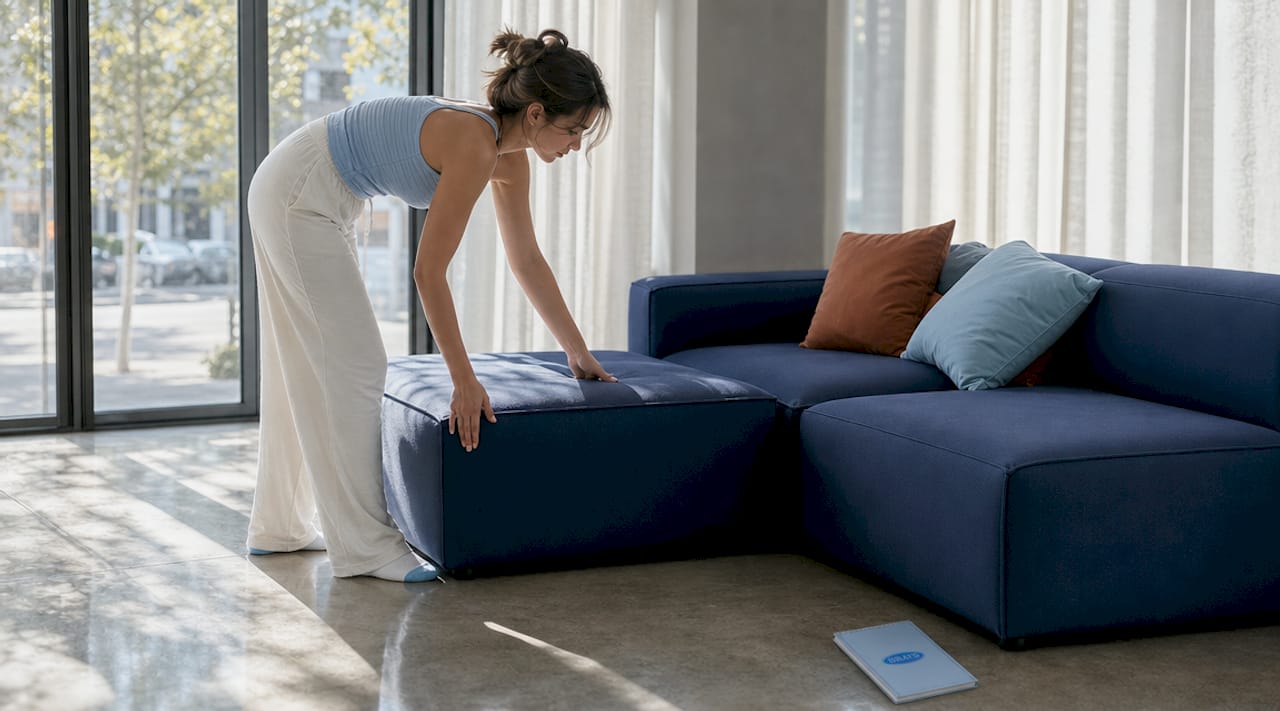
Woman arranging modular sofa in apartment

Modular sofa benefits renters: 8 reasons to switch

A modular sofa is defined as a seating system built from individual, interchangeable sections that can be rearranged, expanded, or reduced to suit any living space. For renters, this design is the most practical seating investment available, combining transport ease, spatial adaptability, and long-term value in a single purchase. Brands such as Swyft and retailers like ProperSofa have made modular seating central to the renter conversation, and the modular sofa benefits renters experience are too significant to overlook when furnishing a home you may not occupy permanently.

1. How modular sofas enhance flexibility in small rental spaces

Flexible configurations including straight, L-shape, U-shape, and standalone modules mean a single sofa can serve a studio flat, a two-bedroom apartment, or anything in between. This adaptability is the defining advantage of modular furniture for apartments, where no two floor plans are identical and awkward alcoves or bay windows can make standard sofas feel clumsy and ill-fitting.

Man moving modular sofa section outdoors

Renters can add or remove modules as their household grows or shrinks, which is a practical reality that fixed sofas simply cannot match. Experts at Furnishings Pro recommend mapping circulation zones before purchase to avoid spatial overwhelm, ensuring the sofa serves the room rather than dominating it.

Key configuration benefits include:

  • Straight layout: Ideal for narrow living rooms or open-plan studios where wall space is limited.
  • L-shape layout: Defines a seating zone within a larger room without requiring additional furniture.
  • U-shape layout: Creates an intimate social setting in spacious flats, perfect for entertaining.
  • Standalone modules: Useful as occasional seating, home office chairs, or bedroom accent pieces.

Pro Tip: Before purchasing, sketch your room to scale and test at least two configurations on paper. Small rentals benefit most from one clear geometric approach rather than ad hoc rearranging, which can create visual clutter and restrict movement.

2. Why modular sofas are easier to move when you relocate

Individual modules typically weigh 50 to 80 pounds, which means a single person can carry each piece independently without professional assistance. For context, a traditional three-seater sofa can weigh upwards of 120 pounds as a single unit, making stairwells and narrow Victorian hallways a genuine obstacle.

The practical moving advantages for renters are considerable:

  1. Narrow access: Modules designed for box-flat delivery navigate tricky UK property access including Victorian and Edwardian stairways with far less risk of damage.
  2. Lift-friendly sizing: Each section fits standard residential lifts, removing the need to negotiate awkward angles on stairwells.
  3. DIY relocation: Renters can self-move their sofa without hiring a specialist removal firm, saving a meaningful sum per move.
  4. Deposit protection: Smaller pieces mean less wall contact during transit, reducing scuffs and damage that could cost you your security deposit.

The financial saving from even one self-managed move can offset a significant portion of the sofa’s original cost, which makes the investment argument for modular seating solutions particularly compelling over a renting career spanning several properties.

3. What long-term value modular sofas offer renters

Replacing individual modules rather than discarding an entire sofa extends the product’s lifespan across multiple apartment moves and preserves your investment over years rather than months. A worn armrest section or a faded corner piece can be swapped without purchasing a new sofa, which is both economically and environmentally sound.

The long-term value of modular sofas rests on three pillars:

  • Expandability: Purchase a two-seat configuration today and add a chaise or extra corner module when you move to a larger flat.
  • Repairability: Swap damaged or worn sections individually, avoiding the full sofa discard that contributes to landfill waste.
  • Adaptability: Downsize your configuration when moving to a smaller property without losing the entire piece.

“Modular sofas are best suited for those with changing living situations, frequent moves, or evolving household needs rather than static long-term dwellers.” — ProperSofa, Best Modular Sofa UK Guide 2026

Modular sofas cost 20 to 40% more per seat than fixed sofas, reflecting the engineering required for modularity. That premium is justified when the sofa travels with you through three or four rental properties rather than being left behind or replaced at each move. Understanding sofa frame construction also helps renters assess whether a modular system will endure the repeated assembly and disassembly that relocation demands.

4. Style and comfort advantages for renters

Modular sofas allow renters to personalise spaces without permanent alterations, which is the defining constraint of rented living. You cannot paint walls or install built-in shelving, but you can entirely transform the character of a room by reconfiguring your seating layout or introducing a new module in a contrasting fabric.

The style and comfort benefits are genuinely varied:

  • Chaise configurations: Add a chaise longue module for a lounging setup that rivals dedicated reading chairs.
  • Ottoman modules: Introduce a central ottoman section to create a multifunctional coffee table and footrest combination.
  • Work-from-home adaptability: Rearrange modules to create a focused corner seating area that separates work from leisure within a studio flat.
  • Fabric and colour choices: Many modular systems offer interchangeable covers, allowing you to refresh the sofa’s appearance without replacing the frame.

Refreshing your layout seasonally keeps interiors feeling considered and alive, which matters when you are living in a space you cannot alter structurally. The advantages of modular sofas in this regard extend well beyond practicality into genuine personal expression.

5. Are there drawbacks renters should consider?

Modular sofas carry genuine trade-offs that deserve honest assessment before purchase. Connection hardware quality varies significantly between manufacturers, and poorly engineered clips or brackets will loosen over time, particularly if the sofa is reconfigured frequently. This is not a reason to avoid modular seating, but it is a reason to prioritise build quality over price alone.

Some configurations also require more planning than renters anticipate. Assembly typically takes 15 to 30 minutes per reconfiguration, which is manageable for occasional moves but can feel laborious if you rearrange frequently. The higher per-seat cost is also a real consideration for renters on tighter budgets, though the lifespan argument generally offsets this over time.

Pro Tip: Assess your lifestyle honestly before committing. If you move every one to two years and value spatial flexibility, modular seating is a sound investment. If you rarely rearrange furniture and prioritise upfront affordability, a well-built fixed sofa may serve you better.


Key takeaways

Modular sofas are the best sofas for renters because their configurable, transportable design adapts to every stage of renting life, from studio flats to family apartments, without requiring replacement.

Point Details
Flexibility across layouts Straight, L-shape, and U-shape configurations suit any rental floor plan without permanent changes.
Easier, cheaper moving Modules weighing 50 to 80 pounds enable self-moves and protect security deposits from transit damage.
Long-term financial value Replacing individual modules costs far less than buying a new sofa after each relocation.
Style without structural change Reconfiguring or refreshing modules personalises a rental home within tenancy restrictions.
Weigh the trade-offs Connection hardware quality and higher per-seat cost require careful assessment before purchase.

Why I consider modular sofas a renter’s most underrated investment

Most renters I have advised focus on price per seat when evaluating sofas, which is the wrong metric entirely. The correct question is: what will this sofa cost me across the next five years of renting? When you factor in the cost of replacing a fixed sofa after a difficult move, the removal fees for bulky furniture, and the deposit deductions from wall damage, the modular premium disappears quickly.

The misconception I encounter most often is that modularity means compromise on comfort or aesthetics. In practice, the opposite is true. A well-chosen modular system from a quality manufacturer offers the same depth of cushioning and fabric quality as any fixed sofa, with the added benefit that you can reconfigure it the moment your circumstances change. Renters who invest in a quality modular system early in their renting life consistently report that it travels with them through multiple properties without feeling dated or ill-suited to new spaces.

My practical advice: choose a system with metal connection hardware rather than plastic clips, select a neutral base fabric you can live with long-term, and consult a small space furniture guide before committing to a configuration. The investment rewards those who plan with their future self in mind.

— V


Discover modular and flexible furniture at BraysUK

BraysUK curates furniture that serves the realities of modern renting: spaces that change, budgets that matter, and a desire for interiors that feel genuinely considered rather than merely functional. Whether you are furnishing a compact studio or a larger flat, the right modular seating solution begins with understanding your space and your lifestyle.

https://braysuk.com

Explore BraysUK’s small space furniture guide for practical advice on configuring modular pieces within rental constraints, alongside curated selections that combine contemporary design with lasting durability. For renters who want to understand what separates a sofa that lasts from one that doesn’t, BraysUK’s guide to sofa frame construction offers the technical grounding to make a confident, informed purchase.


FAQ

What makes modular sofas the best choice for renters?

Modular sofas offer configurable layouts, lighter individual sections for easier moving, and the ability to replace worn parts rather than the entire sofa. These qualities directly address the core challenges of rented living: changing spaces, frequent relocations, and evolving household needs.

How heavy are modular sofa sections?

Individual modules typically weigh between 50 and 80 pounds, making them manageable for one or two people without professional removal assistance.

Do modular sofas cost more than traditional sofas?

Modular sofas cost 20 to 40% more per seat than fixed sofas. The premium reflects modular engineering and connection hardware, and is typically offset by the sofa’s extended lifespan across multiple moves.

Can I add modules later as my living situation changes?

Yes. Most modular systems are designed for expansion, allowing you to purchase additional corner, chaise, or armrest sections as your flat size or household grows. This expandability is one of the core advantages of modular sofas for renters.

How long does it take to reconfigure a modular sofa?

Assembly and reconfiguration typically takes 15 to 30 minutes, as most sections connect with simple clips or brackets requiring minimal or no tools.

Interior designer reviewing sofa fabric samples

Contemporary sofa design examples for 2026

Contemporary sofa design is defined by the union of clean, considered form with genuine everyday comfort, and the finest contemporary sofa design examples of 2026 demonstrate this balance with remarkable clarity. Pieces such as the Leo by Km34 for Connection, the Quincy by Antonio Citterio for Flexform, and the Soft Stone by Gabriel Tan for ClassiCon each represent a distinct design philosophy, from modular adaptability to sculptural elegance. Whether you are furnishing a compact rented flat or a spacious family home, understanding what separates a truly well-designed sofa from a merely attractive one will transform how you shop and how you live.

1. What makes the Leo modular sofa a benchmark in contemporary design

The Leo modular sofa by Km34 for Connection is a masterclass in balancing angular precision with tactile warmth. Its slender metal legs and clean geometric silhouette read as unmistakably modern, yet the sprung seating draws on old-world upholstery craft to deliver a depth of comfort that purely visual sofas rarely achieve. This combination is precisely what separates a benchmark design from a passing trend.

What makes the Leo particularly compelling for homeowners and renters alike is its genuine modularity. The system scales from a compact corner configuration to a generous open-plan arrangement, meaning it can move with you rather than becoming obsolete when your living space changes.

Key features of the Leo include:

  • Modular layout that reconfigures for varied room sizes and shapes
  • Sprung seating with a heritage-inspired construction for lasting support
  • Removable feather-filled arm cushions that add softness and can be repositioned
  • Slender metal legs that keep the profile light and contemporary
  • Wide upholstery fabric range for personalised colour and texture choices

Pro Tip: When evaluating any modular sofa, think beyond your current room. The Leo’s real value lies in its ability to reconfigure for a future move or layout change, not just its fit today.

2. How the Quincy sofa combines curvilinear elegance with versatility

The Quincy sofa by Antonio Citterio for Flexform offers a compelling counterpoint to the angular school of modern sofa design. Its gently rounded corners and enveloping curvilinear form create a sense of conviviality, drawing people together rather than simply providing a place to sit. Citterio’s signature tuck detail, exposed at each corner of the continuous backrest, gives the piece a quiet sophistication that rewards close inspection.

Sales assistant showing curvilinear sofa to customers

The Quincy’s down-filled cushions reinforce its commitment to comfort without sacrificing its fluid silhouette. Dynamic configurations, including chaise longue options, allow you to tailor the layout to your room and your lifestyle with genuine precision.

Notable design features include:

  • Continuous backrest with a distinctive tuck detail at each corner
  • Down-filled cushions for a sumptuously enveloping seat
  • Chaise longue configurations for relaxed, extended lounging
  • Curvilinear, rounded form that softens contemporary interiors
  • Extensive upholstery options spanning fabric and leather finishes

The Quincy is particularly well suited to open-plan living rooms where its sculptural outline can be appreciated from multiple angles, making it as much a design statement as a functional piece.

3. Why the Soft Stone sofa exemplifies sculptural, modular design

The Soft Stone sofa by Gabriel Tan for ClassiCon takes its inspiration from the staggered stone terraces found in natural landscapes, translating that geological rhythm into eleven asymmetrical upholstered modules. The result is a piece that reads differently from every angle, with deliberate fabric folds and soft-edged geometry creating a sense of movement within a static object. This is sofa design at the intersection of architecture and sculpture.

The modular adaptability of the Soft Stone is enabled by concealed Velcro connections between modules, allowing ongoing reconfiguration as your space and needs evolve. Customers can mix and match upholstery options across individual modules, creating compositions that are genuinely personal rather than simply chosen from a catalogue.

Key design attributes include:

  • Eleven asymmetrical modules inspired by staggered stone terrace formations
  • Concealed Velcro connections for flexible, tool-free reconfiguration
  • Soft-edged geometry with deliberate fabric folds for tactile interest
  • Mix-and-match upholstery across individual modules for personalised compositions
  • Ergonomic consideration built into the module proportions for seated comfort

4. Key factors to consider when choosing a contemporary sofa

Choosing a contemporary sofa well requires attention to dimensions, materials, and modularity in equal measure. Interior designers consistently recommend a sofa depth of 38 to 41 inches for comfortable lounging that still allows you to stand up with ease, paired with a seat height of 19 to 22 inches. Sofas below 18 inches in seat height may look striking but become genuinely uncomfortable for daily use.

Cushion fill is another factor that separates lasting quality from short-term appeal. A 50/50 down-wrapped foam insert balances softness with structural resilience, maintaining both comfort and shape over years of use. Purely foam cushions compress and lose their form; purely down cushions require constant plumping. The combination is the standard worth seeking. Understanding frame construction is equally important, as the internal skeleton determines how long your investment will last.

Pro Tip: Measure your doorways, hallways, and stairwells before ordering. Many beautiful sofas are returned not because of quality issues but because they cannot be delivered into the room.

Sizing and cushion styling at a glance

Factor Recommended specification
Sofa depth 38 to 41 inches for daily lounging comfort
Seat height 19 to 22 inches; avoid below 18 inches
Cushion fill 50/50 down-wrapped foam for shape and softness
Cushion count (2-seater) Three cushions for a balanced, proportional look
Cushion count (3-seater+) Five cushions to avoid a flat or cluttered appearance

Modularity deserves particular consideration if your living arrangements are likely to change. A modular system purchased for a two-bedroom flat can be reconfigured into a larger L-shape when you move to a house, protecting the value of your investment across multiple homes.

5. Comparing modern sofa styles: modular, curvilinear, and sculptural

The three dominant contemporary sofa styles each serve a distinct living situation, and understanding their differences makes the choice considerably clearer.

Modular sofas, such as the Leo and the Soft Stone, prioritise adaptability. They suit renters and homeowners who anticipate spatial change, offering the freedom to reconfigure without purchasing new furniture. The trade-off is that modular systems can feel less visually unified than a single-piece design, particularly in smaller rooms.

Curvilinear sofas, exemplified by the Quincy, prioritise form and conviviality. Their rounded profiles soften angular interiors and create a natural gathering point in open-plan spaces. They are less adaptable than modular systems but often deliver a stronger singular design statement. Pairing a curvilinear sofa with gallery wall layouts can amplify its visual impact in compact rooms.

Sculptural sofas treat the piece as an art object first and seating second. They work best as focal points in rooms with considered, minimal surrounding décor, where their form can be fully appreciated.

Style Best suited to Key strength Consideration
Modular (Leo, Soft Stone) Renters, frequent movers Adaptability over time Can appear less unified
Curvilinear (Quincy) Open-plan living rooms Strong design statement Less reconfigurable
Sculptural Minimal, gallery-style spaces Artistic focal point Comfort varies by design

Key takeaways

The finest contemporary sofa designs balance modular adaptability, ergonomic comfort, and considered aesthetics, making them investments that reward both daily use and long-term living.

Point Details
Modularity is a long-term asset Choose modular systems like the Leo or Soft Stone for sofas that adapt to future moves and layouts.
Comfort specifications matter Target 38 to 41 inches depth, 19 to 22 inches seat height, and 50/50 down-wrapped foam fill.
Cushion count shapes the aesthetic Use three cushions on a 2-seater and five on a 3-seater to achieve a proportional, polished look.
Style choice reflects lifestyle Modular suits renters; curvilinear suits open-plan spaces; sculptural suits minimal interiors.
Appearance alone is not enough Designers warn that prioritising looks over comfort leads to expensive, underused furniture.

Why I think most sofa buyers are solving the wrong problem

Most people shopping for a contemporary sofa spend the majority of their time on aesthetics and almost none on the practical specifications that determine whether they will actually enjoy sitting on it. I have seen this pattern repeatedly: a beautifully photographed sofa arrives, looks perfect for three weeks, and then quietly migrates to the corner of the room because it is either too low, too shallow, or too firm to use comfortably for more than twenty minutes.

The cushion layering approach is one of the most underrated tools in contemporary sofa styling, yet most buyers treat cushions as an afterthought. Getting the count and sizing proportional to your sofa length is what separates a polished room from one that looks slightly unresolved, regardless of how much was spent on the sofa itself.

My honest recommendation is to start with the comfort specifications, then find a design you love within those parameters. The Leo, Quincy, and Soft Stone all demonstrate that you do not need to sacrifice one for the other. Modular systems in particular deserve more credit as lifestyle investments. They are not just flexible furniture; they are the only category of sofa that genuinely grows with your home rather than becoming a problem to solve when you move. Invest in craftsmanship, verify the internal construction, and treat the cushion styling as a finishing discipline rather than a decorative impulse.

— V

Discover contemporary sofas at BraysUK

BraysUK curates a considered selection of contemporary sofas designed to bring lasting elegance and genuine comfort to your living space.

https://braysuk.com

From modular configurations that adapt to your floor plan, to sculptural statement pieces with premium upholstery options, every sofa in the BraysUK collection is chosen for its craftsmanship and daily livability. Understanding how frame construction determines sofa lifespan helps you invest with confidence, and BraysUK’s range reflects exactly those quality standards. Explore sofas that complement your décor, suit your space, and reward you with comfort that endures. Visit BraysUK to find your perfect contemporary piece.

FAQ

What is a contemporary sofa design?

A contemporary sofa design is defined by clean lines, considered proportions, and a balance of modern aesthetics with practical comfort. Current examples include modular systems, curvilinear forms, and sculptural pieces that function as both seating and design statements.

How do I choose the right sofa depth and height?

Target a sofa depth of 38 to 41 inches and a seat height of 19 to 22 inches for comfortable daily use. Sofas below 18 inches in seat height are difficult to rise from and become uncomfortable over time.

Are modular sofas worth buying for renters?

Modular sofas are particularly well suited to renters because they reconfigure for different room sizes and layouts, protecting your investment across multiple homes. Systems like the Leo and Soft Stone are designed specifically to adapt as your living situation changes.

How many cushions should a contemporary sofa have?

A 2-seater sofa suits three cushions, while a 3-seater or larger suits five, balancing visual fullness without appearing cluttered. Proportional cushion count is one of the clearest markers of a well-styled contemporary interior.

What cushion fill is best for a contemporary sofa?

A 50/50 down-wrapped foam insert is the recommended standard, combining softness with structural resilience to maintain both comfort and shape over years of regular use.

12 Best Modern Beds UK Shoppers Should Know

12 Best Modern Beds UK Shoppers Should Know

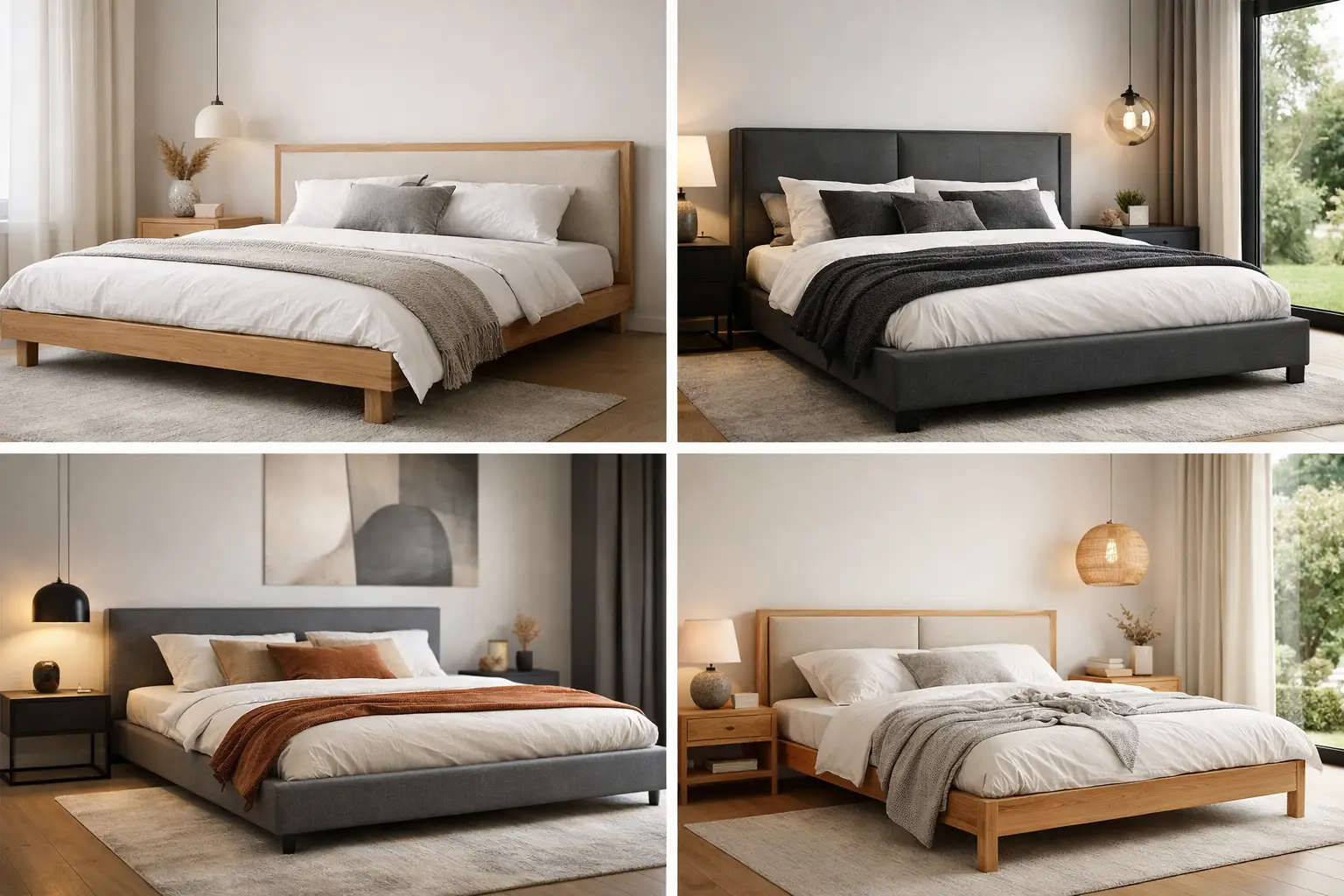
Shopping for the best modern beds UK retailers offer usually starts with a look you love and ends with a checklist you did not expect – storage, mattress support, room size, delivery, and whether the frame will still feel current in three years. That is the real challenge. A modern bed needs to do more than look clean and stylish in a product photo. It has to fit the way you live, sleep, and use your space every day.

For most buyers, the right choice sits where design and practicality meet. A low-profile upholstered frame may look perfect in a styled bedroom, but if you need hidden storage or extra headboard support for reading in bed, another style may make more sense. Modern beds are a broad category, and that is exactly why choosing well matters.

What makes the best modern beds UK shoppers actually want?

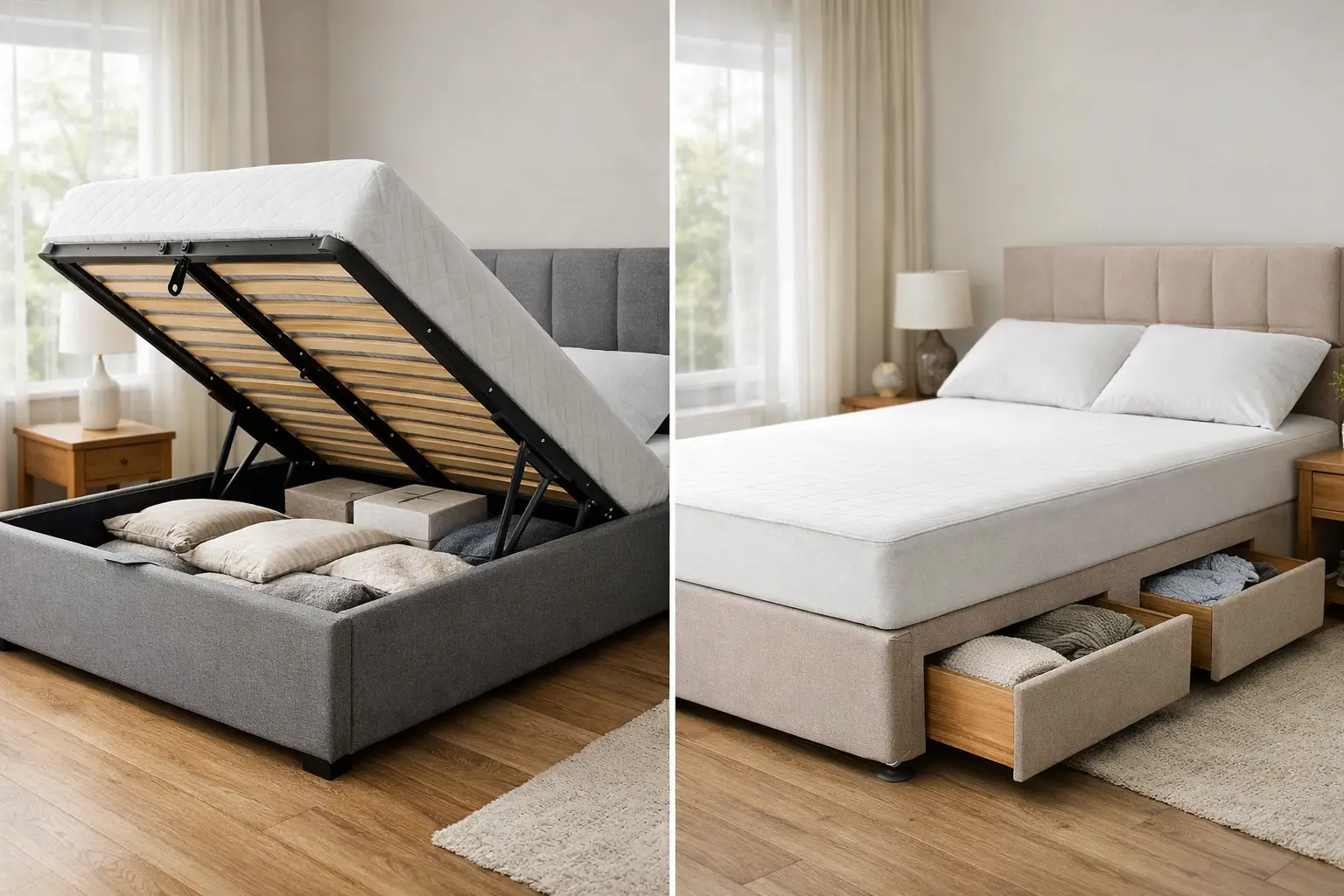
The best modern beds UK customers tend to choose have a few things in common. They feel current without being too trend-led, they work with a range of bedroom furniture, and they solve a practical need at the same time. That might mean a lift-up ottoman base in a smaller home, a statement headboard in a master bedroom, or a clean wooden frame that keeps the room feeling light.

Modern design in beds is less about one fixed look and more about a set of design cues. Think streamlined silhouettes, textured upholstery, soft neutrals, matte finishes, slim legs, panel detailing, and storage that does not shout about itself. A bed can still feel warm and inviting while looking sharp and contemporary.

That balance is what makes a modern bed worth buying. If a frame looks stylish but feels flimsy, it will disappoint. If it is practical but bulky or dated, it can drag the whole bedroom down. The sweet spot is a bed that elevates the room while working hard behind the scenes.

The most popular types of modern beds

Ottoman beds for stylish hidden storage

If storage is high on your list, ottoman beds are hard to beat. They offer one of the smartest space-saving setups because the storage is built into the footprint you are already using. For apartments, smaller bedrooms, or homes where closet space is tight, that can make a real difference.

The modern appeal comes from how clean they look. You are not adding extra drawers, boxes, or bulky cabinets to the room. Everything is tucked away under the mattress platform. Gas-lift mechanisms also make day-to-day use far easier than many shoppers expect.

There is a trade-off, though. Ottoman beds are usually heavier and often more substantial in build. If you move home regularly or like to rework your layout often, a lighter frame may be easier to live with.

Upholstered beds for a softer modern look

An upholstered bed is often the easiest way to give a bedroom a polished, pulled-together feel. Fabric finishes in gray, beige, cream, or deeper tones work especially well in modern spaces because they add texture without making the room feel busy.

This style is popular for a reason. A padded headboard feels more comfortable for sitting up at night, and the overall look tends to feel more premium. Vertical paneling, winged edges, or simple square profiles can all lean modern depending on the detailing.

The key is restraint. If the fabric, shape, and headboard design all compete for attention, the bed can tip from contemporary to overly decorative. The strongest options keep the lines clean.

Wooden beds for warmth and simplicity

Modern does not have to mean glossy or high-shine. Wooden beds bring a cleaner, calmer feel to a bedroom and can work especially well if you want the space to feel relaxed rather than overly styled. Oak-effect finishes, walnut tones, and painted wood frames all have their place.

A wooden frame often suits buyers who want longevity. It is versatile, easier to coordinate with other furniture, and less likely to date quickly than some trend-heavy upholstered styles. If you are building a bedroom you want to keep for years, this is often a smart direction.

That said, wood changes the mood. It can feel more minimal and less cozy than fabric, so it helps to soften the room with bedding, rugs, and lighting.

Adjustable beds for comfort-first modern living

Adjustable beds have moved well beyond purely clinical design. Many newer options are sleek, understated, and made for everyday comfort without compromising the bedroom aesthetic. For shoppers focused on support, flexibility, or easier relaxation, they can be a very modern choice in the most practical sense.

This category is not for everyone. It tends to sit at a higher price point, and mattress compatibility matters more. But if your priority is personalized comfort, few bed types offer the same level of function.

How to choose the right modern bed for your room

Start with size, because great design means very little if the room feels cramped. A king bed can look impressive, but in a tighter bedroom it may leave too little space for nightstands, wardrobe access, or easy movement around the frame. A bed should anchor the room, not dominate it.

Next, think about visual weight. Beds with chunky side rails, tall headboards, and upholstered surrounds tend to feel larger, even when the mattress size is the same. If your room is compact, a bed with slimmer lines or raised legs can keep the space feeling more open.

Storage should be an early decision, not an afterthought. If you already know you need extra room for bedding, seasonal clothes, or spare linens, choosing a storage bed from the start is usually better than trying to solve the problem later with extra furniture. It keeps the room looking cleaner and more intentional.

Finally, match the bed to how you use it. If you read in bed, a padded headboard matters. If you want easy cleaning underneath, avoid low frames that sit flush to the floor. If you like a hotel-style look, a tall statement headboard may be worth the extra visual presence.

Design details that separate a good bed from a great one

A lot of shoppers focus on the headline style, but the smaller details often make the biggest difference once the bed is in the room. The height of the headboard, the depth of the side rail, the finish of the feet, and the way the slats are supported all affect both appearance and day-to-day use.

Headboards are especially important in modern design. A simple panel headboard can look sharp and versatile, while fluted or channeled upholstery adds depth without clutter. Tall headboards create impact, but they need enough wall space to look balanced.

Material choice matters too. Velvet can look rich and dramatic, but in some rooms linen-look fabric feels fresher and easier to style. Matte wood finishes often feel more current than anything too glossy. Metal accents can sharpen the overall look, but too much contrast can make the bed feel colder than intended.

Modern beds should also feel stable. A stylish frame that creaks, shifts, or lacks center support will lose its appeal quickly. Good construction is part of good design.

Best modern beds UK buyers should prioritize by lifestyle

If you are furnishing a first apartment or smaller bedroom, an ottoman bed is usually the strongest all-rounder. It gives you style and storage in one move, which helps you avoid overcrowding the space with extra units.

If you are upgrading a master bedroom, an upholstered bed with a statement headboard often delivers the biggest visual payoff. It makes the room feel finished and works well with matching bedside furniture, dressers, and wardrobes.

For family homes or guest rooms, simple wooden or fabric frames often make the most sense. They are easier to style for different age groups and tend to have broader long-term appeal. If comfort is the main focus, especially for anyone who spends more time in bed, adjustable options are worth a closer look.

This is where product range matters. A retailer with a broad bed selection makes it easier to compare storage, finishes, sizes, and support features side by side instead of forcing a compromise too early. That is often what turns a decent purchase into a satisfying one.

What to look for when buying online

Buying a bed online is convenient, but it only works well when the product information is clear. Look for accurate dimensions, material details, storage information, mattress compatibility, and assembly guidance. Clean photography matters, but specifications matter more.

Delivery and returns deserve just as much attention as the design itself. Beds are higher-consideration purchases, so reassurance counts. Clear service terms, secure payment, and a sensible returns window help remove the hesitation that often comes with buying furniture online.

Price is part of the decision, but value is the bigger point. A modern bed should earn its place through design, comfort, build quality, and function. Brays UK stands out here because the mix of contemporary styles, strong bed category depth, and convenient online shopping makes comparison easier for buyers who want both style and reassurance.

The best modern bed is not always the most dramatic one on the page. It is the one that fits your room properly, supports how you live, and still looks right every time you walk in. Choose with that in mind, and your bedroom will feel better long after the first delivery day excitement has passed.

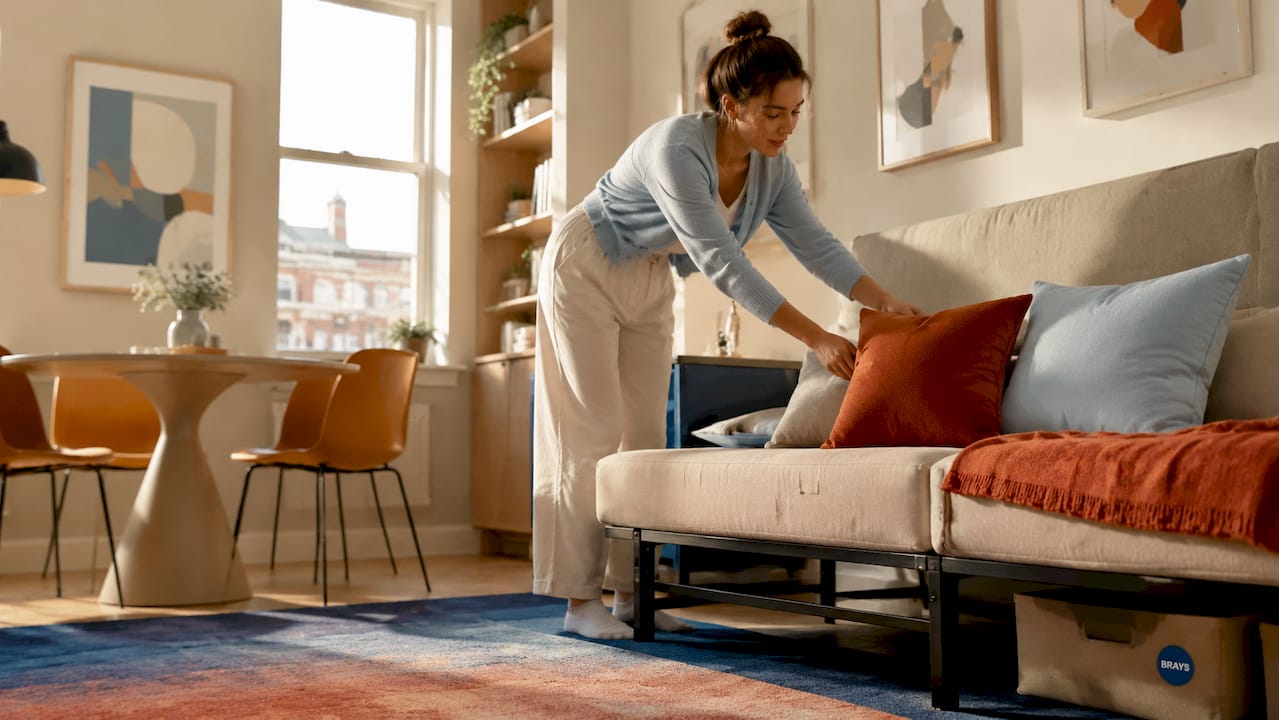
Woman styling sofa bed in small apartment

Style multifunctional furniture for small spaces

Multifunctional furniture is defined as any piece designed to perform two or more distinct roles, such as a storage ottoman that doubles as seating, a sofa bed that transforms a living room into a guest suite, or a wall-mounted desk that folds flush when not in use. The demand for these pieces is rising sharply as urbanisation and hybrid working reshape how people use their homes. For urban dwellers and students, the challenge is not simply saving space. It is doing so without surrendering the considered, personal aesthetic that makes a small room feel genuinely liveable.

What types of multifunctional furniture suit small spaces best?

The most effective way to style multifunctional furniture in a small space is to begin by understanding which furniture categories deliver the greatest return on floor area. Not all dual-purpose pieces are equal in terms of visual weight, practicality, or design quality.

Dual-purpose pieces such as ottomans and console-to-desk tables reduce the need for additional furniture entirely, which is the single most powerful principle in compact living. A storage ottoman, for instance, replaces a coffee table, a blanket box, and an occasional seat in one elegant form. An extendable dining table serves as a compact everyday surface and expands to accommodate guests without occupying permanent space.

Man using storage ottoman and console desk

Here is a comparison of the most popular multifunctional furniture types for small spaces:

Furniture type Primary function Secondary function Style consideration
Sofa bed Seating Guest sleeping Choose slim arms and low profiles
Storage ottoman Seating or footrest Hidden storage Upholstered finishes add warmth
Murphy bed Sleeping Wall unit or desk Requires wall mounting assessment
Extendable table Dining or working Entertaining surface Oval or round forms feel less imposing
Modular shelving Storage Room divider Open shelving preserves visual flow
Convertible desk Working Decorative console Wall-mounted versions free floor space

Ottomans with hidden storage and extendable tables are particularly well suited to studio flats and student rooms because they address clutter and flexibility simultaneously. A sofa bed, meanwhile, is the defining piece for anyone who needs a living room and a bedroom to occupy the same footprint. BraysUK’s guide to sofa beds for real homes explores how to select convertible sofas that genuinely perform both roles without compromising on comfort or appearance.

Pro Tip: When selecting a sofa bed, prioritise models with a dedicated mattress depth of at least 10 cm rather than a fold-out cushion. The difference in sleep quality is considerable, and the piece will serve its secondary function as reliably as its primary one.

How to choose stylish multifunctional furniture that suits your aesthetic

Selecting pieces that are both functional and beautiful requires a deliberate approach to proportion, colour, and material. The most common mistake is choosing furniture that is too small in an attempt to save space. Slim-profile pieces at a comfortable scale create more cohesive, comfortable interiors than miniature alternatives that look out of place.

A cohesive colour scheme is the foundation of a well-styled small room. Neutral tones such as warm whites, soft greiges, and muted sage greens allow multifunctional pieces to recede visually, making the room feel larger and more considered. When every piece shares a tonal family, the eye reads the space as unified rather than cluttered.

Infographic showing steps to choose multifunctional furniture

Material choices carry equal weight. Light neutrals and glass or acrylic elements visually expand a room in a way that dark, heavy materials cannot. A glass-topped extendable table, an acrylic side chair, or open shelving with pale timber finishes all contribute to a sense of airiness. These are not merely aesthetic choices. They are spatial tools.

Consider the following principles when selecting pieces:

  • Choose furniture with tapered or slender legs, which lift the visual weight off the floor and create breathing room beneath each piece.
  • Opt for upholstery in performance fabrics that resist wear, since multifunctional pieces are used more intensively than single-purpose alternatives.
  • Select modular or reconfigurable pieces where possible, as your needs in a student flat or rented apartment will change.
  • Avoid ornate detailing on multifunctional furniture. Clean lines read as intentional and sophisticated in compact spaces.

Pro Tip: Before purchasing, photograph your existing room and use a free tool such as Roomstyler or Planner 5D to place scaled furniture digitally. This prevents the costly error of buying a piece that overwhelms the room proportionally.

For inspiration on how personalised home décor can complement a multifunctional furniture scheme, Wallfully’s guide to customisation offers practical ideas for layering personality into a space-conscious interior.

How to arrange multifunctional furniture in a compact living area

Arrangement is where the design principles above become tangible results. A well-chosen piece placed poorly will still make a small room feel cramped. The sequence below provides a reliable framework for planning your layout.

  1. Measure precisely. Record the room’s dimensions including door swings, window sill depths, and radiator positions. Poor dimension measurements are the leading cause of costly furniture returns and layout failures in small spaces.
  2. Identify your vertical plane. Walls are underused in most small rooms. Murphy beds and wall-mounted desks can free 30 to 50% of floor area compared to their freestanding equivalents. This is the single most impactful spatial decision you can make.
  3. Anchor the room with one primary piece. In a studio flat, this is typically the sofa or the bed. All other multifunctional pieces should relate to this anchor in scale and tone.
  4. Place furniture around the perimeter. Keeping the central floor area clear creates the impression of a larger room and allows multifunctional pieces to be used without obstruction.
  5. Layer lighting deliberately. A well-lit room reads as larger. Use a combination of ceiling, task, and ambient lighting to define zones within a single open-plan space.

The table below illustrates how different room types benefit from specific multifunctional furniture arrangements:

Room type Recommended anchor piece Key vertical solution
Studio flat Sofa bed Wall-mounted shelving unit
Student bedroom Storage bed frame Fold-down wall desk
Shared living room Modular sofa with storage Tall bookcase as room divider
Compact kitchen-diner Extendable dining table Wall-mounted spice and utensil rack

Pro Tip: Install wall-mounted furniture only after confirming your wall type. Stud walls, plasterboard, and solid masonry each require different fixings. Wall-mounted furniture demands walls rated for the relevant weight load. A structural failure is both dangerous and expensive.

Common challenges when styling multifunctional furniture for small spaces

Even well-intentioned small-space schemes encounter predictable problems. Recognising these in advance saves both money and frustration.

The most frequent errors include:

  • Ignoring vertical space. Most people furnish only the lower two metres of a room. Shelving, wall desks, and overhead storage cabinets reclaim otherwise wasted area.
  • Choosing oversized or visually heavy pieces. A bulky sectional sofa in a 20-square-metre flat will dominate the room regardless of how many functions it performs. Scale matters as much as versatility.
  • Failing to account for clearance zones. A Murphy bed requires clear floor space in front of it when open. An extendable table needs room on both ends. Measure the piece in its fully extended or deployed state, not just its resting dimensions.
  • Introducing too many pieces at once. A flexible, stylish environment is built gradually. Adding one well-chosen multifunctional piece at a time allows you to assess its impact before committing further.

“The most liveable small spaces are not the most cleverly packed. They are the most deliberately edited.”

For those adapting a space to accommodate hybrid working, a convertible desk or a sofa with an integrated side table provides a defined work zone that can be visually closed off at the end of the day, preserving the psychological separation between work and rest.

Key takeaways

Stylish multifunctional furniture transforms small spaces when pieces are chosen for slim profiles, cohesive colour, and genuine dual-function performance rather than novelty alone.

Point Details
Define function first Identify the two roles each piece must perform before selecting it.
Prioritise vertical space Wall-mounted and fold-away furniture frees significant floor area in compact rooms.
Choose slim, scaled pieces Correctly proportioned furniture with tapered legs reads as lighter and more refined.
Build gradually Introduce one multifunctional piece at a time to assess spatial and aesthetic impact.
Invest in quality Durable, well-made dual-function pieces adapt as lifestyle needs change and offer lasting value.

Living intentionally: a perspective on small-space furniture

The conversation around small-space living has shifted considerably. Where it once centred on compromise, it now centres on intention. The most satisfying compact interiors I have encountered are not those that cram in the maximum number of functions. They are the ones where every piece has been chosen with genuine care for how it will be used, how it will look, and how it will feel to live alongside it day after day.

There is a tendency to treat multifunctional furniture as a purely practical category, something you buy because you have no choice. That framing misses the point entirely. A beautifully upholstered storage ottoman or a thoughtfully designed sofa bed is not a concession to limited square footage. It is a considered investment in a space that works as hard as you do. The adaptability of quality pieces means they remain relevant as your life changes, whether you move from a student room to a first flat or reconfigure a home office after a job change.

The advice I return to most often is this: buy fewer pieces, but buy them better. A single well-made sofa bed from a brand that understands both comfort and design will serve you more faithfully than three budget alternatives that each do one thing adequately. Style and function are not in opposition in a small space. They are the same decision.

— V

Discover stylish multifunctional furniture at BraysUK

BraysUK curates furniture collections designed specifically for the realities of modern urban living, where every square metre must earn its place without sacrificing the elegance you deserve.

https://braysuk.com

Whether you are furnishing a studio flat, a student room, or a compact city apartment, BraysUK’s range combines contemporary design with genuine everyday functionality. Explore the affordable luxury furniture guide to discover how premium-looking pieces can be accessible without compromising on craftsmanship or durability. For those prioritising versatility, the collection of convertible sofas and beds offers solutions that perform beautifully in both their roles. Thoughtful furniture is not a luxury reserved for large homes. BraysUK makes it attainable for every space.

FAQ

What is multifunctional furniture?

Multifunctional furniture is any piece designed to serve two or more distinct purposes, such as a sofa bed, storage ottoman, or fold-down wall desk. These pieces reduce the total number of items needed in a small room while maintaining full functionality.

Which multifunctional furniture type is best for a studio flat?

A sofa bed is the most impactful single piece for a studio flat, as it combines the primary living and sleeping functions in one footprint. Pairing it with a storage ottoman and a wall-mounted shelf maximises both storage and floor area.

How do I stop multifunctional furniture from making a small room look cluttered?

Choose pieces with slim profiles, tapered legs, and neutral upholstery, and introduce them one at a time. Slim, unobtrusive designs preserve visual cohesion and prevent the room from feeling overloaded.

Is wall-mounted furniture safe in rented flats?

Wall-mounted furniture is safe when installed correctly into load-bearing fixings appropriate for your wall type. Always confirm the wall’s construction and weight rating before mounting a Murphy bed or floating desk, as poor installation is the primary cause of structural failures.

How much should I spend on multifunctional furniture for a small space?

Prioritise quality over quantity. One well-made, durable piece that performs both its functions reliably will outlast and outperform several cheaper alternatives, and it will adapt more gracefully as your living situation evolves.

Woman styling modern sofa in bright living room

How to style a modern sofa as a focal point

A modern sofa is defined as the primary visual anchor of a living room when its silhouette, placement, and surrounding decor are deliberately orchestrated to draw the eye and hold it. Styling a modern sofa as a focal point, known in interior design as creating a conversational centrepiece, requires three things working in concert: the right sofa form, considered spatial positioning, and proportional supporting decor. Get any one of these wrong and the sofa recedes into the background, no matter how beautiful the piece itself may be. This guide covers each principle in precise, practical terms, whether you own your home or rent it.

Which modern sofa designs best create a focal point?

The sofa silhouette is the single most powerful variable in modern living room design. Low-profile sofas with a seat height of approximately 14 to 16 inches and a back height of 28 to 32 inches create more visible vertical space, making rooms appear taller and airier than standard 18 to 20 inch seat heights allow. This is not merely an aesthetic preference. It is a spatial illusion that works in rooms of almost any ceiling height.

When selecting a contemporary sofa centrepiece, consider these defining characteristics:

  • Clean, unbroken lines. Sofas with continuous arms and a low, horizontal profile read as deliberate and composed rather than bulky.
  • Visual weight and material. A velvet or boucle sofa in a deep jewel tone commands attention immediately. A linen sofa in a neutral tone relies more heavily on form and placement to assert itself.
  • Leg visibility. Sofas raised on slender metal or solid wood legs feel lighter and more considered than skirted or floor-flush designs, which can appear heavy in a modern scheme.
  • Scale relative to the room. A sofa that is too small for the wall behind it reads as an afterthought. A sofa that fills roughly two thirds of the wall it faces holds the space with authority.

A sofa’s statement effect depends on its relationship to the room context, including ceiling height, wall space, and natural light, so audition any piece in the actual room before committing. Colour and texture that look striking in a showroom can flatten under different light conditions.

Pro Tip: If your ceilings are lower than 2.4 metres, a low-profile sofa with visible legs is the single most effective design choice you can make. It draws the eye along the horizontal plane and creates the impression of height without touching a wall.

Interior designer selecting sofa fabric samples

How to position your sofa to maximise its role as a focal point

Sofa placement determines whether the piece reads as the room’s centrepiece or simply as seating. Primary seating arranged facing the room’s natural focal point, whether that is a fireplace, a picture window, or a media wall, forms an oval or rectangular conversational group that feels both inviting and intentional. Straight-line arrangements, where all seating faces one direction, flatten the room’s social energy and undermine the sofa’s visual authority.

Follow this sequence when positioning your sofa:

  1. Identify the architectural anchor. Locate the fireplace, window, or media wall that naturally draws the eye. Orient the sofa to face it directly.
  2. Pull the sofa away from the wall. Pulling the sofa 4 to 8 inches from the wall transforms the room’s spatial feel, eliminating dead zones and making the space appear larger and more intentional. This single adjustment has more impact on perceived room architecture than any accessory change.
  3. Set your conversation radius. Place seating within an 8 to 10 foot radius and keep individual pieces 3 to 6 feet apart. This supports natural interaction without crowding.
  4. Allow clear walkways. Maintain at least 90 centimetres of clear circulation space around the sofa group so the arrangement feels considered rather than cramped.
  5. Position the coffee table correctly. Place it 35 to 45 centimetres from the sofa’s front edge, close enough to reach comfortably but far enough to allow movement.

Pro Tip: Even a 10 centimetre gap between your sofa and the wall creates a sense of depth and intentionality that most visitors will feel but not consciously identify. It is one of the least expensive improvements you can make to a room.

What rug and coffee table sizes complement a sofa focal point?

Infographic outlining steps to style modern sofa focal point

The rug and coffee table are the two supporting elements that either ground the sofa visually or undermine it entirely. Rugs sized 8×10 feet or larger that extend at least 8 to 12 inches beyond the sofa’s sides, with the front sofa legs resting on the rug, unify the seating area and prevent the sofa from appearing to float. A rug that is too small is the most common mistake in modern living room design, and it makes even a beautiful sofa look unanchored.

The two thirds rule applies to both the rug and the coffee table. The rug should be wider than the sofa and extend beneath the front legs of all seating in the group. The coffee table should measure approximately two thirds the length of the sofa and sit 35 to 45 centimetres from its front edge.

Element Recommended size Key rule
Rug 8×10 ft or larger Extends 8 to 12 inches beyond sofa sides; front legs on rug
Coffee table Two thirds of sofa length Placed 35 to 45 cm from sofa front edge
Side tables Sofa arm height or slightly lower One on each end, or asymmetric for visual interest
Accent chair Scaled to sofa, not matching Positioned at 45 degrees to sofa for conversational geometry

Pro Tip: If your room cannot accommodate an 8×10 rug without crowding, choose a rug that at minimum holds the front legs of the sofa and the coffee table. That connection is what matters most for visual cohesion.

How to style the surrounding decor to highlight your sofa focal point

The decor surrounding your sofa either amplifies its presence or competes with it. Wall art spanning roughly two thirds of the sofa’s width ensures proportional balance and prevents either the artwork or the sofa from appearing disconnected from the other. This two thirds rule is one of the most reliable proportional guides in interior design, and it applies whether you are hanging a single large canvas or a curated gallery wall.

Consider these principles when styling the space around your sofa:

  • Wall art placement. Centre artwork 15 to 20 centimetres above the sofa back. For wall art in modern interiors, scale and placement relative to the sofa are more important than the artwork’s style or subject matter.
  • Cushion and throw balance. Use an odd number of cushions in two or three complementary textures. A velvet cushion, a woven throw, and a linen bolster create tactile richness without visual noise.
  • Asymmetric side tables. Two identical side tables flanking a sofa can feel static. One taller lamp table on one side and a lower, sculptural piece on the other creates movement and interest.
  • Negative space. Modern focal points rely on minimal but impactful elements, using negative space and scaled supporting decor to avoid overfilling. Resist the urge to fill every surface.

Pro Tip: Audition your cushions, throws, and art in the room’s natural light at different times of day before settling on a final arrangement. Colours and textures shift significantly between morning and evening light, and what reads as cohesive at noon can feel discordant by lamplight.

How can renters create a modern sofa focal point without structural changes?

Renters face real constraints, but furniture grouping, scaled rugs, and non-permanent decor replicate the effect of a designed layout without touching a single wall or fixture. The sofa itself does the heavy lifting when it is well chosen and correctly positioned.

  1. Choose a statement sofa that suits the existing light. A sofa in a rich, saturated colour or distinctive texture becomes the focal point by sheer presence, without any structural support.
  2. Use a large rug to define the zone. A generously sized rug anchors the seating group and signals intention, even in a rented space with neutral walls and generic flooring.
  3. Apply removable wall decor. Removable adhesive strips support framed art and mirrors up to considerable weights, allowing you to apply the two thirds rule above the sofa without damaging plaster.
  4. Prioritise conversation geometry. Position the sofa to face the room’s strongest natural feature, be it a window or a media unit, and arrange supporting seating in an oval or rectangular group around it.

Pro Tip: In a rented space, proportion and geometry do more work than any single decorative item. A well-positioned sofa on a correctly sized rug, facing the room’s natural anchor, will always read as intentional and designed.

Key takeaways

Styling a modern sofa as a focal point requires the right silhouette, deliberate placement away from the wall, and proportional supporting decor including a correctly sized rug, coffee table, and wall art.

Point Details
Sofa silhouette matters Low-profile, clean-lined sofas with visible legs create visual authority and amplify perceived ceiling height.
Pull away from the wall Positioning the sofa 4 to 8 inches from the wall creates depth and makes the room feel larger and more considered.
Apply the two thirds rule Rug, coffee table, and wall art should each measure approximately two thirds of the sofa’s width or length for visual harmony.
Negative space is active Leaving deliberate empty space around the sofa group strengthens its focal presence rather than weakening it.
Renters can achieve the same result Furniture geometry, scaled rugs, and removable decor replicate a designed focal point without any permanent changes.

Why proportion is the principle most people overlook

Most people approach sofa styling by focusing on colour or cushion arrangements first. Having spent considerable time observing how rooms actually read, the most common mistake is not a poor colour choice. It is a rug that is two sizes too small, a coffee table that is too short or too long, and a sofa pushed flush against the wall as though it is trying to disappear.

The two thirds rule sounds deceptively simple, but applying it consistently across the rug, the coffee table, and the wall art above the sofa produces a room that feels resolved in a way that is difficult to articulate but immediately apparent. Rooms that feel “off” almost always have a proportional mismatch somewhere in that chain.

The other insight worth sharing is this: texture does more work than colour in a modern scheme. A sofa in a complex, tactile fabric, boucle, ribbed velvet, or brushed linen, holds the eye even in a neutral palette. Colour is the first thing you notice; texture is what keeps you looking. Invest in the fabric quality of your sofa before you invest in the cushions that sit on it.

— V

Discover BraysUK’s modern sofa collection

BraysUK brings together a meticulously curated selection of modern sofas designed to serve as the elegant centrepiece of any living room, whether you are furnishing a compact flat or a generous reception room. Each piece is chosen for its considered silhouette, quality upholstery, and the kind of enduring presence that transforms a room rather than merely occupying it.

https://braysuk.com

From low-profile statement sofas in rich, tactile fabrics to versatile designs that suit varied layouts and light conditions, BraysUK’s collection is built around the principle that beautiful furniture should also be liveable. Explore the range of modern sofa beds for spaces that demand both style and practicality, or discover how an oversized sofa can anchor even the most intimate room with quiet authority.

FAQ

What makes a sofa a focal point in a living room?

A sofa becomes the room’s focal point when its silhouette, placement, and surrounding decor are proportionally aligned to draw and hold the eye. Orienting it toward the room’s architectural anchor, such as a fireplace or media wall, and pulling it slightly away from the wall reinforces this effect.

What is the best sofa height for a modern living room?

A seat height of 14 to 16 inches with a back height of 28 to 32 inches suits most modern living rooms, creating a low-profile aesthetic that amplifies perceived ceiling height and visual space.

How far should a sofa be from the wall?

Pulling the sofa 4 to 8 inches from the wall eliminates dead zones and makes the room feel larger and more intentional. Even a small offset has a significant effect on how the space reads.

What rug size works best under a modern sofa?

A rug measuring 8×10 feet or larger, extending 8 to 12 inches beyond the sofa’s sides with the front legs resting on it, grounds the seating group and prevents the sofa from appearing to float.

Can renters create a sofa focal point without altering walls?

Renters achieve the same result through furniture grouping, a correctly scaled rug, and removable wall decor. Proportion and conversational geometry do the structural work that permanent fixtures would otherwise provide.

Ottoman Bed vs Divan: Which Suits You?

Ottoman Bed vs Divan: Which Suits You?

Choosing between an ottoman bed vs divan usually comes down to one thing – how hard you need your bed to work. If your bedroom is short on storage, an ottoman can feel like a smart upgrade. If you want a simpler base with flexible options and an easy fit in tighter layouts, a divan often makes more sense.

Both styles are popular for good reason. They can look clean, contemporary, and practical without taking over the room. But they solve different problems, and that matters when you are buying online and want to get it right first time.

Ottoman bed vs divan: the real difference

At a glance, both are upholstered bed bases designed to support a mattress and keep the bedroom looking streamlined. The difference is in how they use the space underneath.

An ottoman bed lifts to reveal a full storage cavity inside the frame. In most designs, the mattress platform rises with gas-lift assistance, giving you access to almost the entire base. That makes it one of the most efficient storage beds you can buy.

A divan is usually a solid upholstered base made in sections, often with optional built-in drawers. Instead of lifting the whole top, you access storage from the sides or foot end through drawers. Some divans are sold as a base only, while others come with a matching headboard option for a more complete look.

That means the choice is not simply modern versus traditional. Plenty of ottomans look sleek and contemporary, and many divans now have a more tailored, design-led finish. The better question is how you want to store things, how much floor space you have, and what kind of bedroom setup feels easiest to live with every day.

Storage capacity: where ottoman beds usually win

If maximizing storage is your top priority, ottoman beds usually come out ahead. Because the whole base opens, you get a large uninterrupted compartment that can hold bulkier items like spare bedding, winter blankets, guest pillows, or off-season clothes.

For smaller homes, apartments, or shared spaces, that extra capacity can make a real difference. It can reduce the need for another chest or storage bench and help keep the room looking calmer and less crowded.

Divan storage is more segmented. Drawers are useful for organizing smaller items and keeping everything easy to reach, but they do not give you the same volume as a full ottoman cavity. If you already have a wardrobe with good capacity and only need extra room for sheets, towels, or sleepwear, a divan with drawers may be more than enough.

There is a trade-off, though. Ottoman storage is generous, but you need to lift the base to get to it. That is fine for items you do not use every single day. If you want instant access to neatly separated essentials, drawers can feel more convenient.

Floor space and room layout

This is where the ottoman bed vs divan decision can shift quickly.

Ottoman beds are often ideal when you want storage but do not have clearance around the sides for drawers to open. Because the base lifts upward, you are not relying on side access. In tighter bedrooms, that can be a big advantage.

Divan drawers need room to slide out fully. If you have bedside tables close to the bed, narrow walkways, or other furniture crowding the layout, those drawers can be awkward. In those cases, an ottoman may actually be the more practical option despite its larger internal storage.

On the other hand, not everyone wants to lift the mattress platform regularly. A divan drawer can be quicker when you are grabbing clean pillowcases or storing smaller everyday items. So it depends on both your room size and your routine.

Style and finish

For shoppers focused on design, both options can work beautifully in a modern bedroom.

Ottoman beds often have a more statement-led look. Many feature taller headboards, upholstered side rails, and a complete bed frame silhouette that feels more substantial and styled. If you want the bed to anchor the room and bring in a polished, contemporary feel, an ottoman is often the stronger visual choice.

Divans tend to be more understated. The base is compact and neat, which makes it easy to pair with different headboards and bedroom furniture. That simplicity can be a strength. In a smaller room, a divan can look less bulky and help the space feel cleaner.

If you like a tailored, hotel-inspired setup, a divan with a statement headboard can look smart without feeling heavy. If you prefer a bed with more presence and hidden practicality, an ottoman often gives you that all-in-one appeal.

Comfort and mattress support

Comfort is not really about whether a bed is an ottoman or a divan in name alone. It depends more on the quality of the base, the mattress you choose, and how the two work together.

That said, both styles are designed to provide solid support. Divan bases have long been favored for their straightforward, stable feel. Ottoman beds can offer the same dependable support when well made, with platform tops or slatted systems depending on the model.

If you are comparing products, it is worth looking beyond the bed type and checking how the base is constructed. A stylish frame matters, but support, durability, and compatibility with your mattress matter more over time.

Ease of use and everyday practicality

An ottoman bed sounds effortless, and many are easy to lift thanks to gas-assisted mechanisms. But “easy” is not the same for everyone. If you have limited mobility, prefer quick access, or simply do not want to raise the mattress platform often, a divan may feel more user-friendly.

Divans are simple. Open a drawer, put things away, close it again. That makes them a practical choice for busy households where convenience matters as much as storage.

Ottomans are better for storing larger, less frequently used items. They keep everything hidden in one clean space, which is great for maintaining a tidy look. But if you are in and out of the storage daily, think honestly about whether lifting the base suits your habits.

Assembly and moving

Another point people often miss is setup.

Divans are usually delivered in sections, which can make them easier to move through hallways, staircases, and tighter doorways. Once in place, they are relatively straightforward to assemble. That is one reason they remain a popular choice for apartments and upstairs bedrooms.

Ottoman beds can be a little more involved because of the lift mechanism and frame structure. That does not make them difficult by default, but it is something to consider if access is tight or you want the fastest possible setup.

If you move home regularly or like to refresh your bedroom layout often, a divan may feel more manageable. If you are creating a more permanent bedroom setup and want maximum hidden storage, an ottoman can be worth the extra effort.

Price and value

Price varies by size, fabric, brand, and finish, but divans are often available at more entry-level price points. Their simpler construction can make them a strong value option, especially if you want a clean upholstered base without paying for a more complex lifting system.

Ottoman beds can cost more, but that extra spend often reflects the added functionality. If the storage allows you to avoid buying extra bedroom furniture, the value picture can change quickly.

The best buy is not always the cheapest one. It is the bed that solves the most problems in your space while still delivering the style you want.

Who should choose an ottoman bed?

An ottoman bed is usually the better fit if your bedroom needs serious hidden storage, your floor space is limited, and you want a bed with a more complete, design-led look. It suits shoppers who like clean lines and want to make the most of every inch without adding more furniture.

It is especially appealing in modern bedrooms where clutter control matters just as much as visual impact.

Who should choose a divan?

A divan is often the smarter choice if you want straightforward practicality, easy-access storage, and a compact base that works well in a wide range of room styles. It is a reliable option for guest rooms, family homes, and primary bedrooms where simple function is the priority.

It also works well if you like the flexibility of pairing a base with the headboard style that suits your space.

Final thought on ottoman bed vs divan

If you are choosing between an ottoman bed vs divan, do not start with the label. Start with your room, your storage habits, and the look you want to wake up to every day. The right bed should do more than hold a mattress – it should make the whole bedroom feel easier, smarter, and better put together.

Person measuring small space for furniture layout

Small space furniture strategy: a 2026 guide

Small space furniture strategy is the intentional practice of selecting and arranging furniture to maximise both function and style within compact living areas. For urban renters and flat dwellers working with studios, one-bedroom apartments, or bijou terraced rooms, this approach transforms tight footprints into genuinely livable, elegant spaces. The method draws on principles of multifunctionality, precise circulation clearances, visual lightness, and vertical storage to make every square metre count. Done well, it removes the sense of compromise that compact living so often carries, replacing it with a considered, curated home that feels far larger than its measurements suggest.

What is small space furniture strategy and why does it matter?

Small space furniture strategy is defined as the deliberate process of choosing pieces that serve multiple purposes, maintain comfortable movement, and preserve the visual openness of a room. It is not simply about buying smaller furniture. The goal is spatial architecture: arranging your home so that every piece earns its place through both form and function.

The core principle is the double-duty rule, which states that every large furniture piece in a compact apartment should fulfil at least two distinct functions. A storage ottoman serves as seating and conceals clutter. A daybed functions as a sofa by day and a guest bed by night. This rule alone can reduce the number of pieces in a room by a third, freeing floor space without sacrificing comfort.

Circulation is equally non-negotiable. Professional interior design standards require at least 3 feet for primary walkways and 18 inches of clearance between seating and coffee tables. These measurements prevent a room from feeling cramped and ensure the space remains genuinely usable rather than merely decorative.

Key principles at a glance:

  • Multifunctionality: Every large piece should serve two or more purposes.
  • Scale: Choose furniture proportioned to the room, not the showroom floor.
  • Visual lightness: Pieces with raised legs and slim profiles allow the eye to travel beneath them, making rooms feel larger.
  • Vertical storage: Walls are functional infrastructure, not blank canvases.
  • Circulation clearances: Maintain 36 inches for primary paths and 18 inches around seating.

Pro Tip: Before purchasing any large piece, tape its footprint onto your floor using masking tape. Walk around it for a day. If it disrupts your movement, it will do the same once it arrives.

How does furniture placement and layout enhance small space usability?

Placement is where strategy becomes spatial experience. The most common error in small apartments is pushing every piece against the walls in an attempt to free the centre of the room. Research shows that floating furniture creates better flow and makes spaces feel more cohesive, because it creates natural zones and draws the eye inward rather than around the perimeter.

Man assembling multifunctional sofa bed in apartment

Floating and modular furniture arranged as vignettes creates distinct zones in open-plan apartments without the need for walls. A slim console placed behind a sofa defines a living area. An open bookshelf separates a sleeping zone from a workspace. These pieces act as boundary furniture, framing each area with clarity and purpose while preserving light and sightlines.

Follow this sequence when planning your layout:

  1. Identify your zones. Decide which areas serve which functions: sleeping, working, dining, relaxing.
  2. Establish your anchor piece. In a living area, this is usually the sofa. In a bedroom, the bed. Place it first.
  3. Float it. Pull the anchor piece at least 30 centimetres from the wall to create depth and flow.
  4. Define boundaries. Use a rug, open shelving, or a low console to frame each zone without blocking light.
  5. Check sightlines. Stand at your entrance and confirm you can see through to a window or focal point. Blocked sightlines compress perceived space.

Pro Tip: A rug placed beneath the front legs of a sofa, rather than entirely under it, anchors the seating zone visually without requiring a larger, more expensive rug.

What types of multifunctional furniture work best in small apartments?

Infographic outlining small space furniture strategy steps

The best furniture for compact homes combines a modest footprint with generous utility. The pieces below represent the most effective space-saving furniture solutions available for urban dwellers in 2026.

Furniture type Primary function Secondary function
Storage ottoman Seating Hidden storage for blankets, books
Sofa bed Sofa Guest sleeping accommodation
Platform bed with drawers Sleeping Under-bed storage without risers
Fold-down wall desk Wall-mounted décor Full working desk when open
Modular shelving unit Display and storage Room divider or zone boundary

Platform beds with integrated drawers convert under-bed dead space into valuable storage without increasing floor footprint. This is particularly effective in studios, where a standard bed occupies a significant proportion of the total floor area. Integrated drawers also avoid the visual clutter associated with bed risers and storage containers placed beneath the frame.

Sofa beds deserve particular attention. The best models transition between configurations without requiring the room to be rearranged, making them genuinely practical rather than a last resort for guests. Look for models with a firm, supportive mattress rather than a thin fold-out pad, as comfort determines whether the piece actually gets used in both modes.

For renters who cannot make structural changes, lightweight modular pieces offer flexibility. They can be reconfigured as needs change, moved without damage, and adapted to different floor plans when you relocate.

What common mistakes should small space dwellers avoid?

The most damaging mistakes in small room design strategies are not about choosing the wrong style. They are about ignoring the physical and visual rules that govern how space is perceived.

  • Choosing furniture that is too small. Undersized pieces create awkward negative space and make a room feel sparse rather than spacious. A properly scaled sofa placed thoughtfully reads as intentional and generous.
  • Overcrowding with single-use pieces. A dedicated side table, a separate magazine rack, and a standalone lamp each occupy floor space. A single well-chosen piece can perform all three roles.
  • Blocking walkways. Ignoring the 36-inch clearance standard turns a living room into an obstacle course. Measure before you place.
  • Pushing everything to the walls. This is the most counterintuitive mistake. Floating furniture inward creates depth and makes the room feel larger, not smaller.
  • Neglecting vertical space. Wall-mounted shelves and cabinets reclaim floor space and draw the eye upward, increasing perceived ceiling height.

Pro Tip: Heavy, bulky furniture reduces perceived floor area and breaks sightlines. The visual weight of furniture is as important as its physical dimensions. Opt for glass-topped tables or pieces with acrylic elements where possible to maintain visual openness.

How can renters implement a successful small space furniture strategy?

Practical implementation follows a clear sequence. Skipping steps, particularly the measuring and planning stages, leads to the costly mistakes that most renters regret.

  1. Measure every wall, doorway, and alcove. Record ceiling height as well. Sketch a scaled floor plan on graph paper or use a free tool such as RoomSketcher or Floorplanner.
  2. Create paper templates. Cut scaled representations of furniture pieces and test fit them on your floor plan before purchasing. This prevents cramped layouts and wasted expenditure.
  3. Prioritise foundational multifunctional pieces first. Buy your sofa bed, platform bed, or storage ottoman before any decorative accessories. Accessories fill the space that remains; they do not define it.
  4. Install vertical storage early. Wall-mounted shelves, a dressing table with mirror storage, and over-door organisers should be in place before you consider additional freestanding pieces.
  5. Use lighting and colour deliberately. Light walls and strategically placed floor lamps extend perceived depth. Mirrors positioned opposite windows double the apparent width of a room.

Key takeaways

A successful small space furniture strategy rests on three non-negotiable pillars: multifunctional pieces, precise circulation clearances, and deliberate vertical storage.

Point Details
Apply the double-duty rule Every large piece must serve at least two functions to reduce footprint without sacrificing comfort.
Maintain circulation clearances Keep 36 inches for primary walkways and 18 inches between seating and tables to preserve flow.
Float furniture inward Pulling pieces away from walls creates depth, defines zones, and makes rooms feel larger.
Exploit vertical space Wall-mounted shelves and cabinets reclaim floor area and draw the eye upward.
Measure and template first Paper floor plan templates prevent costly purchasing mistakes and cramped layouts.

Why small space design rewards patience more than budget

The most revealing thing I have observed in years of working with compact urban homes is this: the clients who achieve the most striking results are rarely those who spend the most. They are the ones who measure twice, plan meticulously, and resist the urge to fill every corner immediately. A single well-chosen sofa bed or a platform bed with integrated drawers does more for a studio than a room full of inexpensive single-use pieces ever could.

There is also a psychological dimension that most guides overlook. Small spaces reward spatial creativity in ways that larger homes simply do not. When you treat your floor plan as a puzzle with precise constraints, you start making decisions that are genuinely considered rather than habitual. The result is a home that feels curated and personal, not merely furnished.

The one piece of advice I return to most often: do not buy anything for the first month in a new space. Live in it. Notice where you naturally walk, where light falls in the morning, where you actually sit. That observation period will tell you more than any floor plan template. The furniture strategy that follows will be far more precise, and far more satisfying, for it.

— V

Discover furniture designed for the way you actually live

https://braysuk.com

BraysUK curates furniture with the compact urban home in mind, combining contemporary design with the kind of lasting durability that justifies every purchase. The BraysUK collection of sofa beds for real homes includes models that transition effortlessly between configurations, offering genuine sleeping comfort alongside elegant daytime styling. For bedrooms where storage is at a premium, the range of upholstered headboards pairs refined aesthetics with practical design, complementing platform beds and divan bases that make full use of every available centimetre. BraysUK pieces are meticulously chosen to serve both form and function, giving you the confidence to invest in quality that transforms your space rather than simply filling it.

FAQ

What is a small space furniture strategy?

Small space furniture strategy is the deliberate selection and arrangement of furniture to maximise function, flow, and visual space in compact living areas. It prioritises multifunctional pieces, proper circulation clearances, and vertical storage over simply buying smaller items.

How much clearance should I leave between furniture in a small room?

Professional design standards require at least 36 inches (3 feet) for primary walkways and 18 inches between seating and coffee tables. These clearances prevent overcrowding and maintain comfortable movement throughout the room.

What is the best type of furniture for a tiny home or studio flat?

Platform beds with integrated drawers, sofa beds, storage ottomans, and fold-down wall desks are the most effective choices. Each piece serves multiple functions, reducing the total number of items needed and freeing valuable floor space.

Should I push furniture against the walls in a small apartment?

No. Floating furniture away from walls creates better flow, defines zones more clearly, and makes rooms feel larger. Pushing every piece to the perimeter creates a hollow, disconnected feel rather than the spacious effect most renters intend.

How do I plan a furniture layout before buying anything?

Measure your room carefully and sketch a scaled floor plan. Cut paper templates to represent each furniture piece and arrange them on the plan to test clearances and walkways before committing to any purchase.